It is a peculiarity of writing that the word you confidently rejected yesterday, today is suddenly perfect. Nothing has changed in the line—it is you who perceive it anew.
Month: September 2019
Niggly Positions
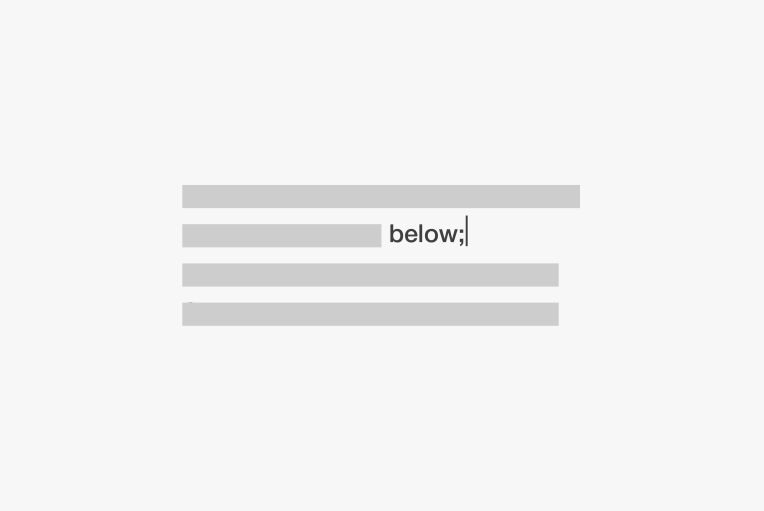
I recently wrote that a line should, in every sense, reflect its content. This rule (which may, of course, be exquisitely broken by the capable) has a profound impact on the words within the line, the line within the stanza and the stanza within the poem.
A line is a collection of words and a stanza, a collection of lines—all in a particular order—from which the mind assembles meaning and constructs concepts, making their very position within a poem—and especially a traditional one—highly significant.
For example, in a “Mist from the Mountains” stanza variation, “below” appears in the second line of the quatrain and, therefore, above its halfway mark, undermining its meaning and compromising its import (the quatrain itself is the third of four stanzas).
Were it not for this issue, the variation would have succeeded; but in this form, it fails. To be saved, its lines must be rearranged so that “below” appears either in line three or four. This I did, considerably improving the stanza and thus the poem.
A line that succeeds on its own may not succeed in a verse, and so a verse in a poem, a poem in a collection, and a collection in a tradition. Context is everything—for it determines everything.
 Forgotten Fields