A Poemlet

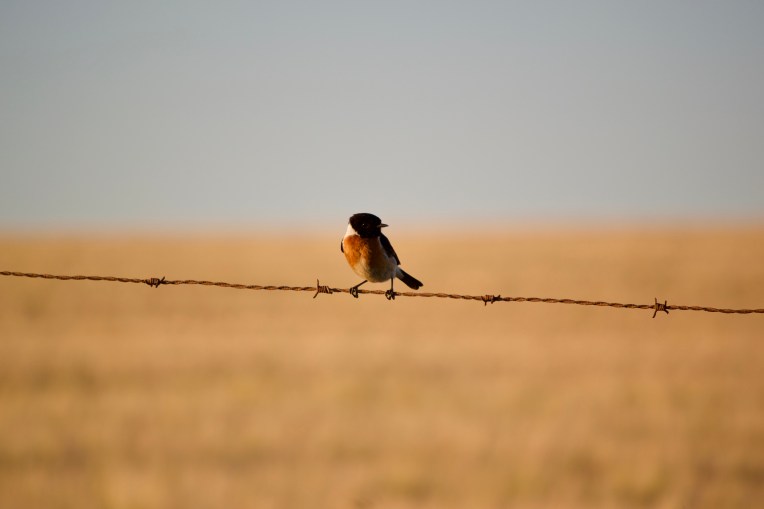
An African Stonechat, 05 October 2019. Copyright 2019 Forgotten Fields. All rights reserved.
A stonechat, photographed mid-spring in 2019.

As I develop a poem, numerous variations on stanzas come as a result of the composition process: some with promise, others beyond redemption. Not once before has any among these become a poem in its own right—its lines either woven into the work for which it was conceived or discarded outright—until now.

One variation of the second stanza of “A Late Winter Morning” (a poem in progress), which began as a playful experiment with alliteration and rhyme, has become too colourful for the work (which is lively but restrained); reluctant to discard it, as normally I would, I have decided to extract it as a separate composition.

An offshoot of “A Late Winter Morning”, a poem in my anthology-in-progress, I intend to include it in the collection despite a previous resolution not to add new compositions to the set, developing it alongside “A Late Winter Morning” as a companion piece under the working title “A Morning Chat” or “A Chat at Solitaire”.

“Chat” here refers to the bird of that name, the African Stonechat (Saxicola torquatus), a vocal passerine along a stretch of dirt road towards an area known as Solitaire. On winter mornings, they utter their warbling calls from the wire fences (little puffs of vapour escaping from their beaks!), the subject of the offshoot poem.
A Ramble

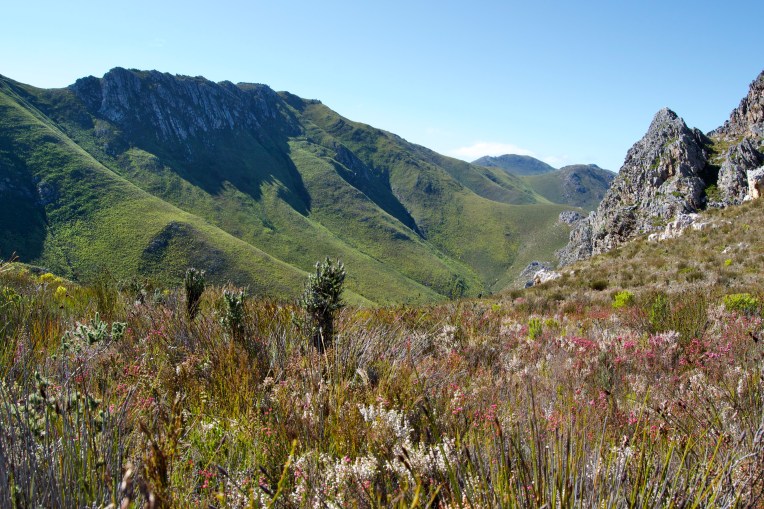
Fynbos in the Kleinriviersberge, 21 August 2020. Copyright 2020 Forgotten Fields. All rights reserved.
Whilst the scenery was spectacular, it was the flowers that captivated me.

Last Friday, I walked up the Little River Mountains range, which often appears in my writing and photography, in the company of Dr Chris Whitehouse, a botanist who owns—or rather stewards, as he reverently puts it—a swath of land upon one of its eastern slopes.

A fount of knowledge—how envious was I of his command of botanical names1—he introduced me to many species that bloom there this time of year (the end of winter in South Africa), waiting patiently whilst I admired and photographed the flowers and scenery2:

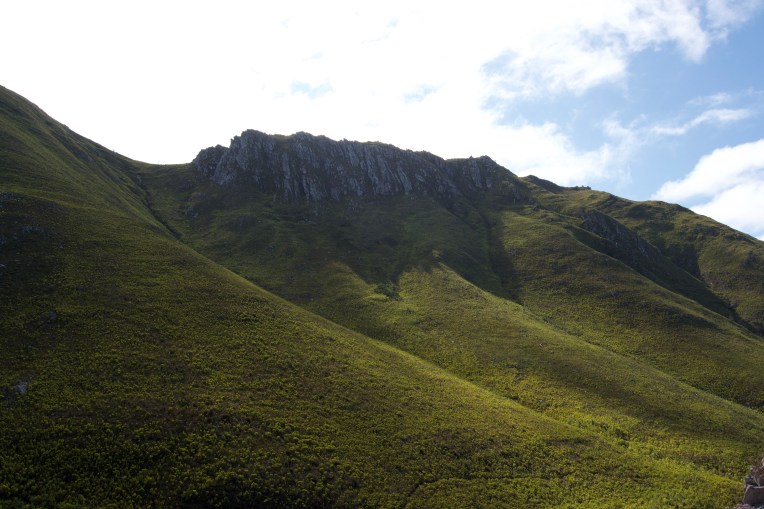
The mountain was laden with Leucadendron whose green conquered the slopes in spectacular fashion.

Leucadendron on the Kleinriviersberge, 21 August 2020. Copyright 2020 Forgotten Fields. All rights reserved.Leucadendron on the Kleinriviersberge, 21 August 2020. Copyright 2020 Forgotten Fields. All rights reserved.

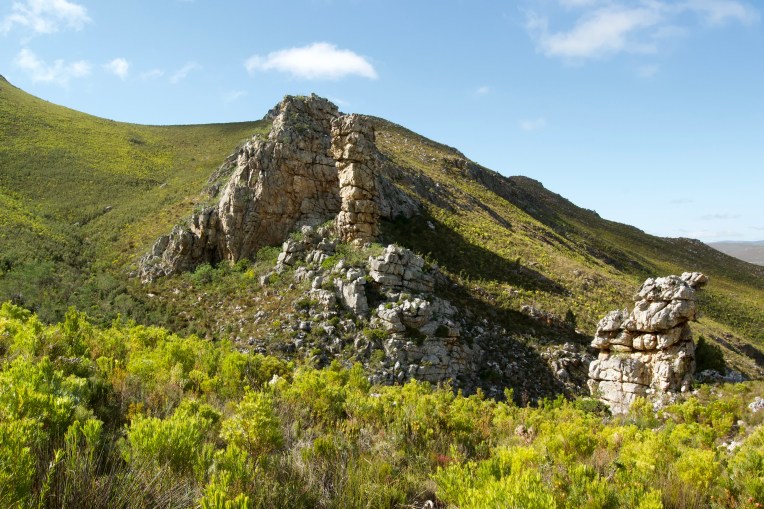
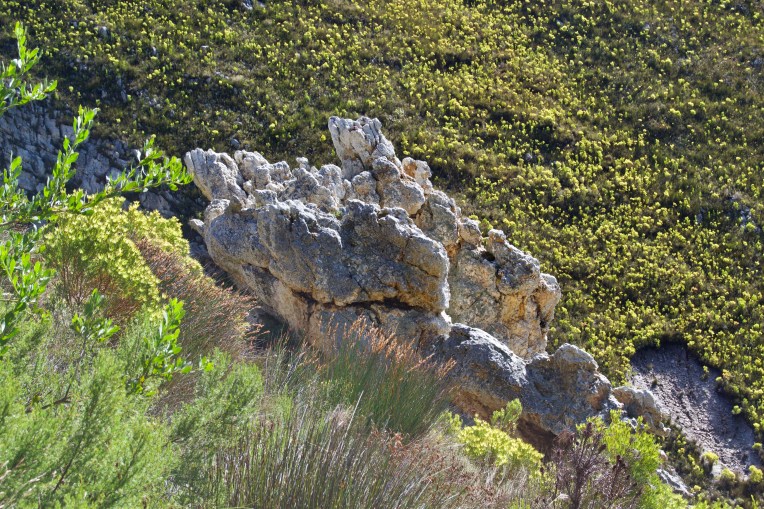
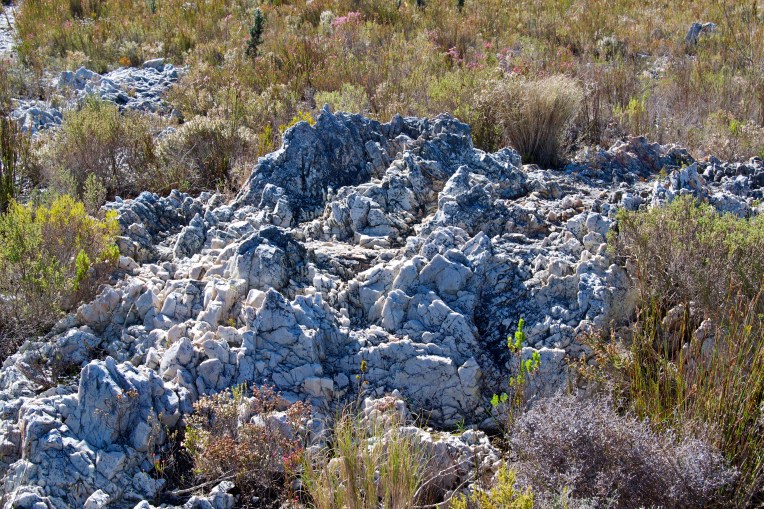
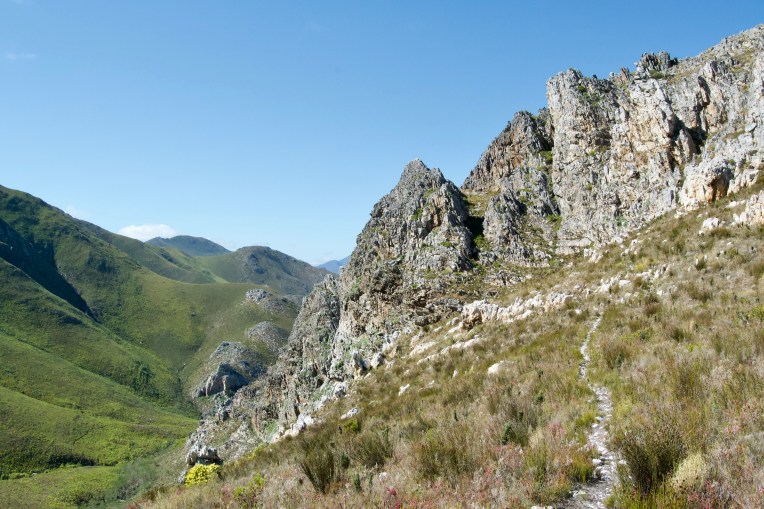
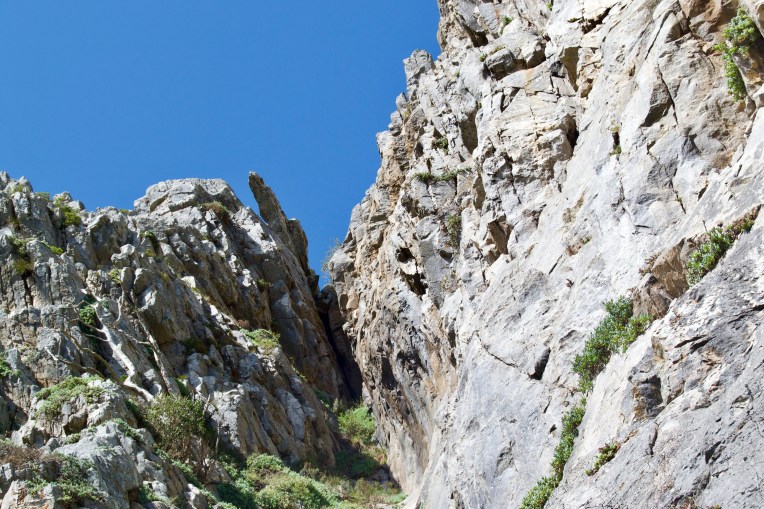
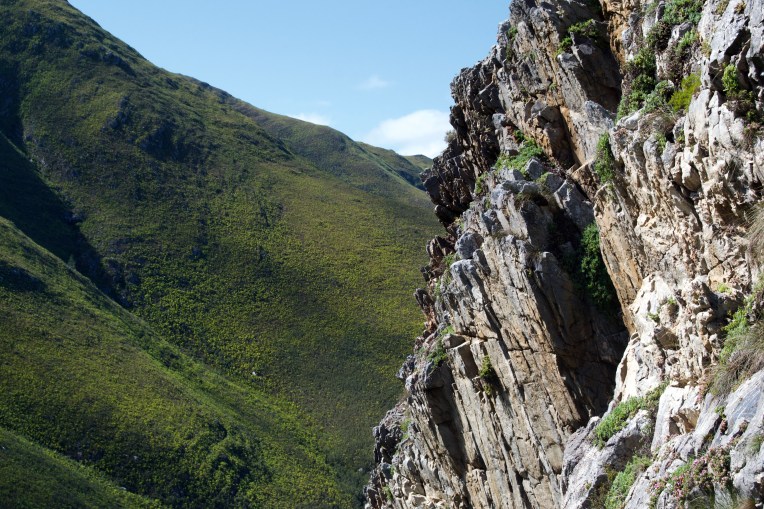
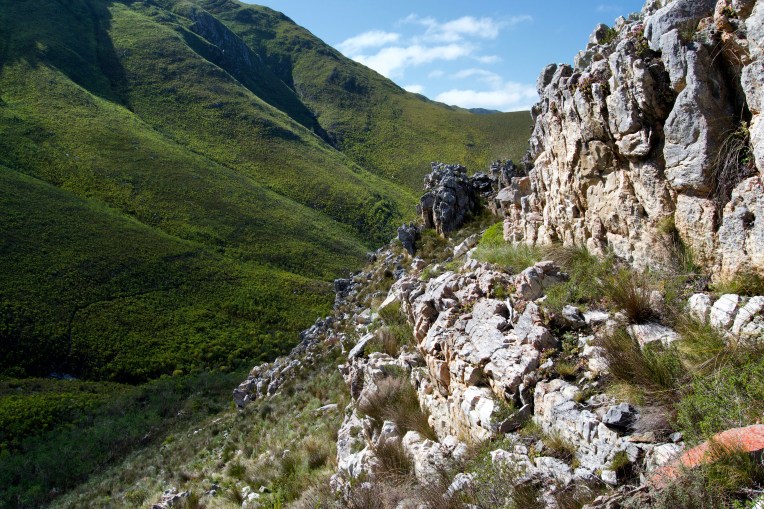
Rocks and rock formations, expertly composed by Nature’s hand, created intricate visual scherzos.

Rock Formations of the Kleinriviersberge, 21 August 2020. Copyright 2020 Forgotten Fields. All rights reserved.Rock Formations of the Kleinriviersberge, 21 August 2020. Copyright 2020 Forgotten Fields. All rights reserved.Rock Formations of the Kleinriviersberge, 21 August 2020. Copyright 2020 Forgotten Fields. All rights reserved.Rock Formations of the Kleinriviersberge, 21 August 2020. Copyright 2020 Forgotten Fields. All rights reserved.Rock Formations of the Kleinriviersberge, 21 August 2020. Copyright 2020 Forgotten Fields. All rights reserved.

At times, the cliffs were surreal in photomontage-like contrast with the surrounding landscape.

Rock Formations of the Kleinriviersberge, 21 August 2020. Copyright 2020 Forgotten Fields. All rights reserved.Rock Formations of the Kleinriviersberge, 21 August 2020. Copyright 2020 Forgotten Fields. All rights reserved.

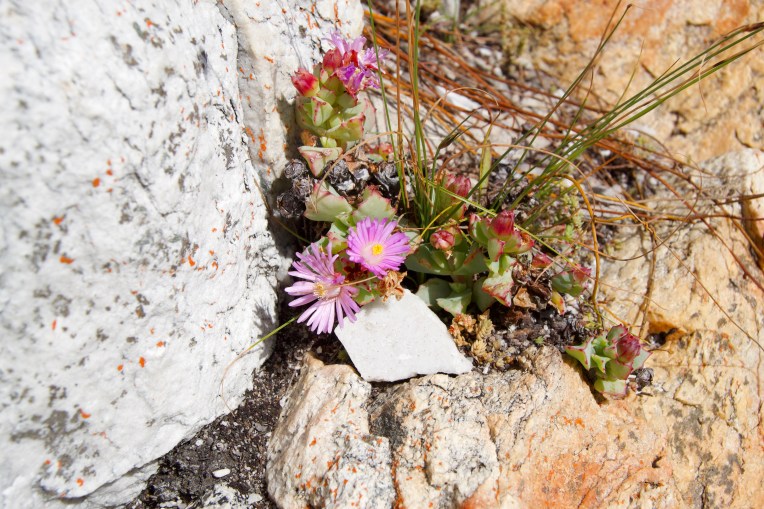
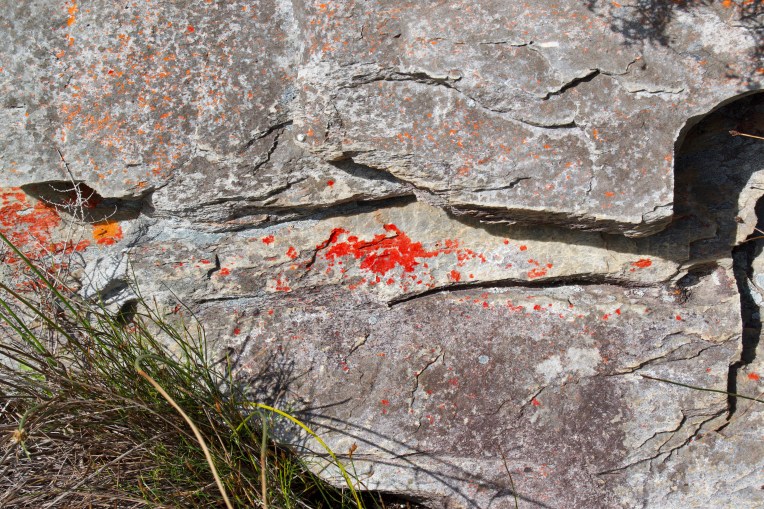
In their seams, Ikebanaesque arrangements burst forth whilst lichens freckled their faces.

Fynbos Ikebana in the Kleinriviersberge, 21 August 2020. Copyright 2020 Forgotten Fields. All rights reserved.Lichens on a Kleinriviersberge Rock, 21 August 2020. Copyright 2020 Forgotten Fields. All rights reserved.

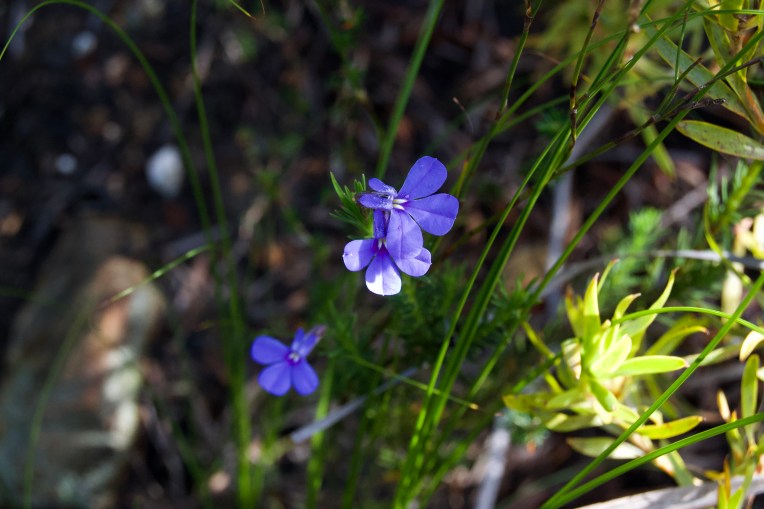
We would often encounter my beloved Lobelia, mostly L. Pinifolia, in violet and white.

Violet Lobelia pinifolia on the Kleinriviersberge, 21 August 2020. Copyright 2020 Forgotten Fields. All rights reserved.White Lobelia pinifolia on the Kleinriviersberge, 21 August 2020. Copyright 2020 Forgotten Fields. All rights reserved.

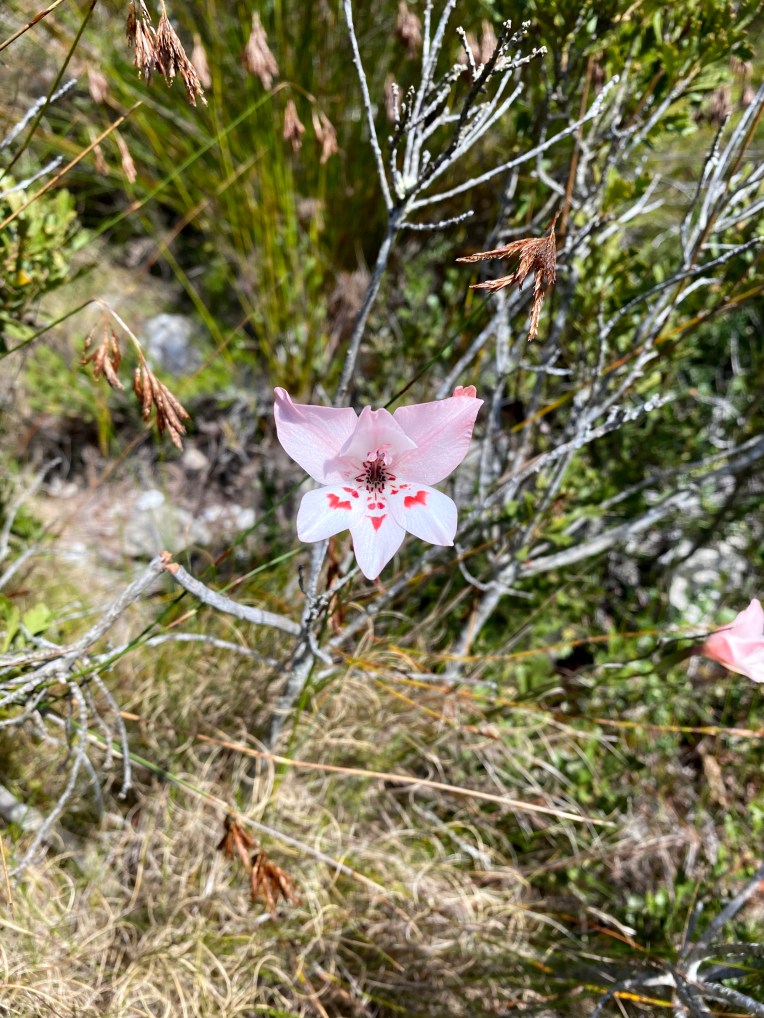
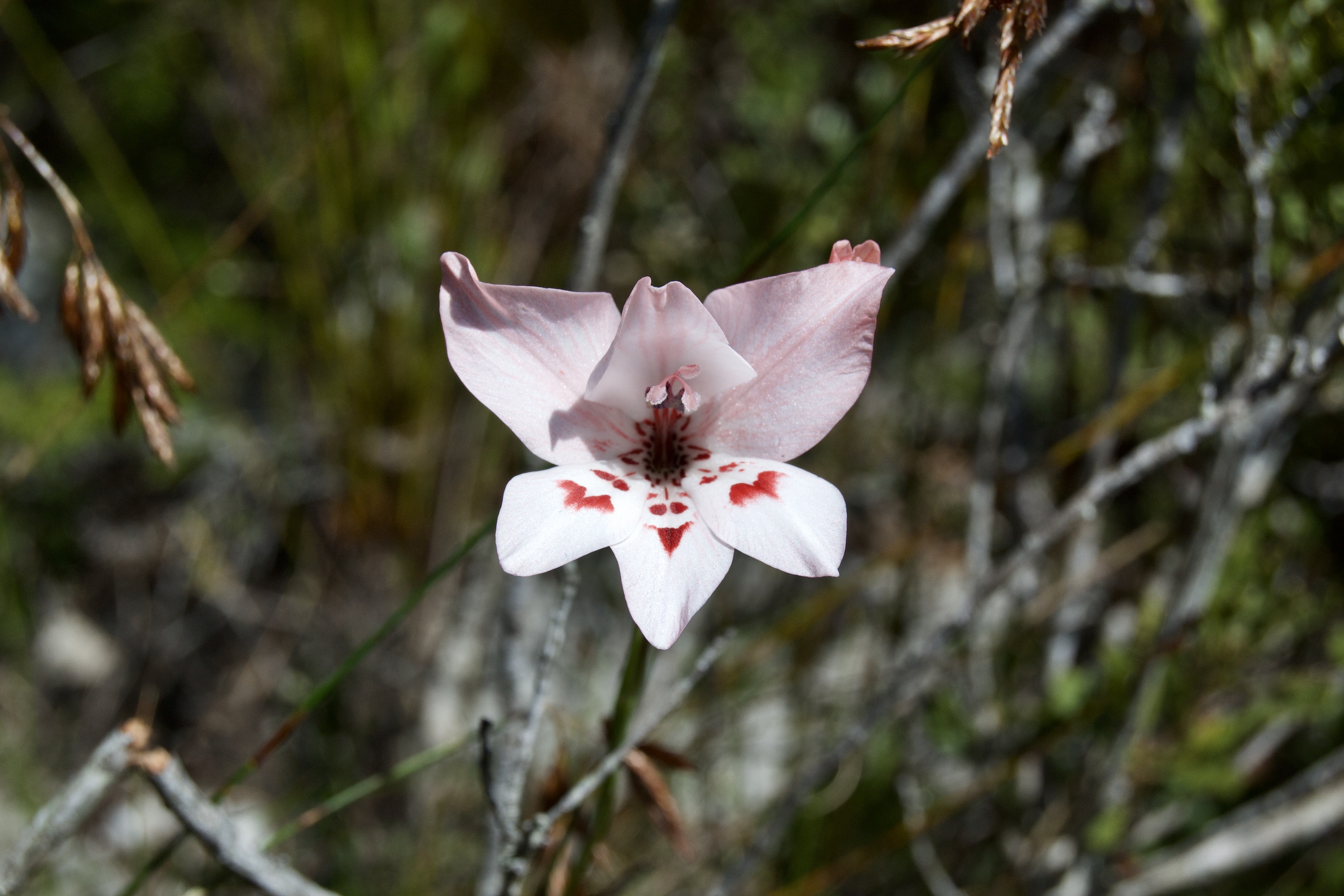
I also saw for the first time, Gladiolus debilis, a lily my mother sometimes recalls from her childhood3.

Gladiolus debilis on the Kleinriviersberge, 21 August 2020. Copyright 2020 Forgotten Fields. All rights reserved.

Other first sightings included Cyphia volubilis winding up the slender stems of a reluctant Restio;

56BC0995-FDD3-40B6-8549-0E4E1FACDEED_1_201_a

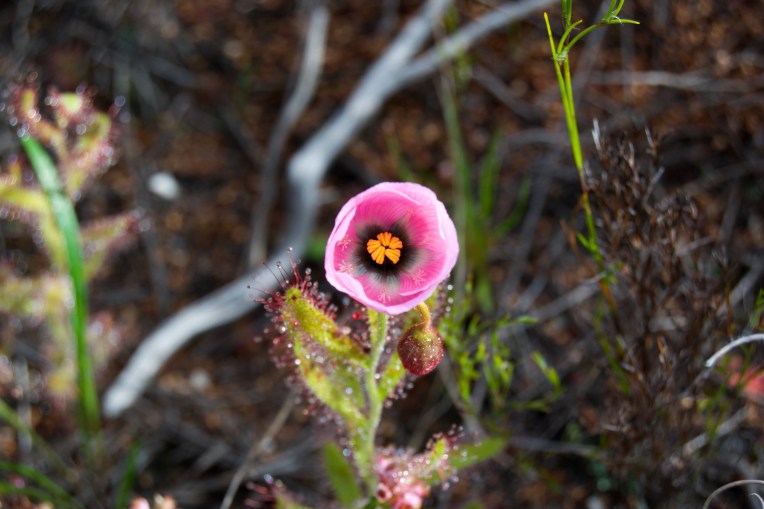
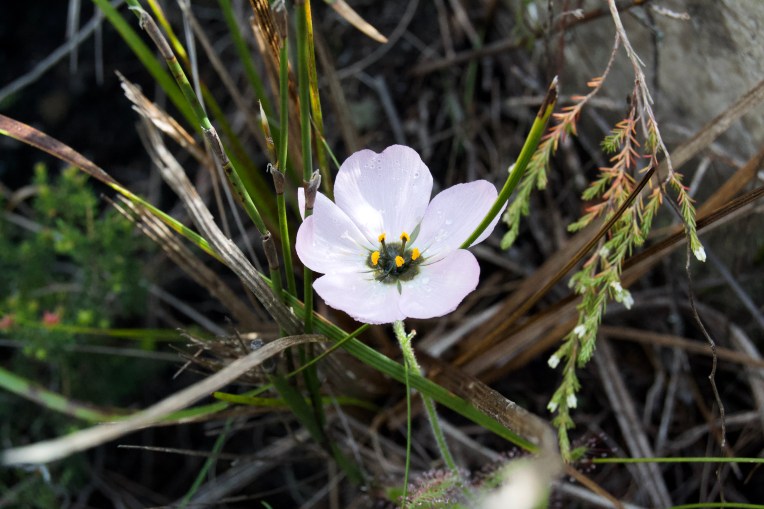
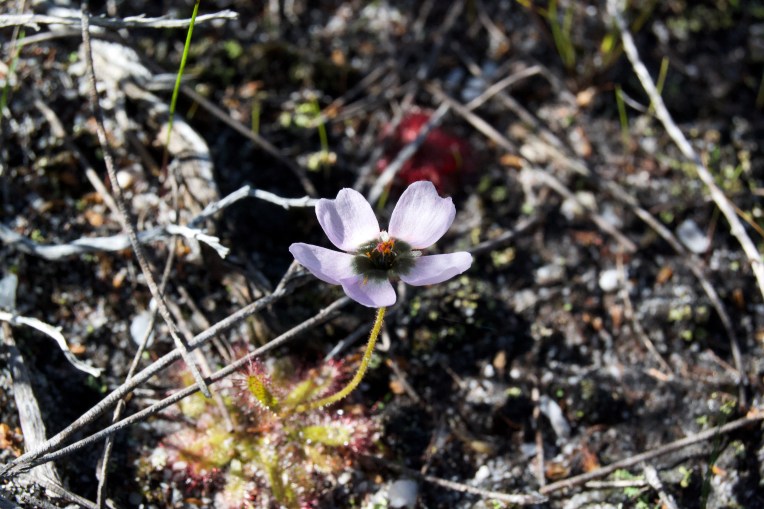
Drosera cistiflora and D. pauciflora with their delicate petals distracting from tentacles below;

Drosera cistiflora on the Kleinriviersberge, 21 August 2020. Copyright 2020 Forgotten Fields. All rights reserved.Drosera cistiflora on the Kleinriviersberge, 21 August 2020. Copyright 2020 Forgotten Fields. All rights reserved.Drosera pauciflora on the Kleinriviersberge, 21 August 2020. Copyright 2020 Forgotten Fields. All rights reserved.

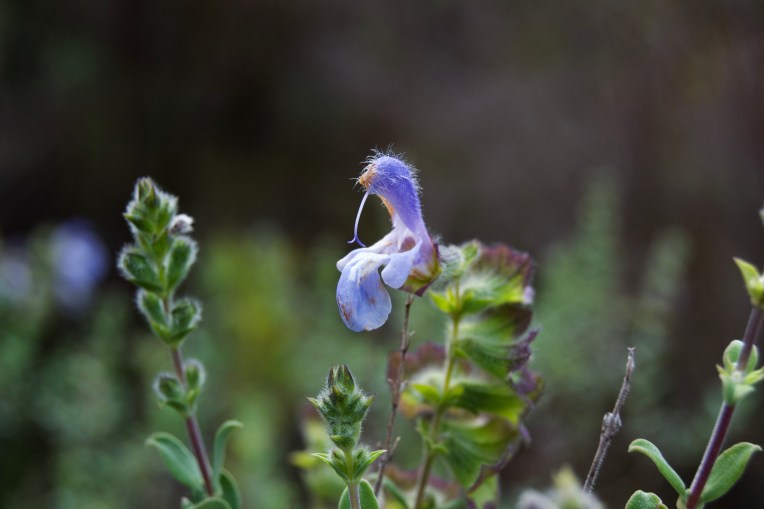
Salvia africana, its scruffy flower perching with a twig in its mouth (a protruding stigma);

Salvia africana on the Kleinriviersberge, 21 August 2020. Copyright 2020 Forgotten Fields. All rights reserved.

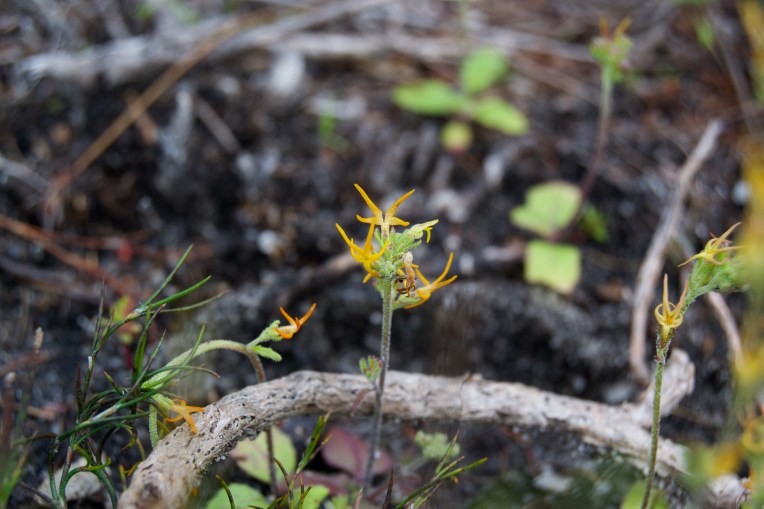
Manulea cheiranthus with its small yellow starfish flowers cavorting atop the stems;

Manulea cheiranthus on the Kleinriviersberge, 21 August 2020. Copyright 2020 Forgotten Fields. All rights reserved.

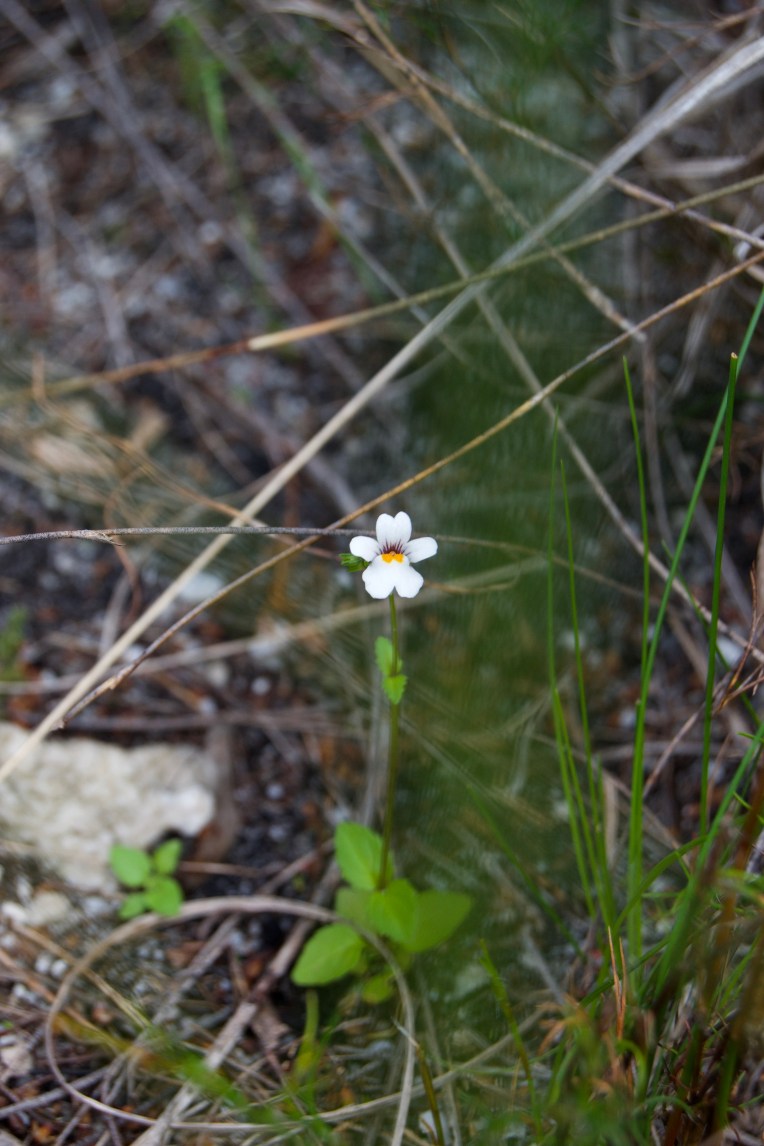
and a little Nemesia lucida4, most delightful of all, which, were it not for the attentiveness of my companion, I would have missed! Its adorable expression so captivated me that, reflecting upon it yesterday, I composed to it a little ode—a sketch for a future anthology!

Nemesia lucida on the Kleinriviersberge, 21 August 2020. Copyright 2020 Forgotten Fields. All rights reserved.

  1. In retrospect, I should have taken notes there and then—supplementing my DSLR photography with iPhone shots, which I could have annotated in the moment—saving me the subsequent search for botanical names (my occupation these past few days, hence the delay of this update), some of which I will doubtlessly have gotten wrong. Incidentally, Dr Whitehouse identified the mysterious flower I discovered two weeks ago (mentioned in “A Buck, a Bush and a Lily”, the fourth image in that update): a member of the genus Roepera, most likely Roepera fulva.
  2. Photographed with the encumbrance of a visor (due to the pandemic), the images are not as good as I would have liked, but I trust they convey some of the beauty of the mountain and its flora.
  3. She would pick “armfuls” of them when she was young, on her way home after a day of watching the sheep on the Little River Mountains. Incidentally, I used an iPhone 11 Pro to take the photograph above (I wanted to share the encounter with my mother in the moment, but there was no service) and must recommend it for detail and ease of use; it captured the delicacy of the tepals, lost in the Nikon images (of which I include one below, for comparison).Gladiolus debilis on the Kleinriviersberge, 21 August 2020. Copyright 2020 Forgotten Fields. All rights reserved.
  4. The closest match in my reference book is Nemesia macrocarpa which this flower does not resemble. Other sources lead me to believe it is N. lucida.

Composing “A Late Winter Morning”

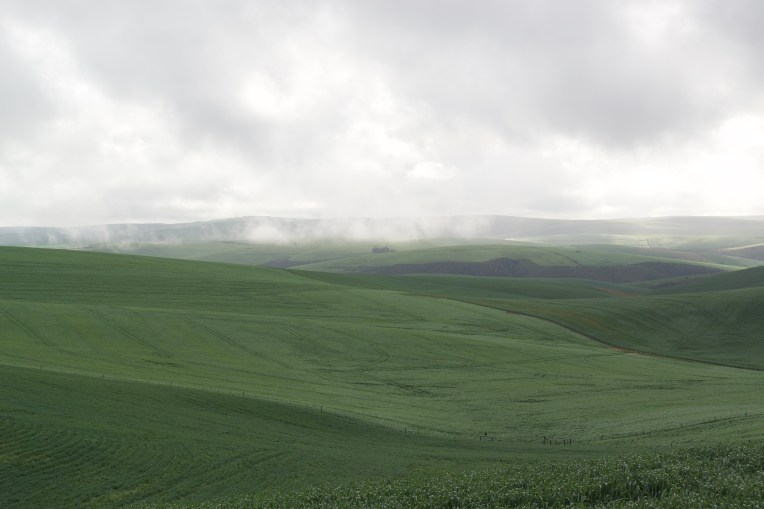
Mist on the Hills in Late Winter, 21 August 2020. Copyright 2020 Forgotten Fields. All rights reserved.
The mist surrenders to the sun, yesterday on a late winter morning, a common sight in August.

It is late winter in my country, South Africa, and the poem on that subject (imaginatively titled “A Late Winter Morning”) is developing slower than expected. It seems to me I have not yet shaped its stanzas to my satisfaction—they contain my impressions of the season, but have not the internal coherence I desire in my work.

Then there are the time-consuming experiments of expression the poet must make—however confident of his lines he may be—for from those may come a thought, word, phrase or line that ignites his composition. Should he be successful, more time must be spent to actualise his discovery in the existing work—often, transforming it completely!

Presently, I am at the end of just such an explorative phase which has resulted in two compositional directions: the first with two stanzas, the second, three (in both cases, with several variations), that I must now attempt to refine. From whatever comes as a result, I shall ultimately choose a draft to develop into a final work.