One of the sorest decisions in poetry is sacrificing the line one adores for the one best suited to the poem; paradoxically, the latter is almost invariably worse than the former—and precisely therefore better!
Lilies in the Morning
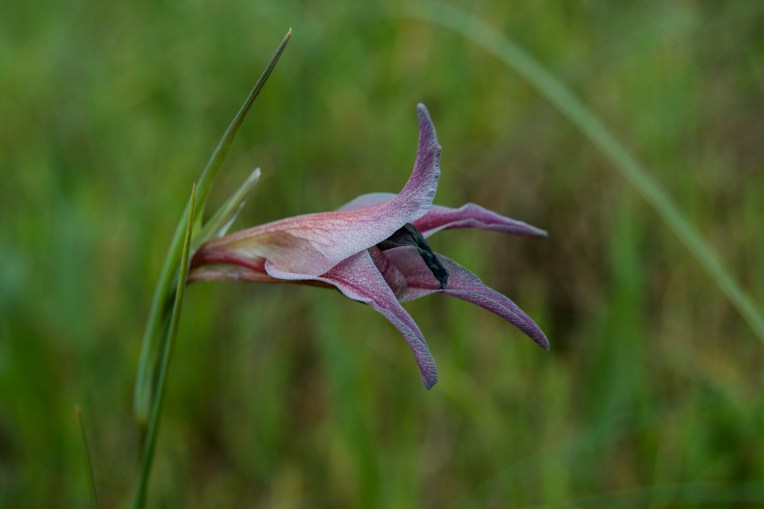
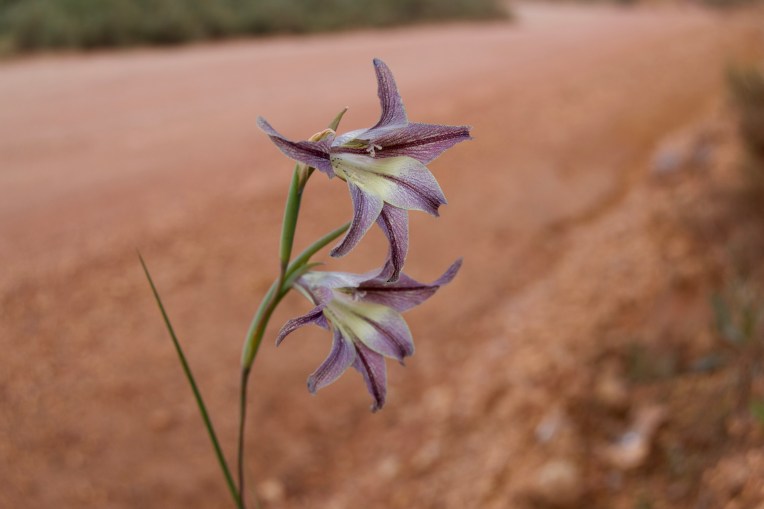
I encountered one of the first Large Brown Afrikaner lilies (Gladiolus liliaceus) of spring this morning. It stood on the same wayside where I saw another (of the cream-coloured variety), last October. Once home, I invited my mother to return to the flower to admire it. Upon her suggestion, we strolled further up the dirt road and what should we see but another of the same flower, precariously blooming on the verge!
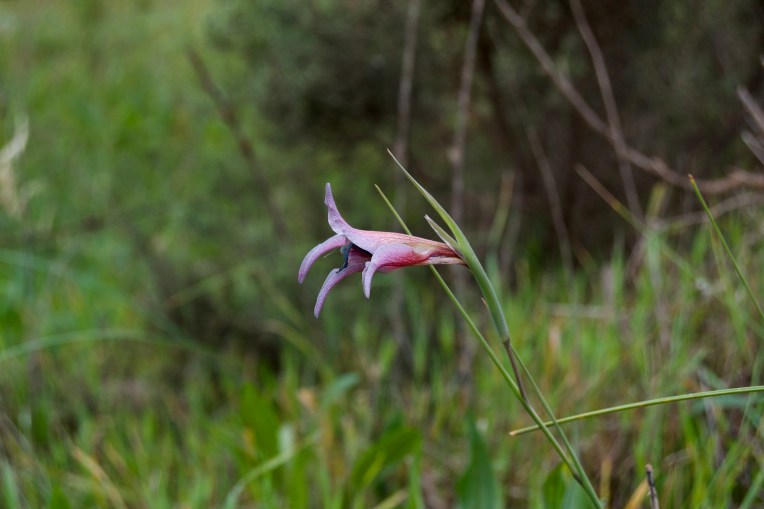
(If you listen carefully at the 15 seconds mark, you can hear one of the Clapper Lark species, Mirafra apiata marjoriae, flap its wings and whistle in the distance.)
We then crossed the road, and there in the field, were more lilies scattered amongst the bushes! These I did not photograph; they were at some distance, and I did not have the right lens (it never occurred to me to use the iPhone). My mother told me how, when she was a child, on the first school day of spring, they had to bring a wildflower to class. She would come to that very field to pick a lily, three kilometres from her home!
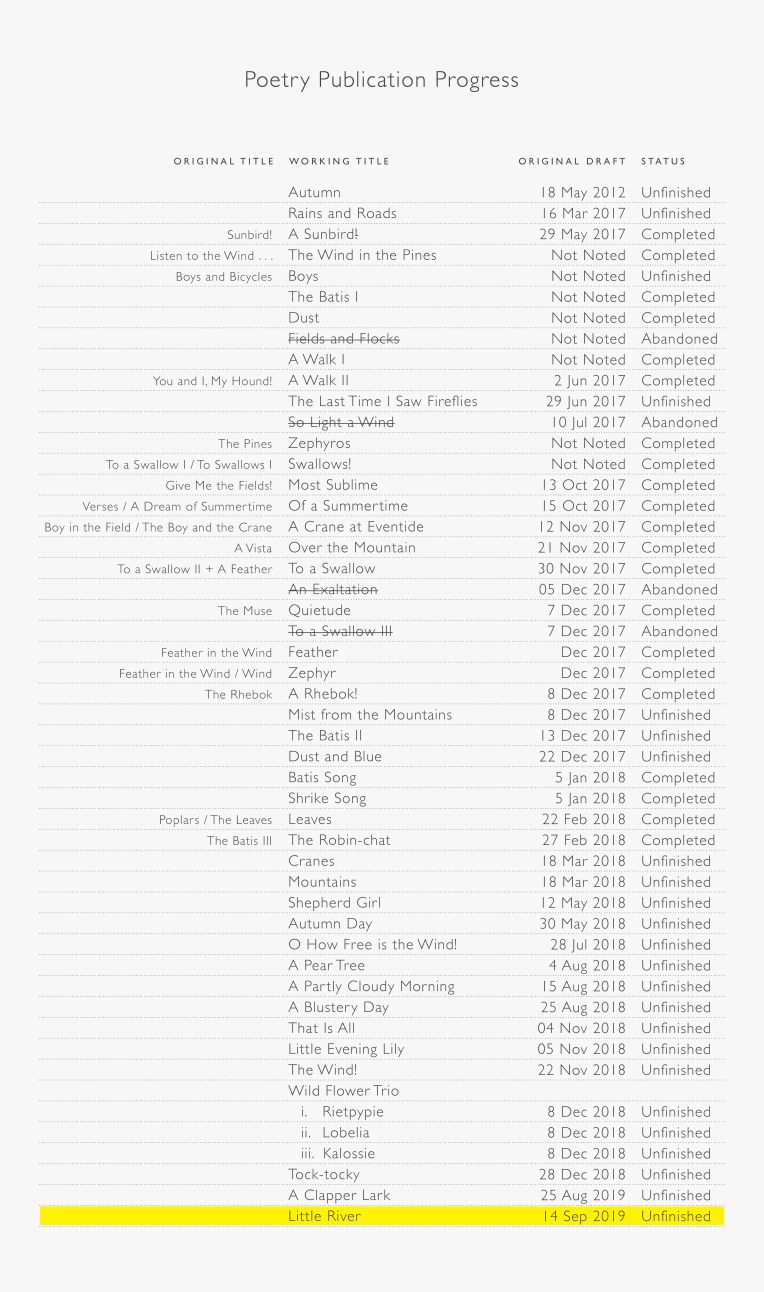
A Little Verse for a Little River
One last surprise has come from yesterday’s excursion: a new poetic sketch! Whilst writing “Wander and Wonder”, I happened upon the line “the Kleinrivier at Klipdrift”.1 Amused by its alliteration, I could not resist composing a little verse about the Kleinrivier river and the bridge that crosses it at Klipdrift. There, I often stop to admire the swift swallows of summer and the slow waters of winter. Reflecting upon these moments in verse I find altogether fitting.
- Kleinrivier (pronounced “cleyn-Ruh-feeR” with a trilled “R”) is Afrikaans for “little river”, and Klipdrift (pronounced “clipdRift” with a trilled “R”) combines klip (“stone”) and drift (“ford”), the Afrikaans equivalent of “Stanford”.