Tseeoo, Tseeuuuu!

This morning, I filmed Cape Clapper Larks (of the sub-species Mirafra apiata marjoriae) in display flight. They were at a distance, so one must look closely at the footage, but this was my first (spontaneous) attempt at recording their performance. Unlike Mirafra apiata apiata (the subspecies I first identified), M. a. marjoriae has two descending whistles: “Tseeoo, tseeuuuu!”

Incidentally, the loud “Kraaaank, kraaaank!” calls you hear throughout the video are those of the glorious—nay, divine—Paradise Crane1 (also known as the Blue Crane, Anthropoides paradiseus, the subject of another poem, “A Crane at Eventide”); the cackling at the 01:36 mark (and elsewhere) is the ubiquitous (and pesky) Helmeted Guineafowl (Numida meleagris).

  1. See the “I watched a crane leaping in the wind” heading in “This January” for a brief account of a memorable sighting earlier this year.
An Antelope and a Lily

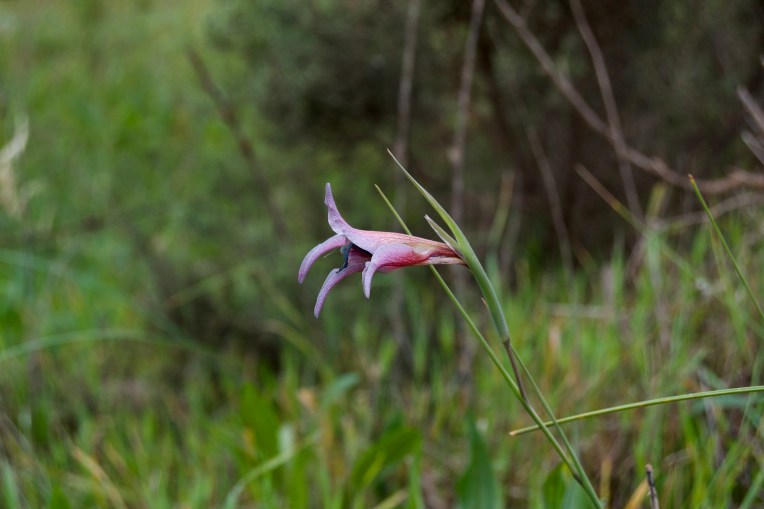
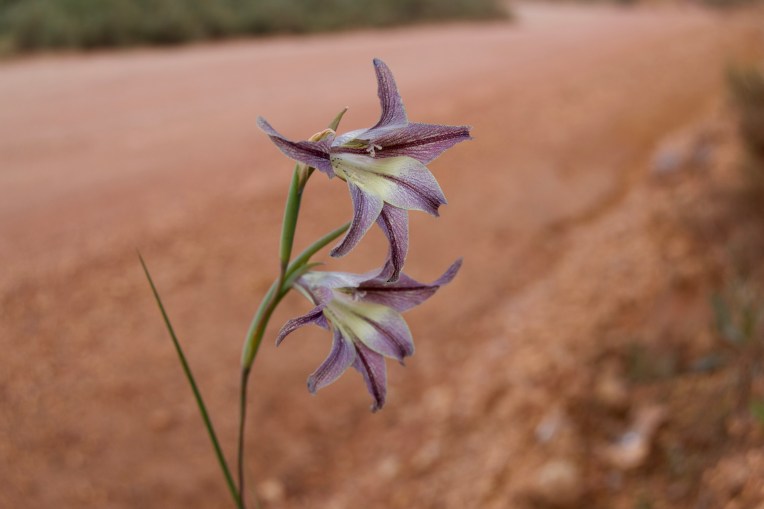
Aandpypie (Gladiolus liliaceus), 19 October 2018. Copyright 2018 Forgotten Fields. All rights reserved.
Gladiolus lileaceus (Taken 19 October 2018)

A delightful fact I neglect to mention is that my beloved Gladiolus liliaceus, commonly known as the Large Brown Afrikaner and Aandpypie1 (“little evening pipe”2), has yet another common Afrikaans name: the Ribbokblom3, that is, the “rhebok flower”!

Whence the name, I can only speculate—perhaps because the rhebok itself is as rare, or that both are found on hillsides and are brownish-grey? Nonetheless, what are the odds that two of my favourite things—an antelope and a lily—should be thus connected!

  1. [aahnd-paypee]
  2. After the flower that opens at night.
  3. [Ribbok-blom] with a trilled “R” and a short [awh] version of the “o” in “or”.

Lilies in the Morning

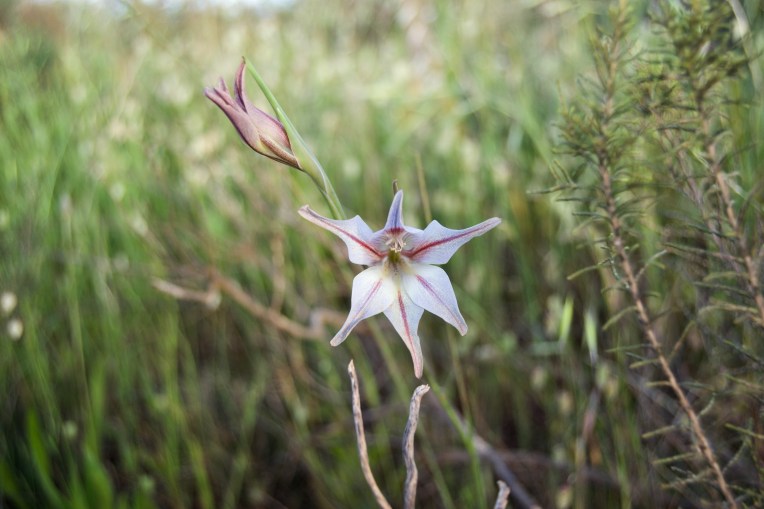
Gladiolus liliaceus, 15 September 2019. Copyright 2019 Forgotten Fields. All rights reserved.
Gladiolus liliaceus

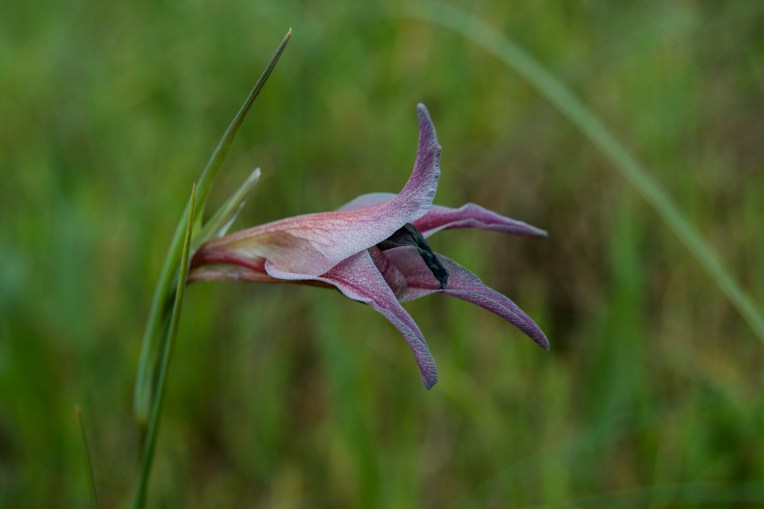
I encountered one of the first Large Brown Afrikaner lilies (Gladiolus liliaceus) of spring this morning. It stood on the same wayside where I saw another (of the cream-coloured variety), last October. Once home, I invited my mother to return to the flower to admire it. Upon her suggestion, we strolled further up the dirt road and what should we see but another of the same flower, precariously blooming on the verge!

Gladiolus liliaceus, 15 September 2019. Copyright 2019 Forgotten Fields. All rights reserved.
The first lily I saw.
Gladiolus liliaceus, 15 September 2019. Copyright 2019 Forgotten Fields. All rights reserved.
The second lily on the very edge of the road bank, still mauve and open on the overcast morning, likely to turn brown (or cream) and close when the sun appears.
(If you listen carefully at the 15 seconds mark, you can hear one of the Clapper Lark species, Mirafra apiata marjoriae, flap its wings and whistle in the distance.)

We then crossed the road, and there in the field, were more lilies scattered amongst the bushes! These I did not photograph; they were at some distance, and I did not have the right lens (it never occurred to me to use the iPhone). My mother told me how, when she was a child, on the first school day of spring, they had to bring a wildflower to class. She would come to that very field to pick a lily, three kilometres from her home!