I revised and revisited poems
Every poem I complete leaves me at once exhausted and invigorated. The former for the mental and emotional exertion of wrestling with poetic lines and the latter for the joy and newfound enthusiasm success in these endeavours, however modest, brings. “A Dream of Summertime”, three verses recalling pastoral details from my childhood, is now complete. Its final title, “Of a Summertime”, is the last line of the poem.
I began revising “Give Me the Fields!” on 13 October, fortuitously exactly one year after composing it as a spontaneous tweet1 in 2017. I enjoyed the verse so much that I added a second, third and fourth! It is now in that dabbling phase where I explore different ways of expressing the ideas behind the poem in rhyming verse. This eventually produces a range of poetic possibilities which I refine into a final composition.
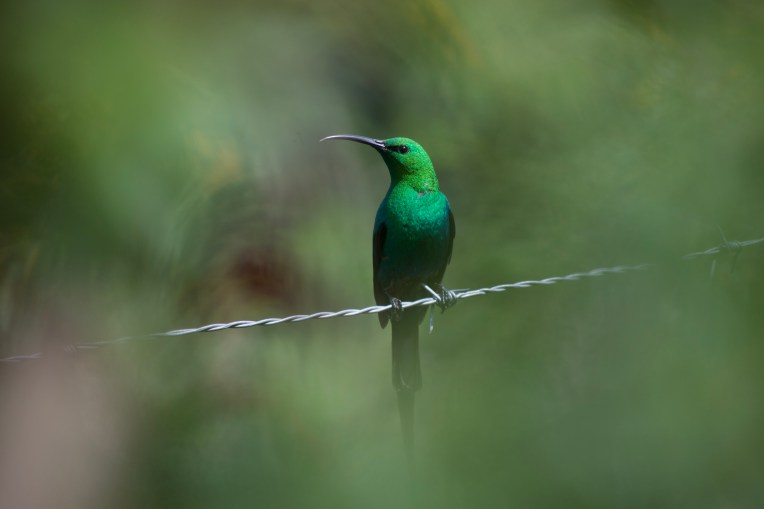
“A Sunbird” is an earlier poem I had completed but since edited in parts, altering its structure somewhat and rendering it unfinished once more. I returned to it unexpectedly in October to fully implement the adjustments. As a result, the poem is more vivid, flowing and succinct. This is why I think it worthwhile to live with one’s work for a protracted period, returning to it anew with a better understanding of its essence.
I bought an atlas
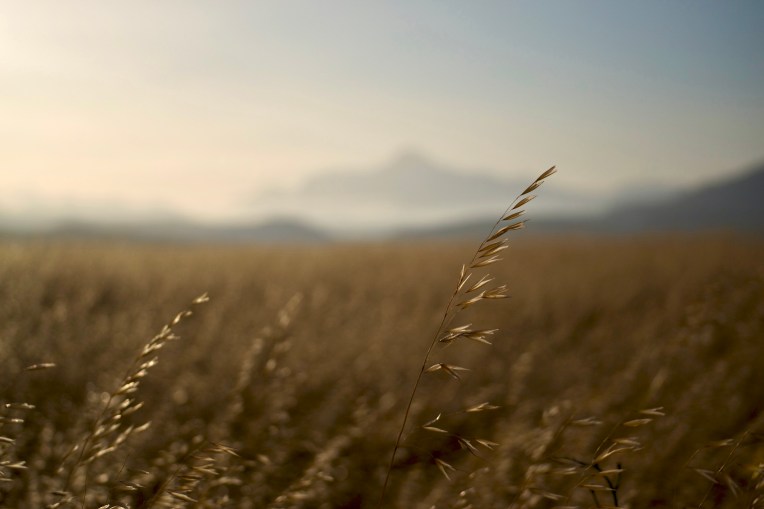
In my last post2, I wrote about the two years I spent in the valley between the Babilonstoringberge3 (Tower of Babel Mountains) and Kleinriviersberge (Small River Mountains)4. There I attended a small farm school where I was taught by my mother, a school teacher. Naturally, she cultivated in me a love for her favourite subjects, Afrikaans and Geography. My love of poetry comes from the former and of maps from the latter.
I remember drawing copies of my atlas, poring over the markings and lines, and inventing maps of my own! A few weeks ago, I purchased a Reader’s Digest Atlas of Southern Africa published in 1984, the very year I entered my mother’s class. It shows South Africa as it was when I was a boy with the provinces and names as they were then. The purchase was a nod to my eight and nine-year-old self, who is, of course, thrilled!

I admired a lily
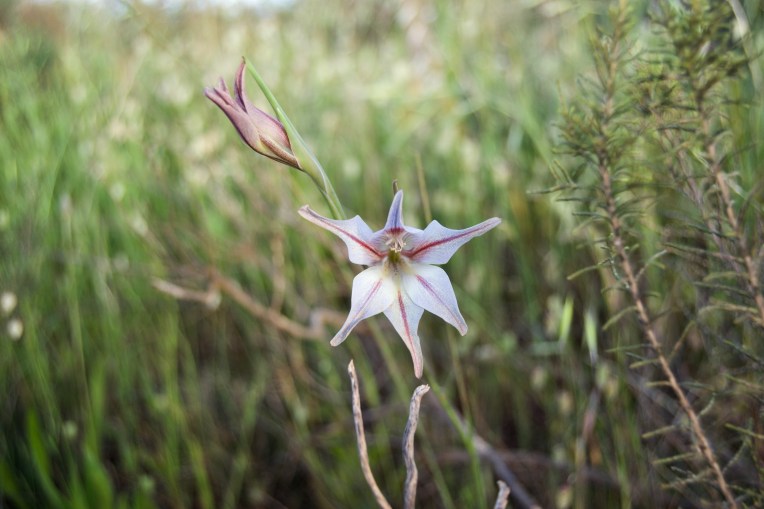
We are in the midst of the South African spring and the countryside is in bloom, from the common Limonium perezii with its purply papery blossoms to the rare and unusual Gladiolus liliaceus. It was the latter I hoped to find a week ago and was delighted to discover by the wayside! Gladiolus liliaceus is a protected indigenous plant, know to us as the Aandpypie (Afrikaans for “little evening pipe”, pronounced “aah-nd-pay-pee”).
It opens at sunset and perfumes the air with an intoxicating (and unmistakeable) scent, an event that causes the lily to change its earthy daytime hues (when it is closed) to purple at night. The purpose of this transformation is to attract nocturnal insects but also, I fancy, to delight its human admirers. The lily is another connection to the time I spent in the Babilonstoringberge valley where I was introduced to it by my mother.
It is one of her favourite wildflowers. Watching sheep as a child, the Aandpypie, then still abundant, was her companion in the pastures, growing in the mountains and marshes in flocks of their own. It was there she learned to revere Nature, a virtue she passed to me. As I knelt to admire my wayside discovery, I felt it was a transgression even to behold it… Compelled to capture its beauty, I took my photographs reluctantly.
I wept before a poem
My mother was recently a surprise guest during a television interview with my youngest sister about her ventures in the South African wine industry5. Thinking she might be asked about this region, my mother resolved to include in her answer two lines from “In die Hoëveld”6, a poem by the Afrikaans poet Toon van der Heever7 (1894–1956): “[W]aar dit oop is en die hemel wyd daarbo, / Waar kuddes waaigras huppel oor die veld…”
The Afrikaans translates roughly thus: “Where it is open and heaven wide above, / Where herds of grass skip across the field…” Only once before have I encountered a description so vivid of a sight so sublime—one that lies at the heart of my poetry and music—that of Eugène Marais (1871–1936) in “Winternag”8 where he likens the windblown waving grass to beckoning hands. I loved Toon van der Heever’s poem instantly.
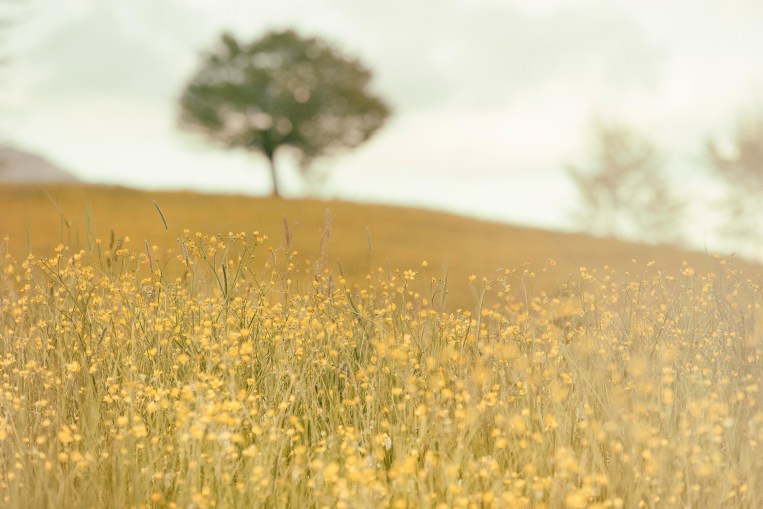
I had not encountered it before my mother told me of it some days after her interview. I read the whole poem the next day. In the verses, Toon van der Heever longs for his beloved fields… There he played as a child, there his little house awaits him, there the wind makes waves of the grass… Ah! It was as if every string inside me was suddenly plucked! I was that boy! I am that man! I wept as I read because I understood every word9.
October Interests and Inspirations
I thought I would include here some of the things that interested and inspired me during the month:
- The House of Small Cubes (2008), an outstanding short animated film by Kunio Kato exploring the unstoppable advance of time;
- Calluna (2015) by Andrew Chalk and Tom James Scott, a delicate and meandering album with fleeting melodic fragments;
- The term of venery “a loveliness of ladybirds”, which delighted me no end;
- Carles Viarnes’ handwritten notation for his contemporary classical piano album Schematismus (2016) which I purchased; and
- An insightful review by Doug Thomas of Origins by Affan, the inaugural release of Lonely Swallow, my micro label.
Footnotes
- I posted it first to Twitter here and the day after to other social media platforms.
- “This September”
- Babilonstoringberge is pronounced “bah-bee-lons-twuh-Ruh-ng-beR-guh” (the “o” in “or”, the “e” in “wet” and trilled “R”s).
- Kleinriviersberge is pronounced “clayn-Ruh-fee-Rs-beR-guh” (the “e” in “wet” and trilled “R”s).
- Under the aegis of a local wine farm, she owns a wine brand named after the hamlet in which we grew up and where I live now.
- Afrikaans, pronounced “ihn di hoo-uh-feld” (the “ih” in “sit”, the second “i” as in “did” and the “e” in “meld”), meaning “in the highveld”.
- Pronounced “toowin fun dihR yih-fihR” (a trilled “R”, the “y” in “year” and the “ih” in “sit”).
- Marais is pronounced “mah-R-ai” (a trilled “R” and the “ai” in “air”). “Winternag” is Afrikaans for “winter night”, pronounced “vihn-teR-nah-ch” (the “ih” in “sit”, a trilled “R” and the “ch” in “loch”).
- I wrote briefly of my own longing for the fields in “My Pastoral Romance”, which goes some way to explain why Toon van der Heever’s lines affected me so!
 Forgotten Fields