Niggly Positions

“Niggly Positions” Title Card, 26 September 2019. Copyright 2019 Forgotten Fields. All rights reserved.

I recently wrote that a line should, in every sense, reflect its content. This rule (which may, of course, be exquisitely broken by the capable) has a profound impact on the words within the line, the line within the stanza and the stanza within the poem.

A line is a collection of words and a stanza, a collection of lines—all in a particular order—from which the mind assembles meaning and constructs concepts, making their very position within a poem—and especially a traditional one—highly significant.

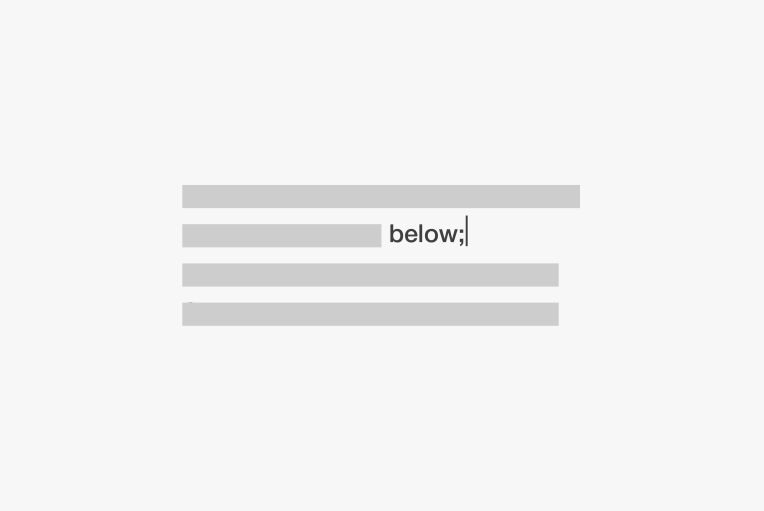
For example, in a “Mist from the Mountains” stanza variation, “below” appears in the second line of the quatrain and, therefore, above its halfway mark, undermining its meaning and compromising its import (the quatrain itself is the third of four stanzas).

Were it not for this issue, the variation would have succeeded; but in this form, it fails. To be saved, its lines must be rearranged so that “below” appears either in line three or four. This I did, considerably improving the stanza and thus the poem.
On Titles

“On Titles” Title Card, 20 September 2019. Copyright 2019 Forgotten Fields. All rights reserved.

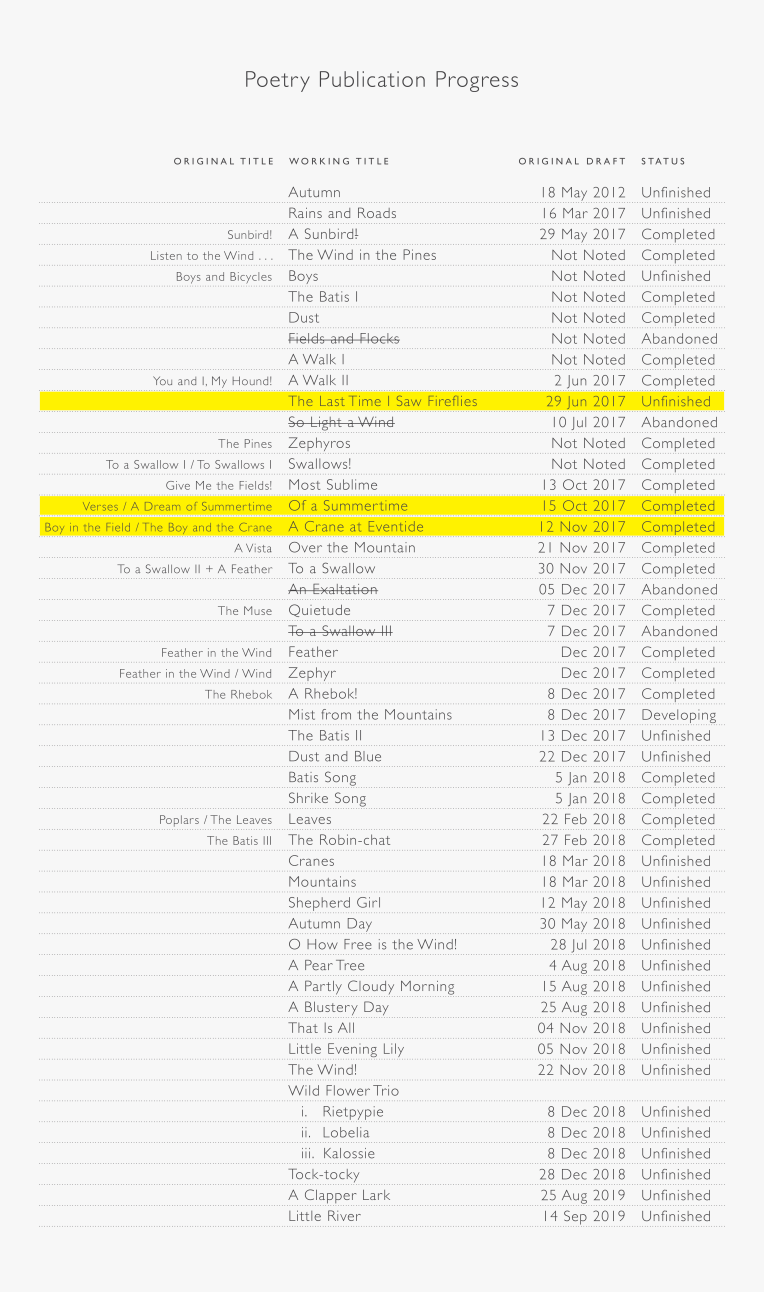
To indulge my need for minimalism (something one would never guess from these verbose posts), simplicity and consistency, I thought to limit all the poem titles within the collection to no more than two words; but glancing through the list, it soon became clear that it was a fool’s errand—for whilst one or two-word titles suit some poems, their brevity adds nothing to others; I had to abandon the idea.

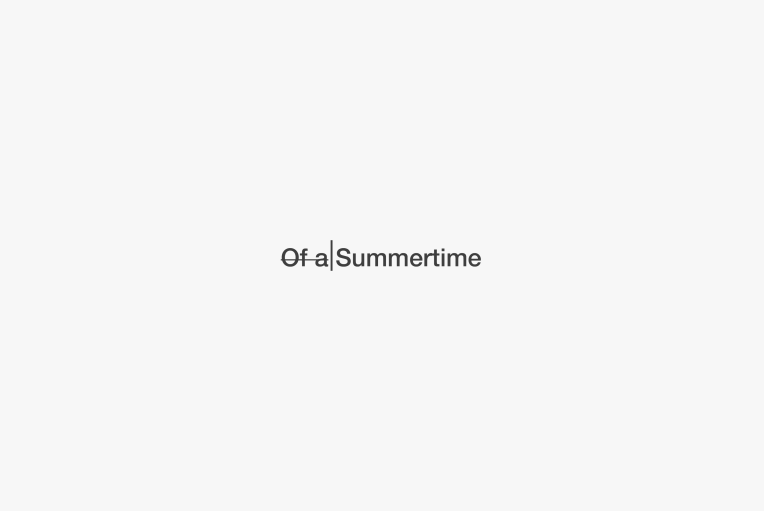
I was forced to admit the obvious: that there are instances where a longer title brings to a poem a necessary colour or meaning. The best example is “Of a Summertime” for nostalgic glimpses from childhood that “Summertime” fails to evoke. (Some instances are thematically more uncertain: is “A Crane at Eventide” more evocative than “A Crane”, or “The Last Time I Saw Fireflies” more wistful than “Fireflies”?)

Ultimately, beyond its pragmatic function, a title must encapsulate and, where necessary, complete a poem—or not exist at all (which, in my view, is preferable to the spineless, spiritless and evasive “Untitled”—a “title” I only accept in exceptional cases—but I digress). Happily, these are decisions I can make poem by poem; and my guiding principle remains: that the barest minimum is preferable.

Poetry Publication Progress (2019-09-24)

A Pause

I wrote yet another new poetic sketch yesterday—the sunlight through the clouds on the wheatfields was magical—and had to pause.

It occurred to me that I had been treating the collection like an infinite publication, and of course, it cannot be so—a limit must be set.

I have therefore put this new sketch into a “for a future collection” category, and shall do the same with all new poetic sketches.