Poetry Takes Time

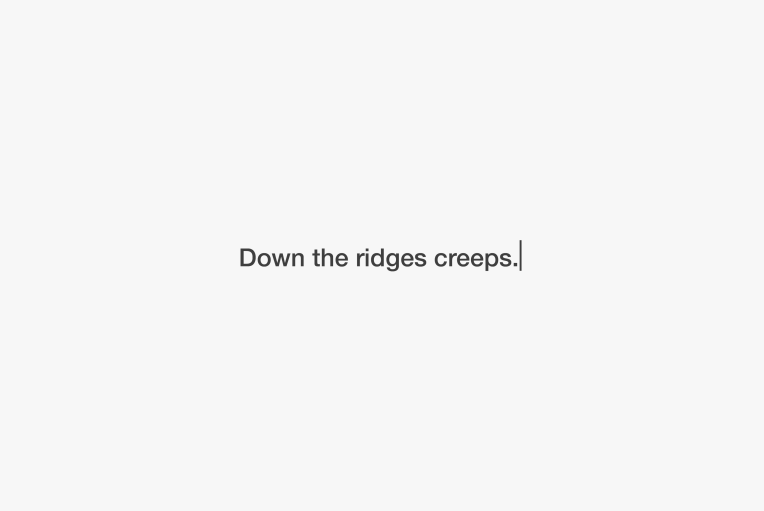
A line from the “Mist from the Mountains” variations, 20 September 2019. Copyright 2019 Forgotten Fields. All rights reserved.

In traditional poetry, a line should—in every sense—reflect its content. I am reminded of this daily as I compose—writing, revising, rejecting and refining ideas, words, lines and stanzas.

In “Mist from the Mountains” (the poem I am currently developing), consider this line:

“Down the ridges creeps.”

Its purpose is to describe the gentle passage of the mist down a rock face; but when read, the natural stresses of the words (down the ridges creeps), the plosives ([duh] in “down”, [djuh] in “ridges”, [kuh] and [puh] in “creeps”) and cadence of the phrase (DUM, da DA-DUM, DUM) are at odds with the subject—more suggestive of a bouncing ball than a drifting vapour—and therefore not ideal—its words should be weightless, its accents airy.

Then there is the position of the line within the stanza and the poem, and its rhyming scheme: since it concludes the second of three stanzas, does its terminating “creeps” create a perfect or imperfect rhyme with what precedes it? A perfect rhyme neatly concludes a stanza, making it “stable”; but an imperfect rhyme leaves one hankering (for a perfect rhyme), making it “unstable”—one wavers on a lingual precipice, ready for the next stanza.

Depending on the theme and style of the poem, any one consideration may override another—a blemish here may be necessary for a sublimity there. The poet must weigh every factor (too many to mention here—some literary, some intuitive) when deciding the fate of a word, line or even punctuation. This involves a repetitive process of exploration and reflection for which he requires time, perseveringly to search Language for Beauty.
A Little Verse for a Little River

One last surprise has come from yesterday’s excursion: a new poetic sketch! Whilst writing “Wander and Wonder”, I happened upon the line “the Kleinrivier at Klipdrift”.1 Amused by its alliteration, I could not resist composing a little verse about the Kleinrivier river and the bridge that crosses it at Klipdrift. There, I often stop to admire the swift swallows of summer and the slow waters of winter. Reflecting upon these moments in verse I find altogether fitting.

  1. Kleinrivier (pronounced “cleyn-Ruh-feeR” with a trilled “R”) is Afrikaans for “little river”, and Klipdrift (pronounced “clipdRift” with a trilled “R”) combines klip (“stone”) and drift (“ford”), the Afrikaans equivalent of “Stanford”.

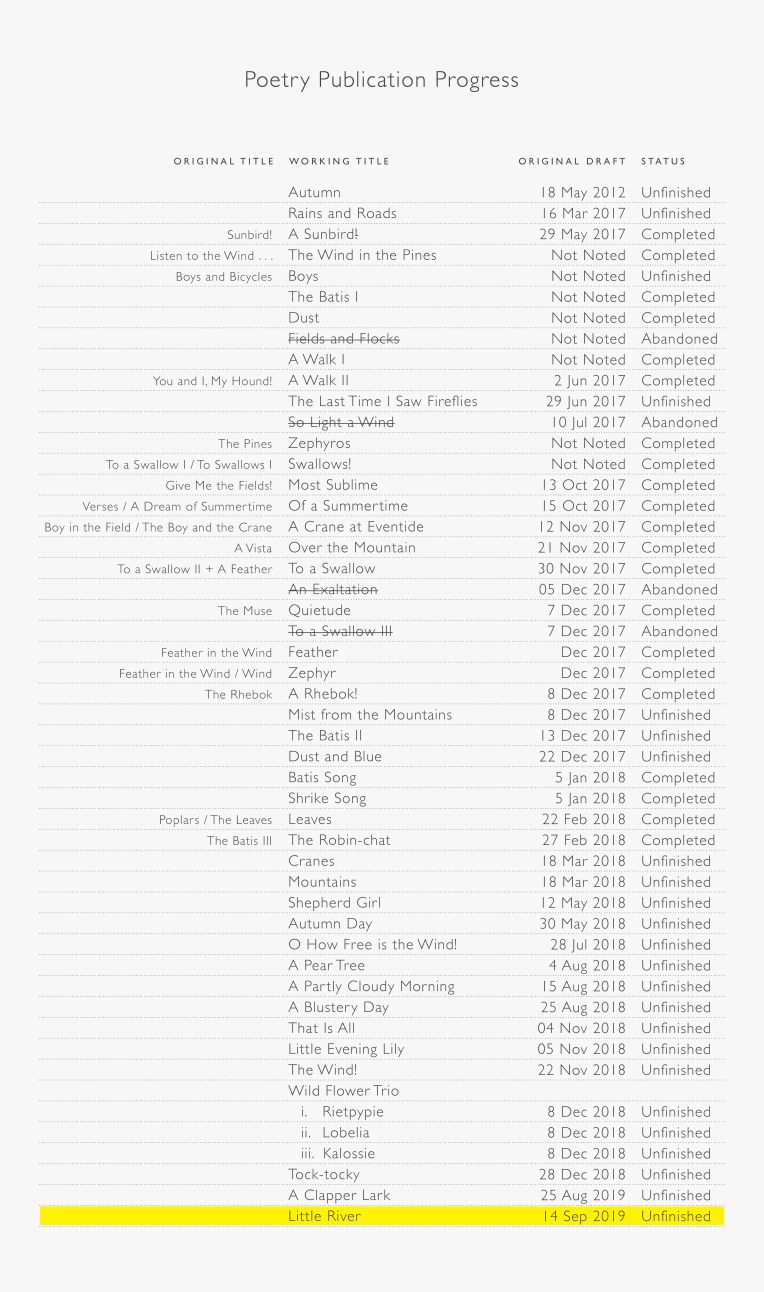
Poetry Publication Progress (2019-09-14)

Poet. Pedant.

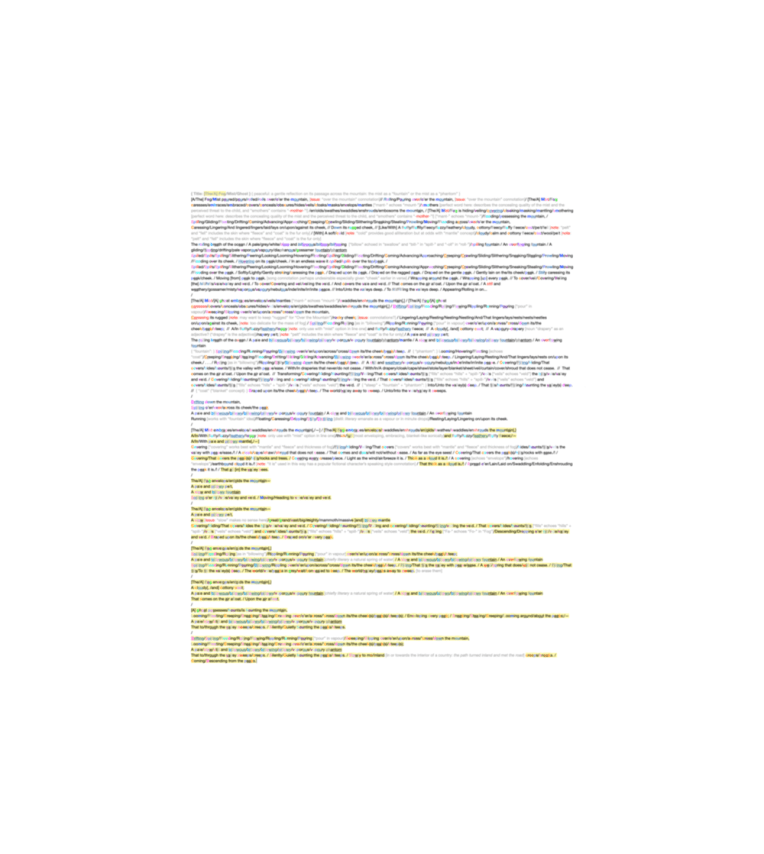
“Mist from the Mountains” first direction in progress, 12 September 2019. Copyright 2017 Forgotten Fields. All rights reserved.
“Mist from the Mountains”, the first direction in progress.

The page above shows the current state of the first direction1 for “Mist from the Mountains”.2 In the top half, you see rows of words and lines that attempt to generate ideas for the theme (for example, how to describe the fog), resulting in a shapeless nebula of possibilities. From these, I extracted the rough stanza variations you see in the bottom half where the familiar shape of a poem slowly emerges. This direction will have one quatrain which I shall eventually come to after many more pages like this one.

As always, highlighted black text are those lines I am actively developing and grey text are notes (for example, a reminder as to why I chose this word over that one, or what shortcomings there may be in this line or that one); a forward slash separates variations of the same stanza and coloured letters help me keep track of words (namely their sounds3, literary alliteration, visual alliteration4, and frequency of use5). All this is of little interest I am sure but such is my numbingly meticulous nature!

  1. As noted here on 5 September 2019.
  2. There is, of course, a preceding page with the initial draft that spawned the three directions, as well as two subsequent pages with variations I have already written for directions two and three.
  3. “And everywhere that Mary went…”
  4. Words similar in shape and letters (I made this one up, I fear): The peasant plucked a pheasant.
  5. For example, I make a significant word red the moment it appears more than once lest unwittingly I repeat it too often—it is easy to lose track of the obvious even in so short a poem when one is rapt in the writing process.