The Oddness of the New

There are times when one must live a while with a new approach to a stanza—to become accustomed to it—especially after devoting weeks to the existing incarnation of that stanza.

As one recites the new version with the rest of the stanzas and continue to develop its variations, it begins to feel part of the poem—not quite so peculiar.

I am working through such a process now following recent developments in the final stanza of “Mist” before committing to any significant decision regarding its incorporation into the poem.

A Poem Evolves, Yet Again

Yesterday, whilst preparing the near-final draft of the “Mist” poem (previously “Mist from the Mountains”)—that is, extracting from the latest stanza variations the ones I intend to refine for the final draft—there came to me suddenly a new perspective on that ever-challenging closing stanza.

Hitherto, it had been intentionally styled as an anecdote—an afterthought, if you will, to reflect its origin—but a quick (and surprisingly successful) experiment produced a new set of variations that explicitly echo the structure of the rest of the poem, firmly establishing its thematic import.

I must now decide which conceptual approach to embrace as I come to the final draft: one embodying the origin of the stanza—thematically apt but structurally distinct from the rest of the poem—or one approximating the same but structurally alike and integrated—this is my task today.

It is painful to forego an existing set of variations for another altogether new (with its concomitant implications to be determined and applied to the rest of the poem)—but it may be inevitable. Why then write these paragraphs instead of beginning the work? To brace myself should it happen!
A Poem Evolves, Continued

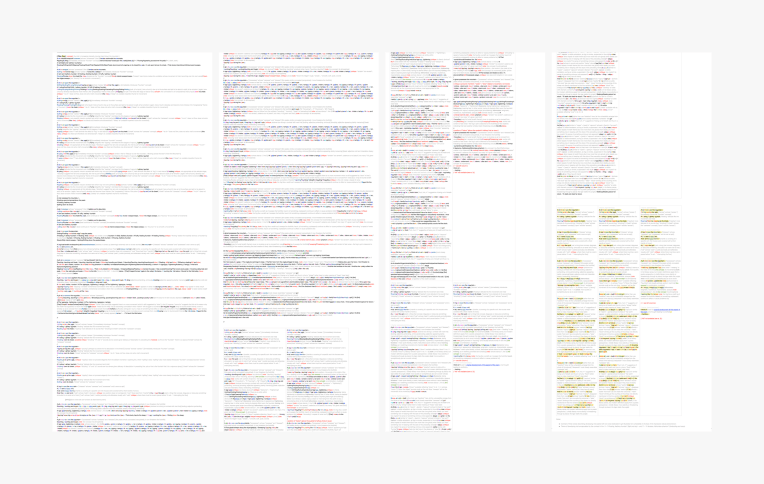
“Mist from the Mountains” first direction in progress, 30 September 2019. Copyright 2017 Forgotten Fields. All rights reserved.

This is the entirety of the “multi-stanza” sub-direction of the first direction for the “Mist from the Mountains” poem, thus far. (Not shown are the additional writings for the first direction’s “variations” sub-direction, the second “one-stanza” direction and the third “two-stanza” direction—all yet to be fully explored.)

This is how my poems usually develop—an explosion of lines that coalesce into verses that I write and rewrite, experimenting with different ways of expressing the theme. The result is the nebulous mass of words, lines, stanzas and notes you see above.1

The three columns on page four each contain a version of the “multi-stanza” draft as it exists currently. They are essentially the same—extracted from pages one to three—but with sufficient differences in rhyming sets that they must now be considered separately. From these will emerge the final “multi-stanza” poem.

  1. “Poet. Pedant.” explains how I end up with so colourful a body of text.