Finding an idea
Walt Disney once said:
We don’t make movies to make money, we make money to make more movies.
It was natural, for me, to substitute “movies” with “music”. I am a graphic designer by profession. I like to think of it as making shapes by day and sounds by night. In many ways, graphic design is like music, but instead of manipulating sound to communicate a message, you manipulate visuals to do so. I find both disciplines satisfying because they allow me to make things that add beauty to the lives of others. To create beauty, one must often begin with the not so beautiful. I was never one for getting dirty, but creativity is very messy, at least, in its early stages. There are scribbled notes and cutouts, rough sketches and experiments, a host of silly solutions and obvious ideas easily exposed for their unoriginality. But, as the process develops, workable solutions emerge, a good idea crystalises, and order slowly imposes itself on the chaos.
Like most creative folk, I tend to think my first idea is my best idea. (This is especially true if you’ve been around for a while). I have to learn, again and again, that this is rarely the case. Almost every first idea can be improved upon. In art school, I learned to love this process of development and improvement, of looking at an idea from different perspectives and getting feedback from others. (For the best feedback, Paul Arden (I think) brilliantly suggests that we don’t ask people if they like our idea, but that we ask them what they would change about our idea—I can report that this works, every time.) Sometimes, an idea must be totally abandoned in favour of a better one, or it must be abandoned temporarily and returned to later with fresh eyes and ears. This is how one goes beyond the obvious and arrives at something new and even unique. But, ideas are only part of creating beauty. Finding the right medium in which to develop those ideas can be a challenge.
Finding a medium
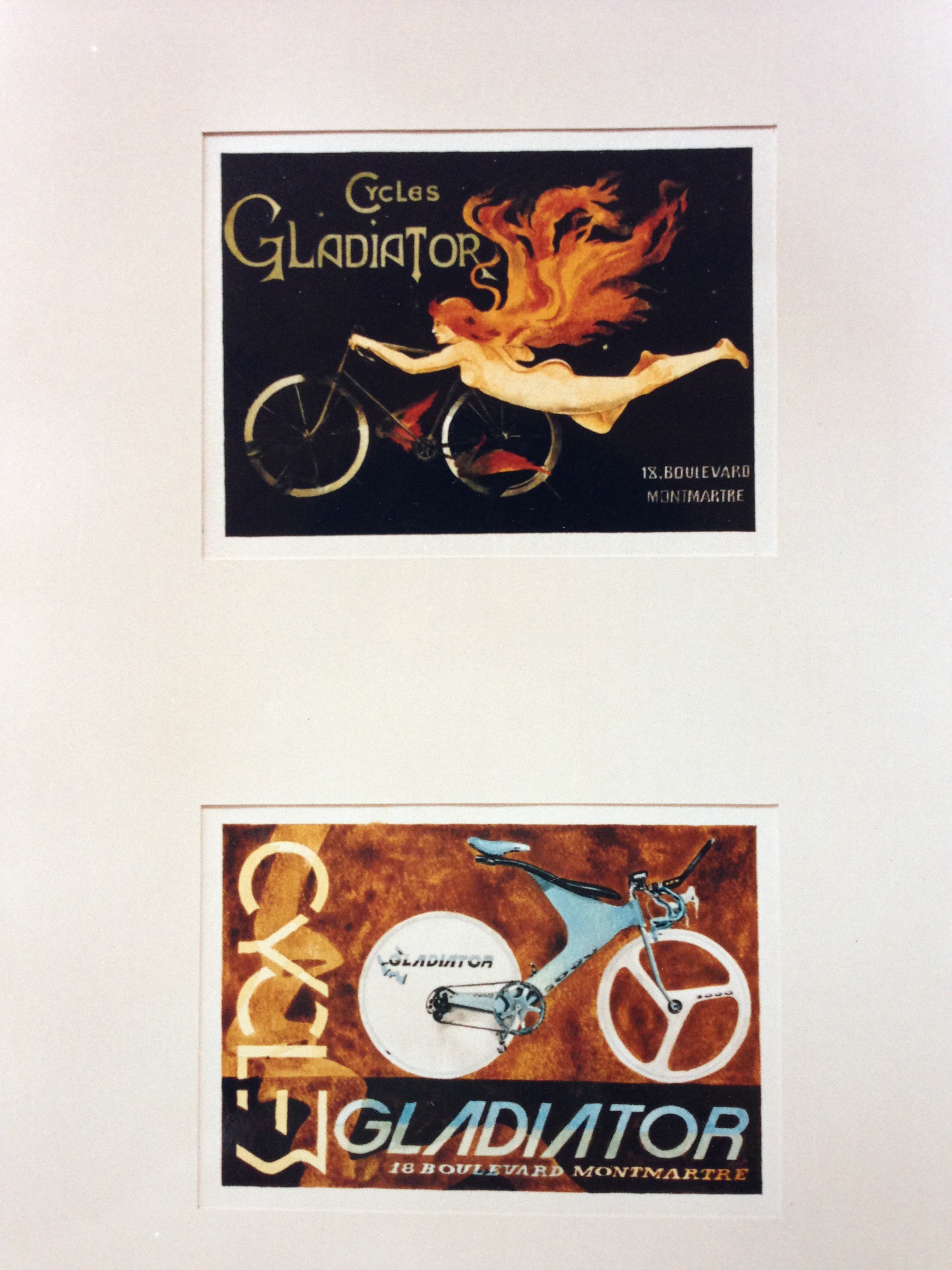
When I began specialising in graphic design at art school, I needed a medium with which to hash out ideas. Something that was inspiring to work with, but still suited to the precision necessary for the discipline. During my first year, I had developed a way of working with watercolours that met these requirements, perfectly. Watercolours became my trademark medium for preliminary designs and I think my work was better as a result of having found the right medium to explore in. A lot of my early final pieces of design were not rendered on the computer and printed. Instead, I painstakingly produced them in watercolours. Working with watercolours gave me an opportunity to master something that seemed to defy mastery. It gave me a sense of power and control, something I have always felt I lacked inwardly. A similar quest for a suitable medium of exploration took place for me in music. (Of course, the struggle to master that medium is ongoing.)
My early training in music was classical. I composed precise little pieces for the piano, but they were so structured I couldn’t stand them. I loosened up a little when I learned to play the guitar. I wrote lots of folk songs, but they were forced and embarrassingly pretentious. For a long time after that, I experimented with different genres, looking for a music style that felt natural and honest. Stories High was my most recent attempt in this quest. But, I found working with lyrics to be restrictive. I wanted to be liberated from them—besides, I felt ambivalent about singing. What I needed was the musical equivalent of watercolours. When I couldn’t find it, I stopped making music, for a while.
Finding a Muse
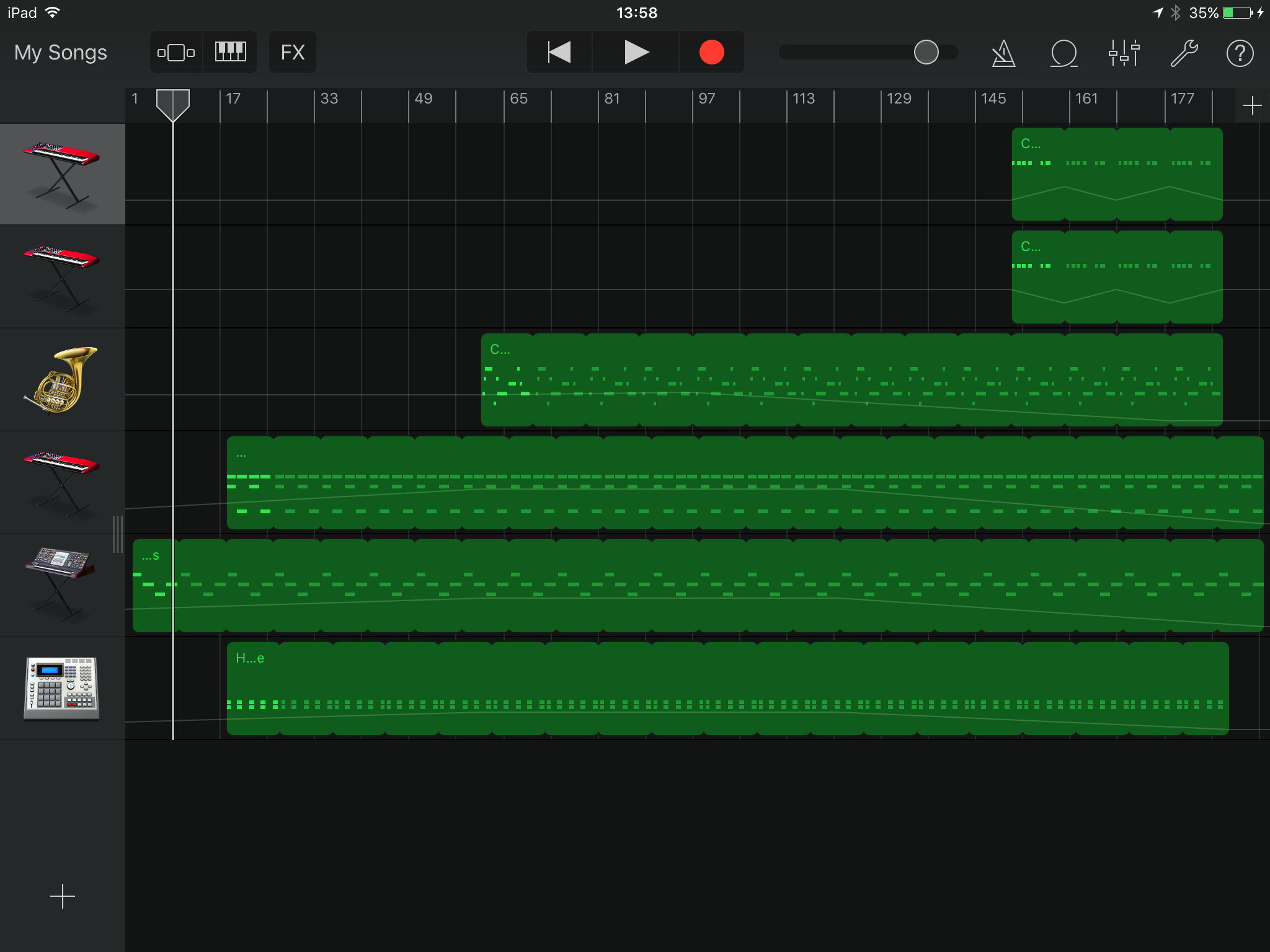
Then, a few months ago, I heard Sketches From New Brighton by Loscil. The album described Scott Morgan’s fascination with an oceanside park in Vancouver. I was captivated by both the concept and the execution of this idea. Scott Morgan was doing what I had subconsciously wanted to do, all this time. It’s baffling, but even though I’d listened to ambient electronic music for years, I’d never seriously considered composing in that genre. Somehow, having so clear an example in Scott Morgan was just the catalyst I needed. Here was a musician telling a story in abstract soundscapes. He did this by building layers of musical loops, creating a kind of sonic chaos. From this, he extracted musical phrases. At least, this was how I interpreted his work. To me, it was a revelation. I had found my watercolours of sound! Suddenly, I had a medium from which to draw my own melodies and meaning. It was only a matter of time before Forgotten Fields was born. There’s another quote involving Disney:
Disney movies touch the heart, but Studio Ghibli films touch the soul.
— Unknown
Scott Morgan’s Sketches From New Brighton had the Studio Ghibli effect on me. One day, I’ll write him a letter of thanks. Even if no one ever reads this blog or listens to a single track, I have him to thank for giving me a new medium and a new love for musicmaking. And here I am, putting together my first album, composing my first story in music. There is an incredible amount about making instrumental music I am in the process of learning, but what better way to do so than by making instrumental music? I feel a tremendous sense of relief finally being able to make the music I want to listen to.
Finding a message
As for the subject and theme, the very childhood demons I have been wrestling with in recent times have provided them. I never understood what people meant when they said that a curse can become a blessing (or something to that effect), but I think I know what they mean. All my life, I have struggled with abandonment issues. It would not be an exaggeration on my part to call it a curse. But in music, I can work through these issues, expressing the grief, loss and loneliness, but also the beauty, wonder and adventure of childhood as experienced by adult children of dysfunctional families. Perhaps in my music I can give myself and others a place of refuge and release. That would be my curse turned into a blessing. It is an exciting time for me. I am eager to see what happens next.
FORGOTTEN FIELDS

 Forgotten Fields