One More Poem

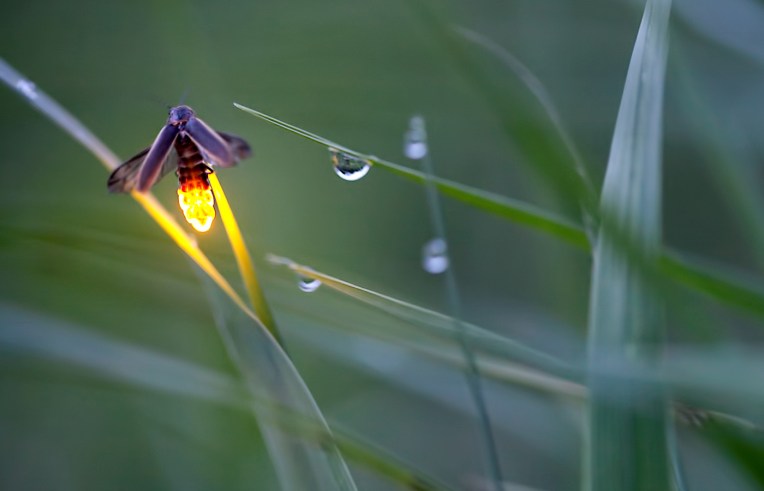
‘Amber Firefly’ by Radim Schreiber. Copyright Radim Schreiber. All rights reserved. Used with permission.
Whilst composing ‘The Last Time I Saw Fireflies’, I constantly referred not only to memory, but also the remarkable firefly photography of Radim Schreiber for inspiration. ‘Amber Firefly’ (above) was my constant reference, evoking the memory of that summer night. (Copyright Radim Schreiber. All rights reserved. Used with permission.)

Revisiting ‘The Kleinrivier at Klipdrift’

The poems ‘Boy’1 and ‘The Last Time I Saw Fireflies’ are complete. This would have marked the conclusion of the composition period, but my interest in the previously abandoned Afrikaans draft of ‘The Kleinrivier at Klipdrift’,2 titled ‘Die Kleinrivier by Klipdrift’,3 was suddenly revived after its stanzas came to me, virtually complete, one morning on the hills of South Limburg (The Netherlands) a few weeks ago.


  1. Developed under the working title ‘Boys’.
  2. Kleinrivier [claynRhfeeR] (trilled [R]) is Afrikaans for ‘little-river’, a river; and Klipdrift [klipdRift] (trilled [R]), Afrikaans for ‘stone-ford’ or ‘Stanford’, a farmland area.
  3. Pronounced [di claynRhfeeR bay klipdRift] with the [i] in ‘did’, a trilled [R] and for ‘klipdrift’, both instances of [i] as the [e] in ‘folded’.

Therefore, I shall compose the Afrikaans version after all, doing so under the working (and likely final) title, ‘Die Kleinrivierliedjie’.3 The Afrikaans expresses the diminutive of ‘The Little River Song’ (thus, ‘the little Little River song’) and is at once a reflection of the lyric nature and structure of the poem and a homage to ‘Die Oukraalliedjie’, an Afrikaans folk song dear to my heart.


  1. Pronounced [di claynRhfeeRlikki] (with the [i] in ‘did’) and a trilled [R].

As a result of the Afrikaans title, I have changed the title of the English version of the poem (‘The Kleinrivier at Klipdrift’) to the corresponding ‘The Little River Song’. I enjoy its double meaning: ‘little’ reflecting both the name of the river and the brevity of the poem or ‘song’. ‘Die Kleinrivierliedjie’ will occupy me for the next few weeks, at the completion of which the editing process of the anthology will finally begin.
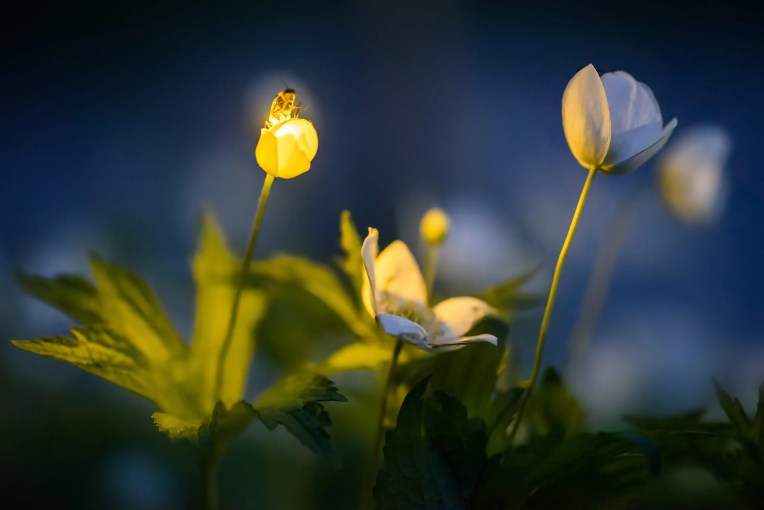
‘A Flash of Hope’ by Radim Schreiber. Copyright Radim Schreiber. All rights reserved. Used with permission.
‘A Flash of Hope’ by Radim Schreiber (Copyright Radim Schreiber. All rights reserved. Used with permission.)

On ‘Boy’ and ‘The Last Time I Saw Fireflies’

A montage of childhood memories, the original draft of ‘Boys’ recalled happy adventures in the countryside with my best friend Bradley: riding bicycles on dirt roads, picking pears from an old pear tree, watching clouds from the wayside; however, when I considered the sense of isolation I felt, even in those happier moments, it seemed more fitting to write from that perspective, and thus ‘Boys’ became ‘Boy’.

The poem has three short trochaic stanzas that move swiftly through the boyhood scenes described above. The lines are perhaps the most clear, concise and uncomplicated I have achieved yet, capturing the simplicity of that time. Somewhat more complex is ‘The Last Time I Saw Fireflies’, a four-stanza recollection of my encounter with those magical creatures as a six or seven-year-old.

It was the first numinous moment of my life—though at the time, I was too young to grasp it. I was camping with my family at the beach, rather appropriately, during a church gathering. I wandered about the site and saw in the darkness of a shrub the light of fireflies. Deeply impressed, I quietly marvelled at the sight. The poem attempts to wrap in words my naive wonder—the experience in nature of the divine.
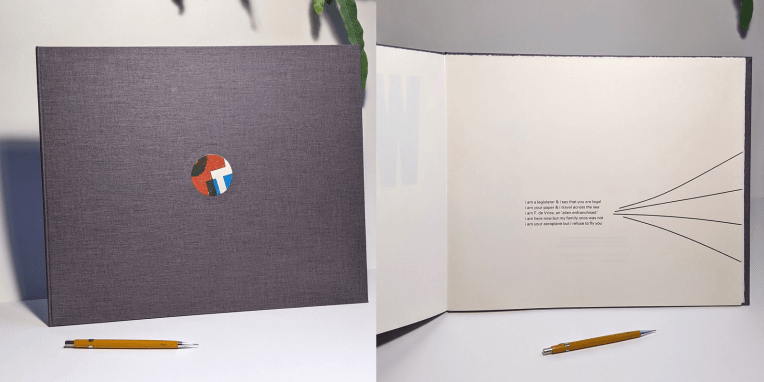
‘Here, Others’ by David Armes (Red Plate Press). Copyright Red Plate Press. All rights reserved. Used with permission.
The format of the final publication will be a limited letterpress edition by David Armes of Red Plate Press who created the sleeves for my self-titled 2017 musical release. Above is an example of his work. (Copyright Red Plate Press. All rights reserved. Used with permission.)

Publishing the Poems

Progress on the poems has been slow, but this year, I intend to assemble a chapbook, that is, a rudimentary booklet to distribute for scrutiny amongst followers of my work. As one writes, one becomes so deeply involved in the process that one misses obvious errors, obscurities and superfluities. A chapbook is the ideal way to identify and address such shortcomings and improve the verse where it is wanting.

It will also give me a sense of how the poems fit together as a collection: whether it is best to include the full set of fifty-two compositions or a selection, whether they are best arranged chronologically (by date composed or completed) or thematically (by subject matter, for example, ‘flowers’ and ‘birds’) and whether it is best to present one poem per page or per double-page spread.

Also to be decided is the title. I have narrowed down my options to Idylls, Odes and Over the Mountain. The first two describe my genre, lyric nature poetry, and the third is the title of a poem in the collection about the Overberg,5 the region that inspired it. Both approaches appeal to me. ‘Over the Mountain’ and Other Idylls (or Odes) is another option, in the style of Toon van den Heever’s Eugene en Ander Gedigte.6


  1. The Overberg (pronounced [oohuhfeR-behRCH] with a trilled [R] and the guttural [CH] in ‘loch’) is Afrikaans for ‘over-mountain’, a reference to its location beyond the Hottentots Holland mountain range, its natural border with the Cape Town region.
  2. ‘Eugene and Other Poems’, the reworked title of the South African Afrikaans poet’s first anthology, originally titled Gedigte. Eugene en Ander Gedigte is pronounced [yoogene en undeR CH’h-diCHtih] with a trilled [R], the guttural [CH] in ‘loch’ and the [i] as the [e] in ‘folded’).

Poetry Publication Progress (2023-06-24)

“A Clapper Lark” Completed

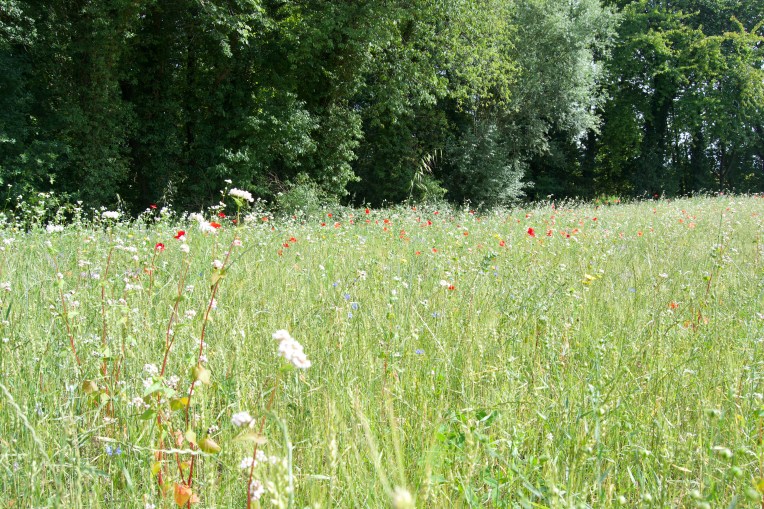
Wild Flowers in South Limburg, The Netherlands,12 July 2022. Copyright 2022 Forgotten Fields. All rights reserved.
I happened upon this field of wild flowers last year at the height of summer in the south of The Netherlands. To capture its magnificence in a photograph proved impossible, wherefore I naturally resorted to poetry—a composition for a future anthology! Taken 12 July 2022.

On the Hiatus

The past year and nine months have been disruptive but wonderful. I moved from my beloved South African pastures to the hills of South Limburg (The Netherlands) and, as a result, have had little time to write. The reason for the move was love, which against all odds, I found at last in the form of a gentle Dutchman.

Adjusting to love and life in a new country—greatly aided by the similarity between the Dutch and Afrikaans languages (the latter being derived from the former)—this period was marked by distraction of the best kind, exploring parts of The Netherlands, Germany and Belgium with simple but unforgettable trips.

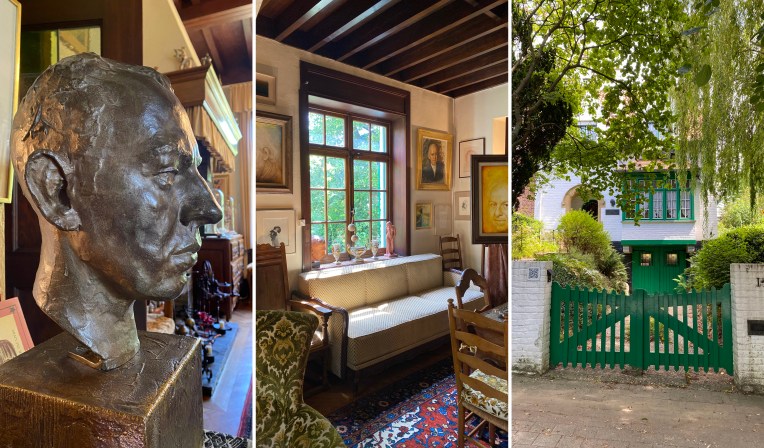
Amongst these was a visit to the picturesque home of Maurice Carême (1899–1978) whose lyric poetry for children made a lasting impression upon me when I first encountered it a decade and a half ago. The foundation in his name has preserved his home as he left it, affording visitors a unique glimpse into his life.

I had the singular and unexpected pleasure and honour to hold one of his original manuscripts in my hands. Were it possible, I would have spent the entire day poring over these fascinating documents, as well as his library, occasionally sitting in the laissez-faire garden, which in summer was pretty as a picture.

Musée Maurice Carême, 6 July 2022. Copyright 2020 Forgotten Fields. All rights reserved.
Impromptu pictures taken at Musée Maurice Carême (the Maurice Carême Museum) in Anderlecht, Belgium on 6 July 2022. From left to right: a bust of the poet in bronze, a sun-kissed settee in the sitting room and the modest exterior of the house. (So enraptured was I in his study—quite apart from the fact that I was asked to recite one of my compositions in that sacred room—that I took no pictures of his desk!)

On the Poem

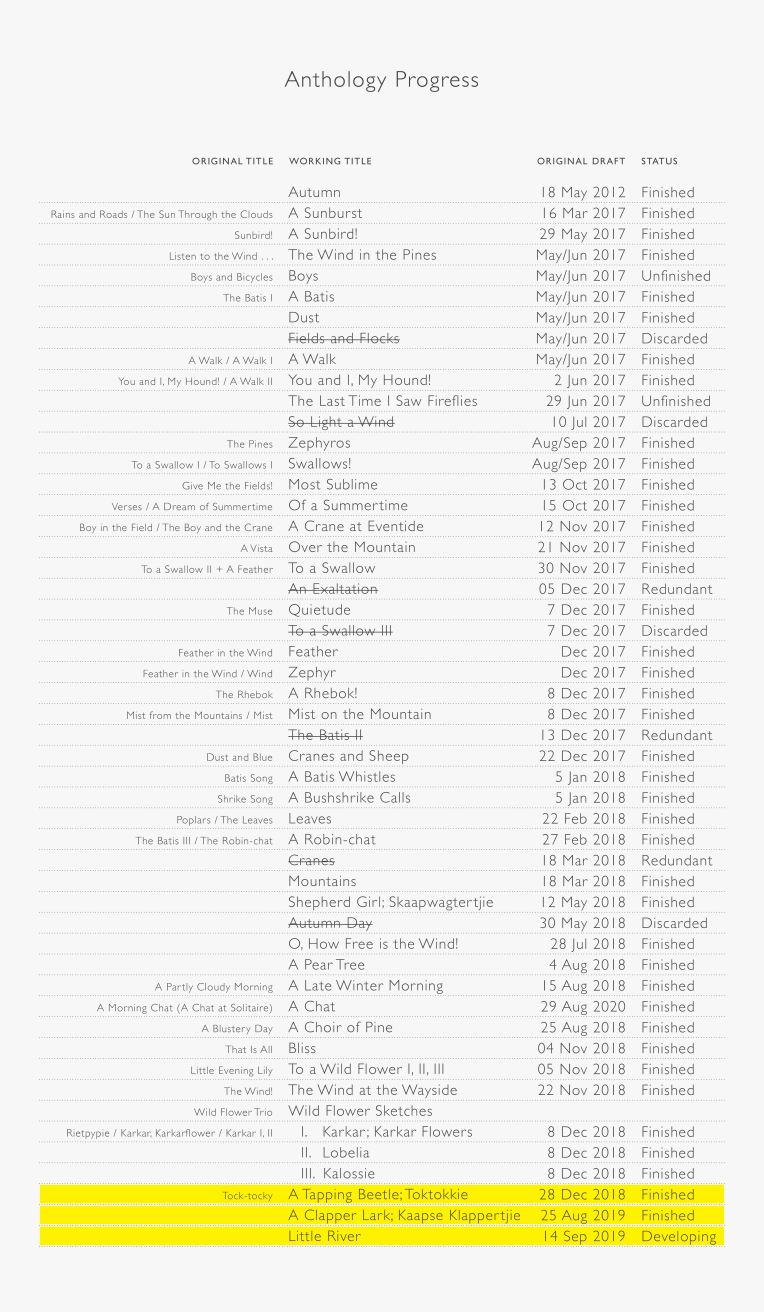
Thus, after an unexpectedly lengthy hiatus, I resume work on my anthology of lyric poetry. It has been a year since the last poetic sketch, “A Tapping Beetle” (and its Afrikaans companion “Toktokkie”1), was completed. I then began developing “A Clapper Lark”, and I am pleased to report that it too is complete.


  1. Afrikaans; pronounced [tockTOCKy], with a clipped version of the [o] in “or”.

What began as an English sketch of but two short quatrains, after much wrestling and episodic inspiration, transformed into two compositions with eight even shorter couplets. These are centre-aligned so that the symmetry echoes the shape of the bird in flight and the length (or, more aptly, the height), its ascent.

Like “A Tapping Beetle” and “Toktokkie”, “A Clapper Lark” has an Afrikaans companion (I hesitate to use the word “version”, for it implies a mere translation, whereas it is conceived as a poem in its own right, though the theme and style are the same): “Kaapse Klappertjie”.2 Both celebrate the bird’s courtship display.


  1. Afrikaans for “little Cape clapper”, pronounced [KAAHpsuh KLUppuhRky], with [uh] as the [e] in “flutter”, [KLU] as in “clung”, a trilled [R] and [y] as the [i] in “it”.

To attract a mate, the Cape Clapper Lark male flies up into the air from the grasses, rapidly clapping its wings. As it reaches the highest point, it utters either a long, ascending “pooooeeee” in the case of the species that inspired the poem,3 or two descending “tseeoo tseeuuuu”s in that of the species I filmed.4


  1. Mirafra apiata apiata
  2. Mirafra apiata marjoriae

“A Clapper Lark” and “Kaapse Klappertjie” describe this lively flying-up-diving-down, clapping-then-whistling display in eight stanzas each.5 Of the two, “Kaapse Klappertjie” seems to me the most successful phonetically, rhythmically and emotionally, the result of the inherent crispness of the Afrikaans language.


  1. Whilst writing these paragraphs, I suddenly conceived of a simple way at once to infuse the English composition with more vivacity and joviality, and align its structure with that of the Afrikaans. Originally, the final version of the English poem had four stanzas and the Afrikaans, eight. Both now have eight. This text was adjusted accordingly.

The common name of the bird in each language is an excellent example of how Afrikaans suits the concept of the poems better: “Cape Clapper Lark” flows; “Kaapse Klappertjie”2 skips. Taking this difference into account, the boisterous display of this otherwise unobtrusive bird is best expressed in that tongue.

The above-mentioned “A Tapping Beetle” and “Toktokkie” and “A Clapper Lark” and “Kaapse Klappertjie” form a set describing the amusing manners in which the creatures in question attract a mate. All four poems are centre-aligned and make liberal use of onomatopoeia: a visual and lyrical delight to compose!

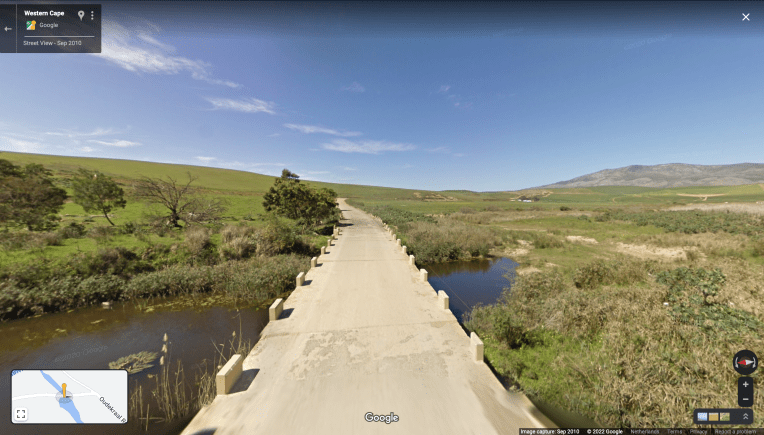
The Kleinrivier River at Klipdrift, September 2010. Copyright 2022 Google.
The bridge at Klipdrift in the Overberg region of the Western Cape province of South Africa that inspired the “Little River” poetic sketch. Upon my last visit there, it was being made flood-proof, altering the charming and unassuming structure forever. Not only do I deeply regret this modernisation, but also the consequential loss of the many meticulously-built swallow nests in its arches. (Image from Google Street View, September 2010.)

On a Bridge

Next, I shall develop “Little River”, first drafted in mid-September 2019. Whilst living in the Overberg region of the Western Cape province of South Africa, it was my custom to drive once a week to the seaside town of Hermanus. These drives resulted in many a sight, which, in turn, resulted in many a poetic sketch.

On the way, in summer, I would encounter flights of swallows at Klipdrift6 where a small, simple bridge crossed the Kleinrivier7 river. Beneath this bridge, they nested; upon it, they sometimes alighted in the roadway; and above it, they frolicked and flitted—always an exquisite performance for anyone willing to watch.


  1. Afrikaans for “stone ford” or “Stanford”, pronounced [clipdRift], with a trilled [R].
  2. Afrikaans for “small river”, pronounced [cleyn-RhfeeR], with a trilled [R].

How fondly I remember those moments, for I was such a one! I would stop upon the narrow bridge—to the bafflement and annoyance of the occasional fellow road user who would invariably appear just then and end my adoration—and lose myself in the spectacle of Greater Striped Swallows (Cecropis cucullata) in flight.

I would also see many other birds; among them, the African Black Duck (Anas sparsa) and Vleitinktinkie8 (Levaillant’s Cisticola, Cisticola tinniens), both of which appear in the original “Little River” draft: a sketch about the river, its bridge and its birds. In the coming weeks, I shall develop the draft into a complete lyric poem.


  1. Afrikaans for “little marsh tink-tinkler” (literally “marsh little tink-tinkler”); pronounced [FLEY-tihng-tihngky], with the [ih] as the [e] in “flutter” and [y] as the [i] in “it”; named after its tinkling call, whence its other English common name, Tinkling Cisticola.

Poetry Publication Progress (2023-01-06)

The Next Sketch

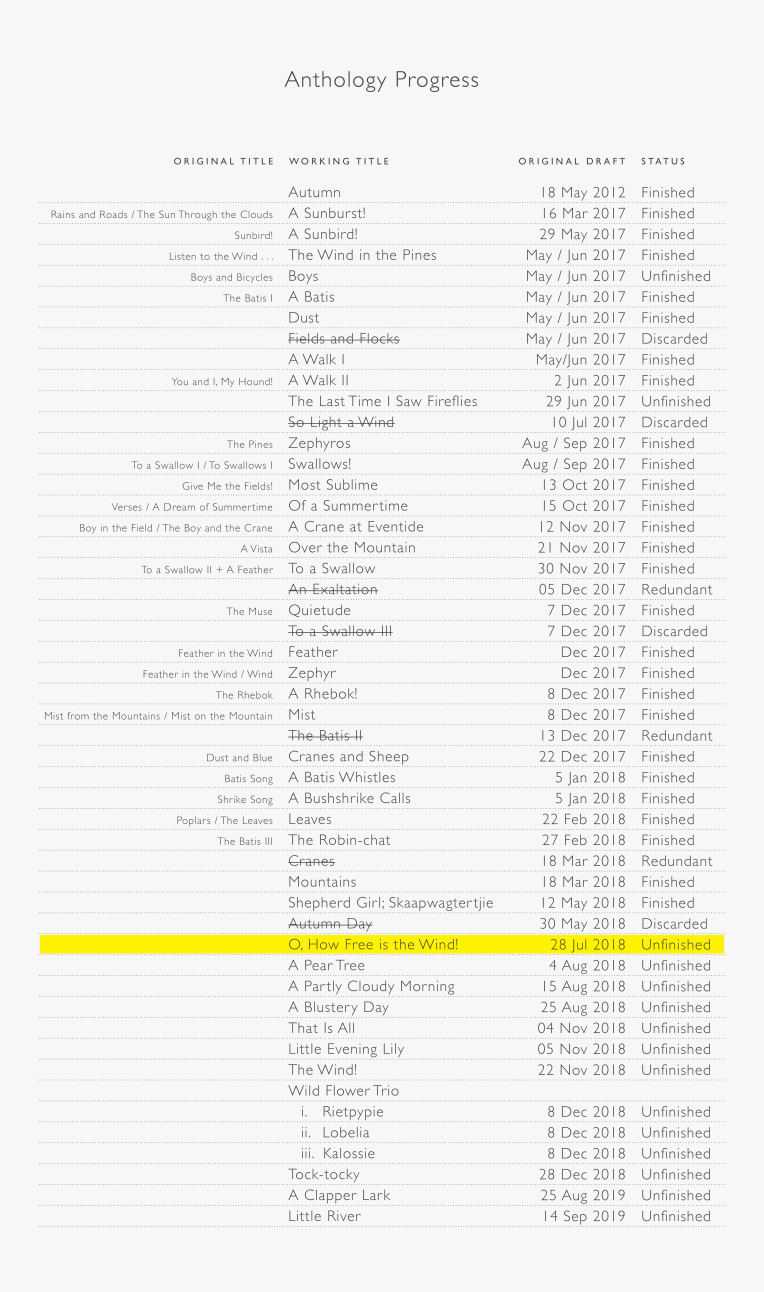
It appears I am not yet done with Afrikaans after completing “Skaapwagtertjie”—the counterpart in that language of “Shepherd Girl”—as the next poem to be developed is “O, How Free is the Wind!” (working title), a sketch prompted by an Afrikaans song: “Ruiter van die Windjiie”1 (Rider of the Breeze).

It was composed by Drafi Deutscher in the mid-nineteen-seventies for Heintje Simons and covered in the mid-nineteen-eighties by Bles Bridges.2 For the lyrics, Deutscher—under the alias Renate Vaplus—collaborated with singer Ben E. Madison, describing in simple verses, life on the wings of the wind.

The wind is a prominent theme of my work. When I heard the Deutscher-Madison lyrics anew, almost exactly two years ago, I was moved to compose several rough English stanzas in response. These I shall now review to determine whether they will work as a lyric poem, joyful and bracing as the song.

  1. Pronounced [RoyteR fun dee veyngkee] with the [R]s trilled, the [ee]s short like that in “it” and [oy] like that in “toy”, but uttering an “uh” rather than “aw”: [uhee].
  2. Like Simons in The Netherlands, Bridges in South Africa was famous for schlager songs: vocal-centred compositions with memorable tunes, dutiful accompaniment and light, sentimental lyrics. Simons recorded many songs in Afrikaans, a language similar to his native Dutch, from which it derives.

Poetry Publication Progress (2020-06-12)