Time Well Wasted

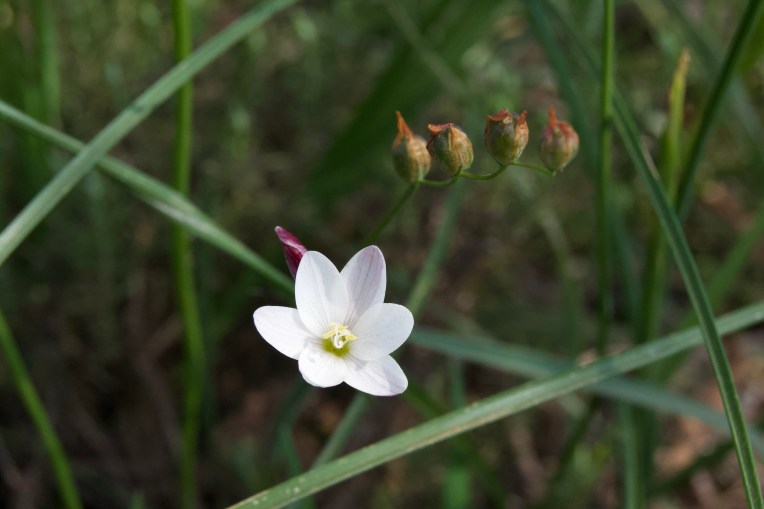
A Geissorhiza, possibly G. inflexa, 12 September 2020. Copyright 2020 Forgotten Fields. All rights reserved.
A Geissorhiza, possibly G. inflexa, photographed 12 September 2020. It is mentioned incidentally in “A Wayside Wonderland”, where it appears in the Nemesia barbata set (par. 7, photo. 11).

I resumed work on “A Late Winter Morning” today after two weeks otherwise occupied, chiefly with matters of secular life; it is clear to me that it will be many weeks before the poem is complete. Why then spend “whatever hour I could spare” these past two weeks buried in botanical books instead of devoting that time to the poem?

The reason is twofold: my rural surroundings inspire my work—studying its flora, fauna, topography and history I consider my duty—and in the writing of pieces like “A Wayside Wonderland”—in which I consolidate what I learn—I often produce lines that inspire new poems1. “Time well wasted” is the phrase I reserve for these moments.

  1. The case with the above-mentioned piece, from which came a new poetic esquisse titled “A Lily” or “Lily in the Sedges” for a future anthology.
A Poemlet

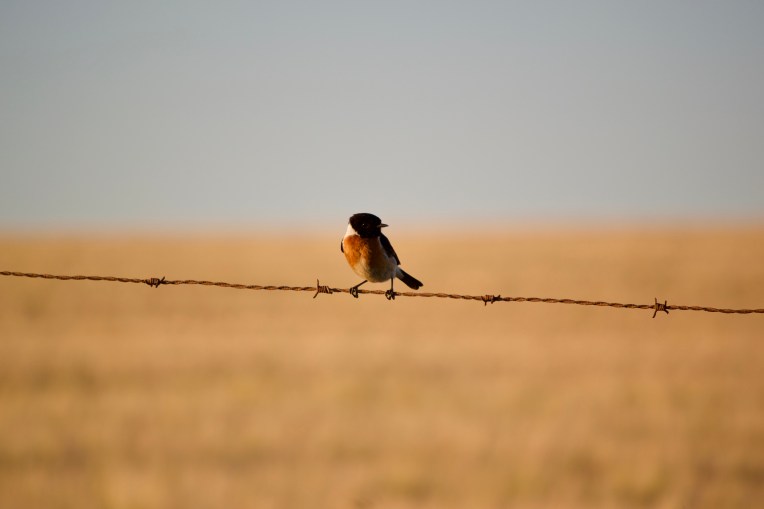
An African Stonechat, 05 October 2019. Copyright 2019 Forgotten Fields. All rights reserved.
A stonechat, photographed mid-spring in 2019.

As I develop a poem, numerous variations on stanzas come as a result of the composition process: some with promise, others beyond redemption. Not once before has any among these become a poem in its own right—its lines either woven into the work for which it was conceived or discarded outright—until now.

One variation of the second stanza of “A Late Winter Morning” (a poem in progress), which began as a playful experiment with alliteration and rhyme, has become too colourful for the work (which is lively but restrained); reluctant to discard it, as normally I would, I have decided to extract it as a separate composition.

An offshoot of “A Late Winter Morning”, a poem in my anthology-in-progress, I intend to include it in the collection despite a previous resolution not to add new compositions to the set, developing it alongside “A Late Winter Morning” as a companion piece under the working title “A Morning Chat” or “A Chat at Solitaire”.

“Chat” here refers to the bird of that name, the African Stonechat (Saxicola torquatus), a vocal passerine along a stretch of dirt road towards an area known as Solitaire. On winter mornings, they utter their warbling calls from the wire fences (little puffs of vapour escaping from their beaks!), the subject of the offshoot poem.

Composing “A Late Winter Morning”

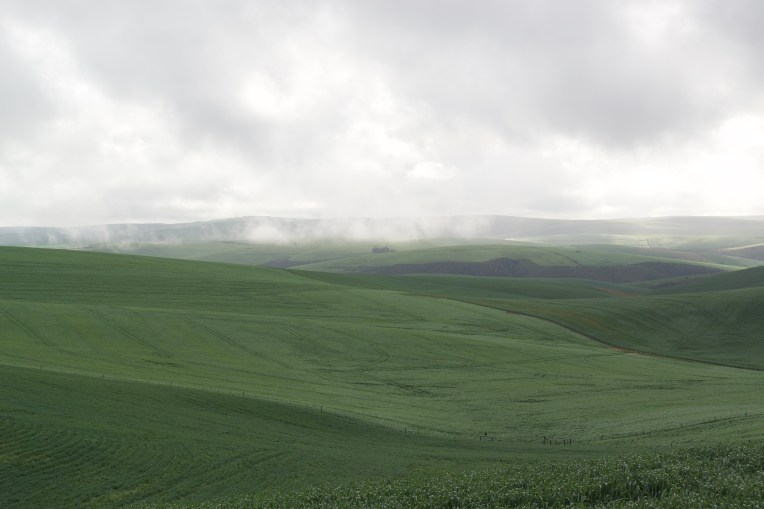
Mist on the Hills in Late Winter, 21 August 2020. Copyright 2020 Forgotten Fields. All rights reserved.
The mist surrenders to the sun, yesterday on a late winter morning, a common sight in August.

It is late winter in my country, South Africa, and the poem on that subject (imaginatively titled “A Late Winter Morning”) is developing slower than expected. It seems to me I have not yet shaped its stanzas to my satisfaction—they contain my impressions of the season, but have not the internal coherence I desire in my work.

Then there are the time-consuming experiments of expression the poet must make—however confident of his lines he may be—for from those may come a thought, word, phrase or line that ignites his composition. Should he be successful, more time must be spent to actualise his discovery in the existing work—often, transforming it completely!

Presently, I am at the end of just such an explorative phase which has resulted in two compositional directions: the first with two stanzas, the second, three (in both cases, with several variations), that I must now attempt to refine. From whatever comes as a result, I shall ultimately choose a draft to develop into a final work.