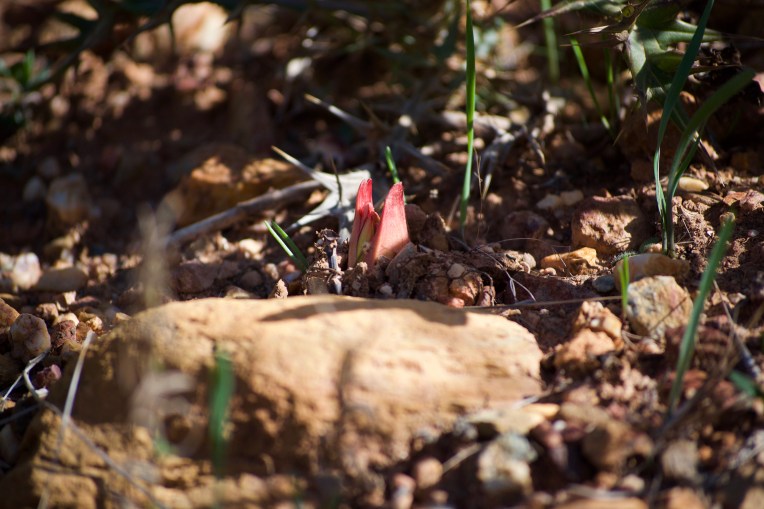
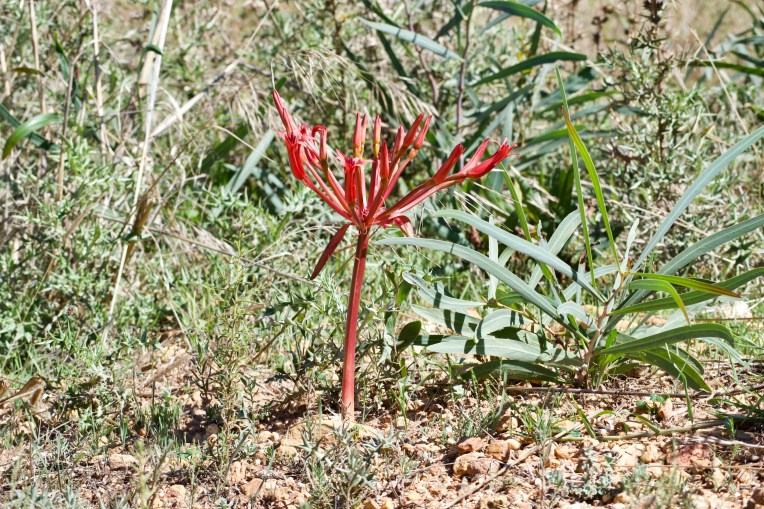
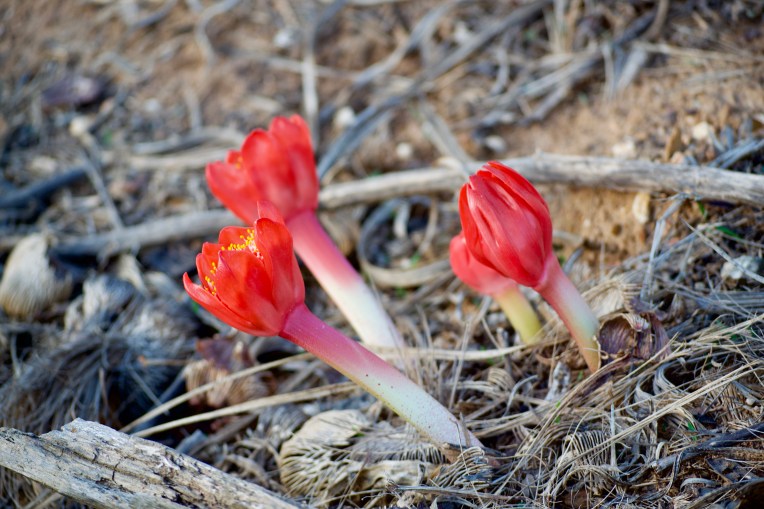
I was delighted to photograph a Chandelier lily1 as it emerged from the ground directly from the bulb, and as it began to unfold into the branched flowerhead, from which it derives its common name, one week later. What a sight!
A Chandelier Lily RebornA Chandelier Lily Unfolding
Footnotes
Brunsvigia orientalis, possibly Brunsvigia litoralis, a slight variant.
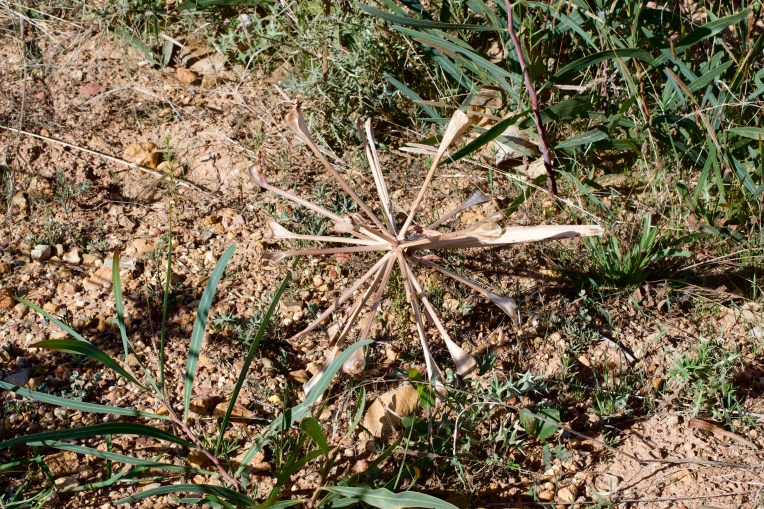
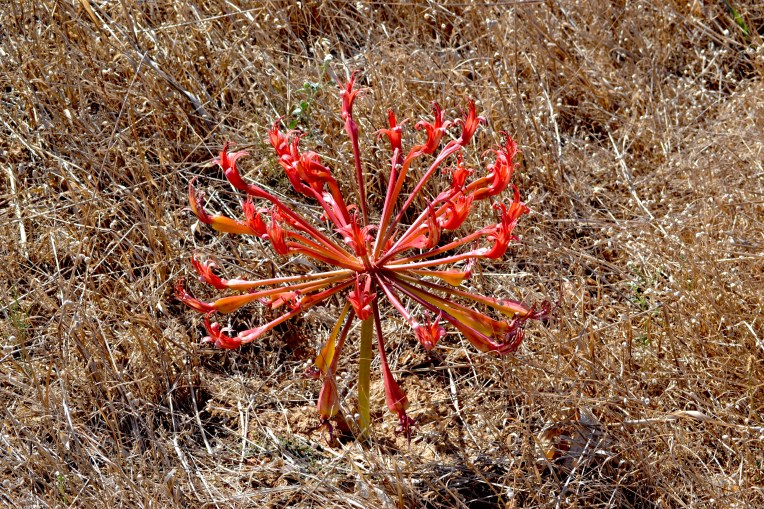
I recently shared a photograph of the Chandelier lily (Brunsvigia orientalis, possibly Brunsvigia litoralis, a slight variant) and briefly mentioned what happens once the flower expires. I was fortunate to come across an example, a week ago. This one was about 30 centimetres (11,81 inches) wide. The seeds—which are about half the size of a pea, green at first, then black—are contained in the triangular pods at the extremities of the many arms. What a plant!
Friday, out among the hills in the company of my mother was a joy. March is the beginning of autumn in South Africa. It arrived with showers of rain and lilies unique to the Western Cape province. The lilies are unusual in that they flower suddenly, straight from the bulb—not a leaf in sight—giving the impression that they were stuck into the ground rather than emerged from it. The leaves follow later, once the flowers have died—as if they are an afterthought.
The Paintbrush lily
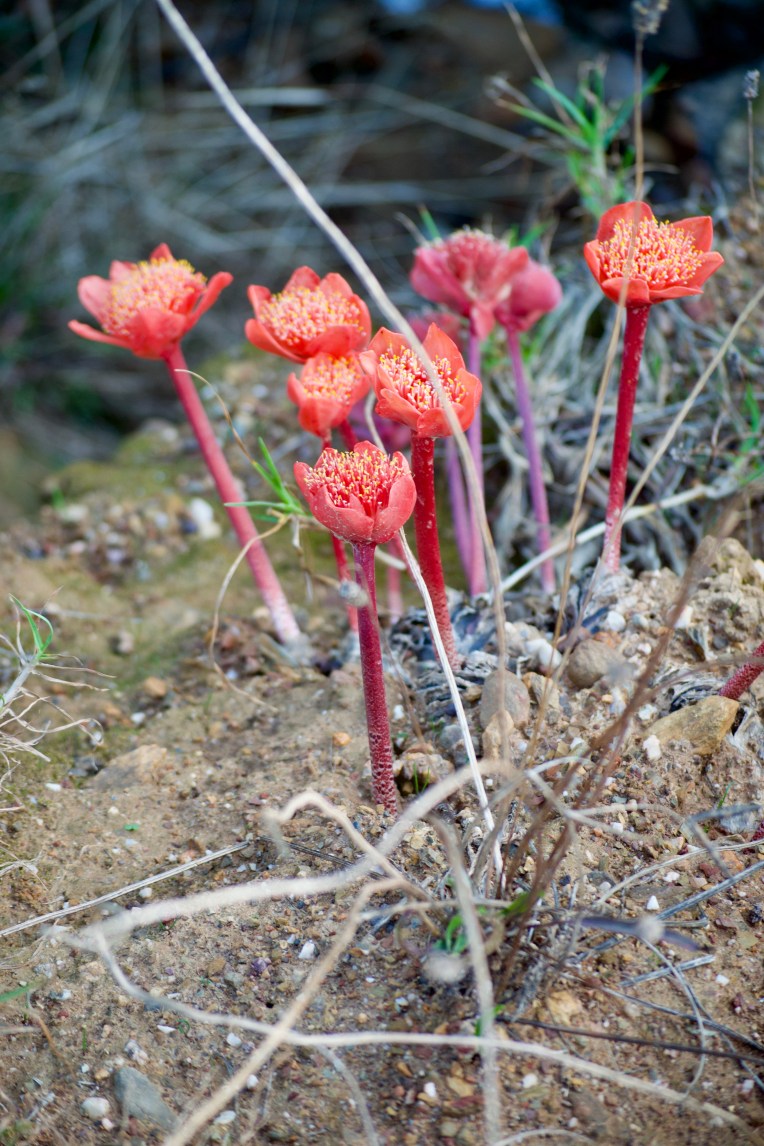
The first of these we encountered was the blood-red Paintbrush lily, Haemanthus coccineus. There was a cluster on one side of the dirt road verge, another against a sheer drop where the road crossed a channel, and even more, scattered at the foot of a steep hill. Never before have we seen so many of these flowers; so red are they that from a considerable distance, we were able to spot another cluster at the far end of a small field, later on.
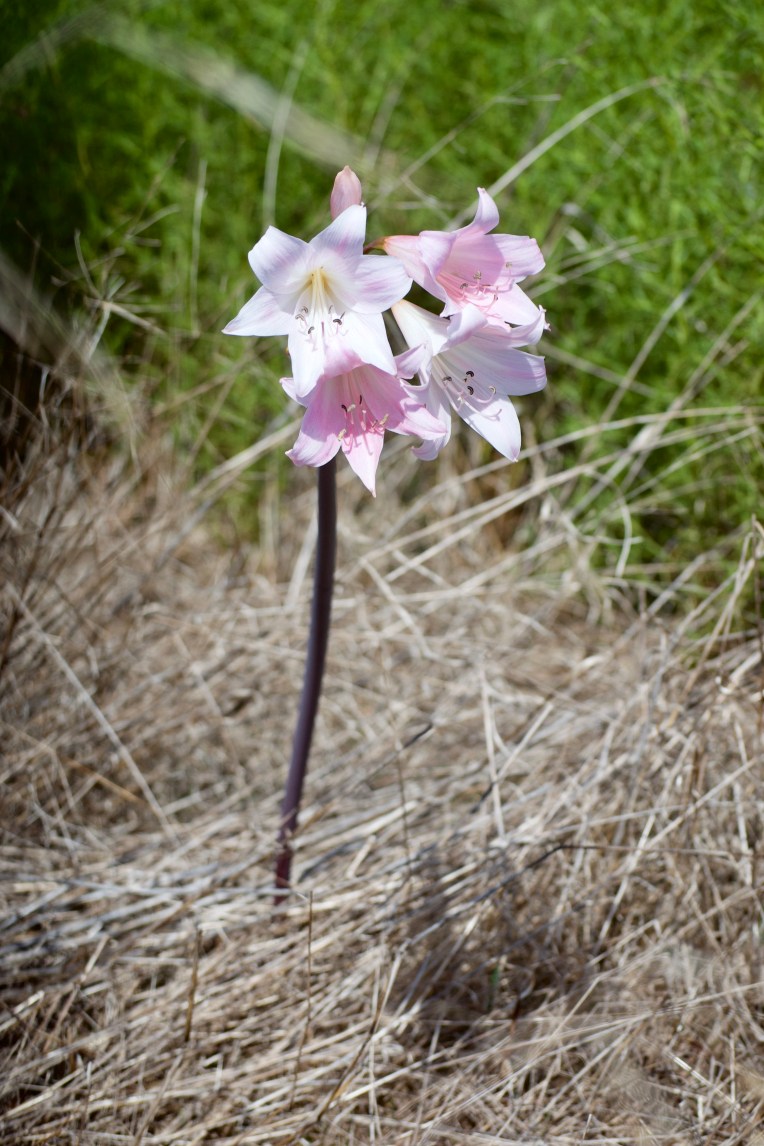
The second kind was a much smaller group of four Belladonna lilies, Amaryllis belladonna, of which only one was in bloom; the rest had already flowered and produced fruits. They stood in a meadow, one I had passed through a week ago—it was thanks to my mother that I spotted them, this time. In Afrikaans1, they are aptly named the Maartblom, “March-flower” (pronounced “maah-Rt-blom”, with a trilled “R” and a shortened version of the “o” in “or”).
Belladonna lily (Amaryllis belladonna)
The Chandelier lily
The third was the Chandelier lily, Brunsvigia orientalis2. These were the first “straight-from-the-bulb” lilies I ever encountered, this time last year. Where there were three then, there were now five. I did not photograph them because they were already in the later stages of flowering and so not very arresting, but I include a photograph from last year’s sighting instead. The flowerhead dries out, breaks off in one piece and rolls in the wind to disperse its seeds.
Chandelier lily (Brunsvigia orientalis)
Footnotes
Afrikaans is the native language of the Western Cape province.
 Forgotten Fields