A Fox, a Bush and a Buzzard

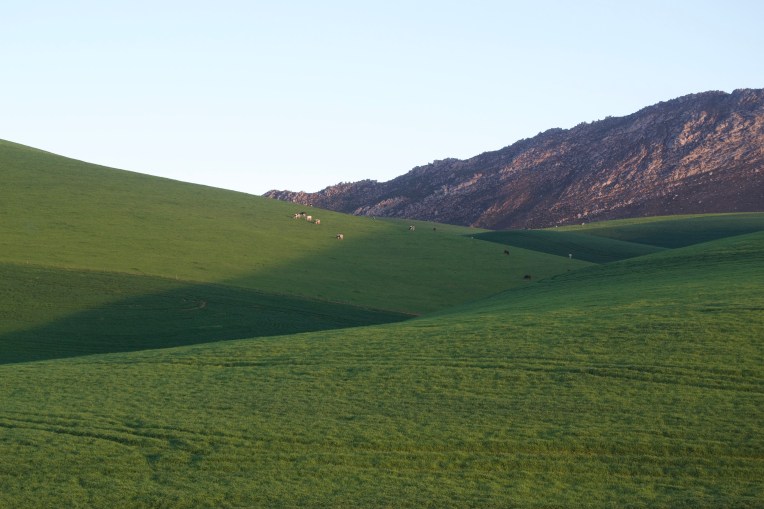
Herd on the Hills, 07 August 2020. Copyright 2020 Forgotten Fields. All rights reserved.
A rough ridge of the Little River range watching over a quiet herd upon the hills.

Yesterday, for the first time, I saw a fox! I had heard of fox mischief during my childhood but had never actually seen the creature, and so I was stunned to spot one in broad daylight, making its way up a hill, turning briefly to watch me scramble for my camera. The photograph below was the frantic post-scramble result, taken with a hopelessly inadequate lens, as I was set up to photograph landscapes, ill-prepared for the zoom necessary in the moment.
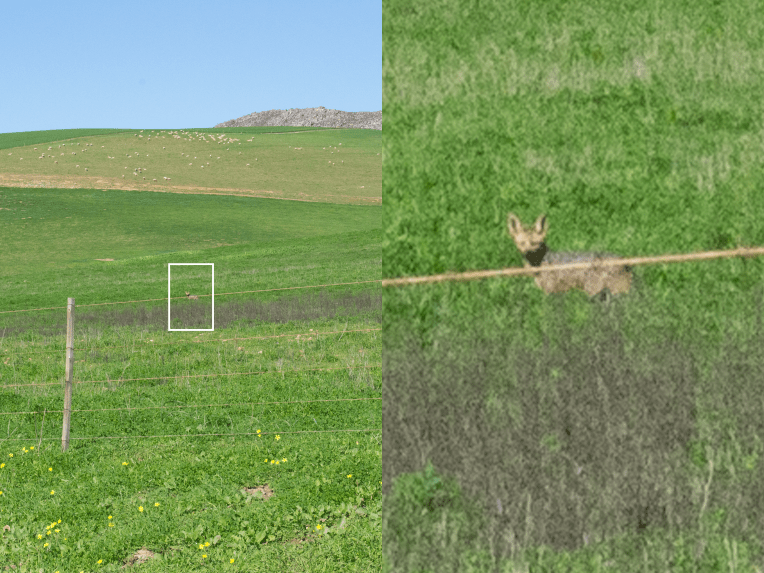
Cape Fox, 07 August 2020. Copyright 2020 Forgotten Fields. All rights reserved.

It was, undoubtedly, a Cape Fox (Vulpes chama), also called the Silver-backed Fox, a small animal—about 50 cm (20 in) long, the tail adding a further 30 or so cm (11 in); about 30 cm (12 in) at the shoulder—supposedly nocturnal.
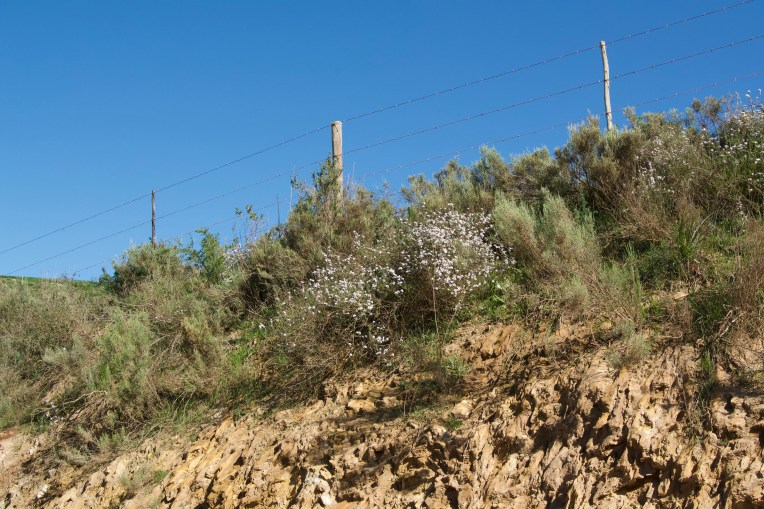
Unknown White-flowered Shrub, 07 August 2020. Copyright 2020 Forgotten Fields. All rights reserved.

I also saw a shrub in bloom on a north-facing slope which, like so many species of fynbos1, had been unassuming throughout the year, suddenly to impress in late winter. Unable to come sufficiently close to it, I could not identify it; however, it may be part of the Sutera family—a wild guess, based upon vague similarities with certain species in that family. When next I am in that spot, I shall make the precarious uphill climb and attempt to inspect it properly.
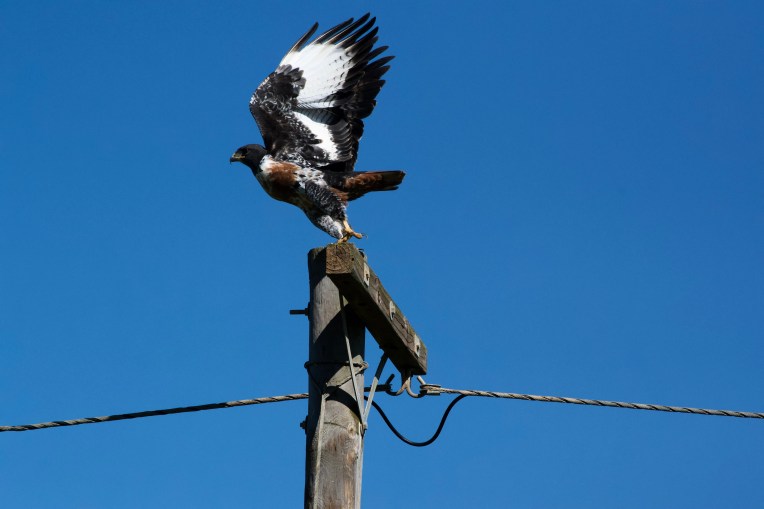
Jackal Buzzard, 07 August 2020. Copyright 2020 Forgotten Fields. All rights reserved.

Another sighting (this time, photographed with a more appropriate lens) was of an adult Jackal Buzzard (Buteo rufofuscus)—a bird I have photographed many a time, and which I captured in hallmark circling flight, three years ago2.
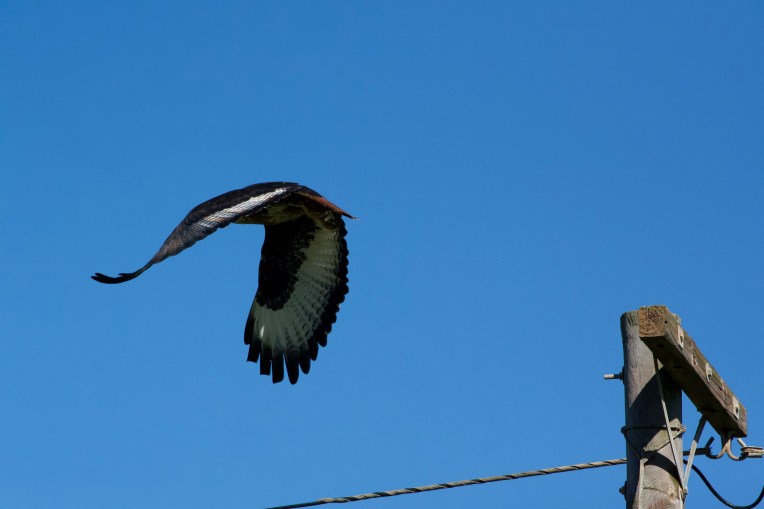
Jackal Buzzard, 07 August 2020. Copyright 2020 Forgotten Fields. All rights reserved.

  1. Fynbos (Afrikaans for “fine-bush”, pronounced [feynboss], with the [ey] in “feign” and the [o] in “or”, but shortened)—so named for the relative fine-ness of the shrubbery in the Western Cape province of South Africa—is an extremely heterogeneous heather-like vegetation exclusive to the region; indeed, the province (roughly the size of England) has more plant species than the whole of Europe.
  2. Whilst recording footage for the “Verse One” short film. I shared the unused footage in question to both Facebook and Twitter.
Launching the Anthology

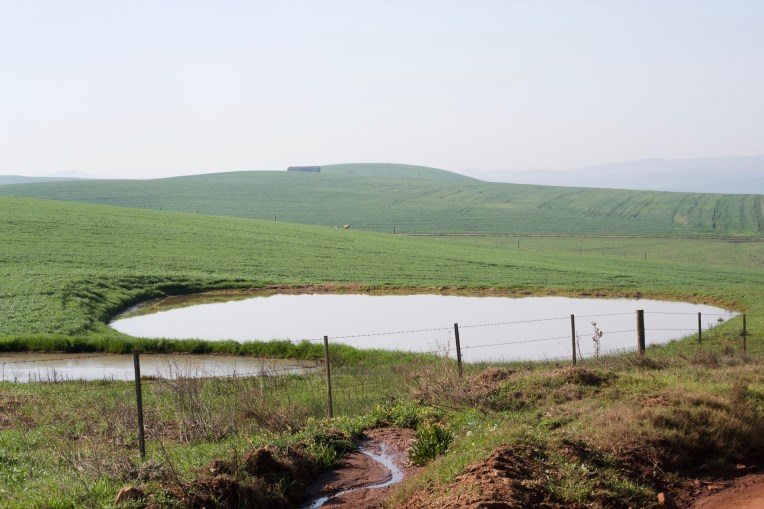
A Dam in the Still, 25 July 2020. Copyright 2020 Forgotten Fields. All rights reserved.
I took this photograph today on a perfect late-winter morning in South Africa.

A Late Winter Launch

Today was another winter idyll. It convinced me that late winter is the ideal time to launch this anthology: the days are crisp and clear, flocks bleat on the hills, and the pear tree blooms in the valley.

There are fourteen sketches left to develop. It takes me around four weeks to transform drafts into complete poems. Therefore, I project the compositions will be finished next year, about this time.

Protracted, but Appropriate

That would mean two more years before I publish them, if I were to commit to this late-winter launch date. This suits the project, since some time must be spent on producing the handmade books.

Moreover, I intend to devote a considerable amount of time to the creation of items supplementary to the anthology—a year to attend to these suits me well—wherefore I anticipate a launch only in 2022.

Ah!

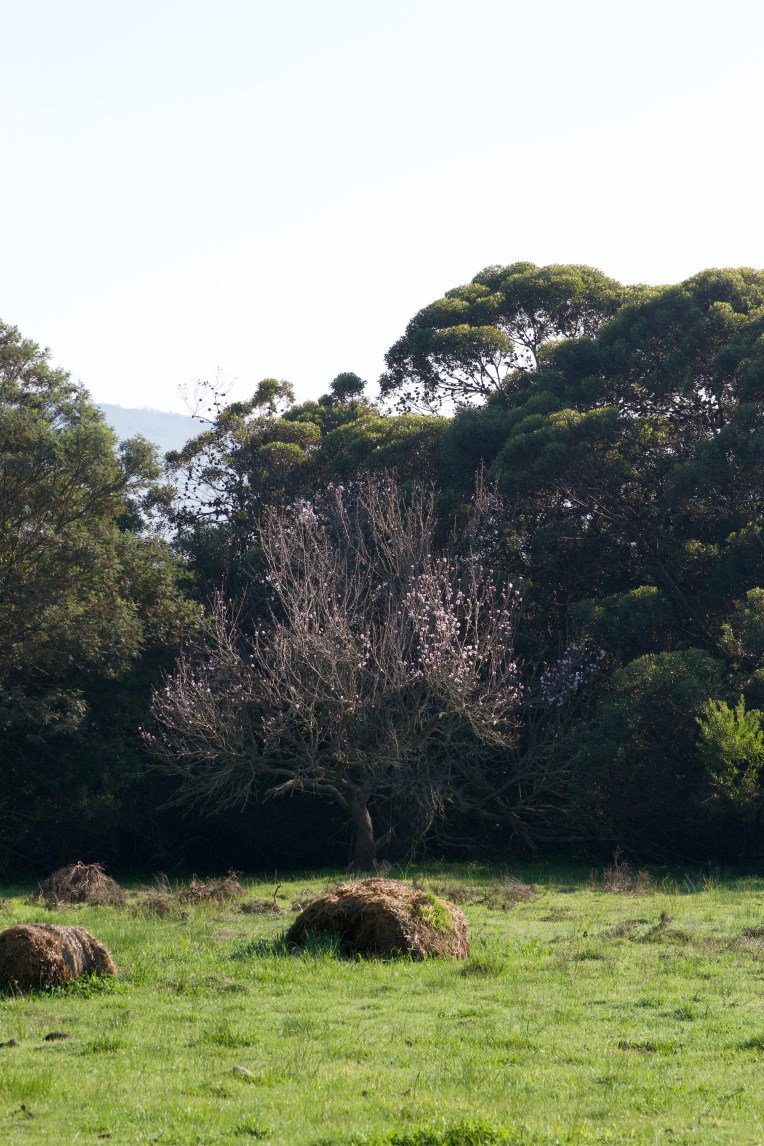
The Pear Tree in Bloom, 25 July 2020. Copyright 2020 Forgotten Fields. All rights reserved.

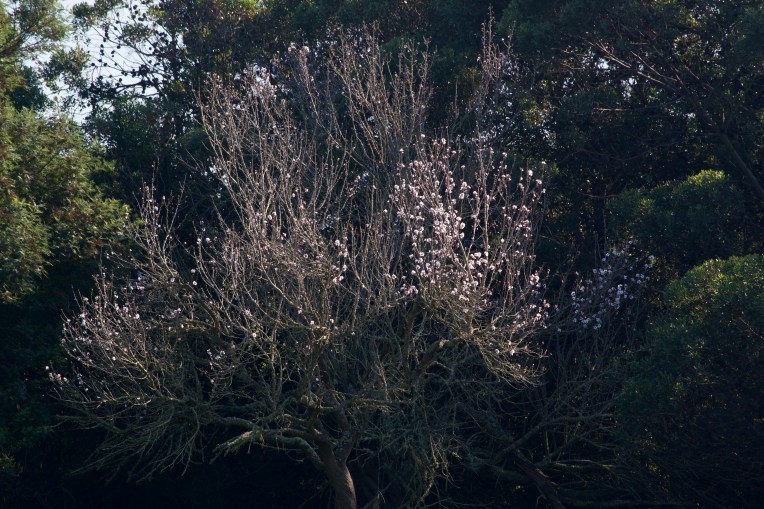
Look who blossoms, yet again in mid-winter! Here in South Africa, July is the second month of the season, but the weather is mostly autumnal, with crisp and clear days: misty in the morning, but later sunny.

Seeing the pear tree covered in flowers this early should come as no surprise, yet the sight never ceases to amaze. Naturally, I recited to it “A Pear Tree”—and I think it approved of my modest effort to praise it.

The Pear Tree in Bloom, 25 July 2020. Copyright 2020 Forgotten Fields. All rights reserved.