“Lobelia” is Complete

Wild Flower Trio Triptych, 3 December 2018. Copyright 2018 Forgotten Fields. All rights reserved.
The “Wild Flower Sketches” are a triptych of vignettes in response to flowers I encountered on a summer mountain slope before nightfall in 2018. From left to right: the Karkarblom (Tritoniopsis antholyza), the subject of “Karkar” and “Karkar Flowers”; the Thin-stalked Lobelia (Lobelia chamaepitys), the subject of “Lobelia”; and the Kalossie (Ixia stricta), the subject of “Kalossie”, the next sketch to be developed—all photographed on 3 December 2018.

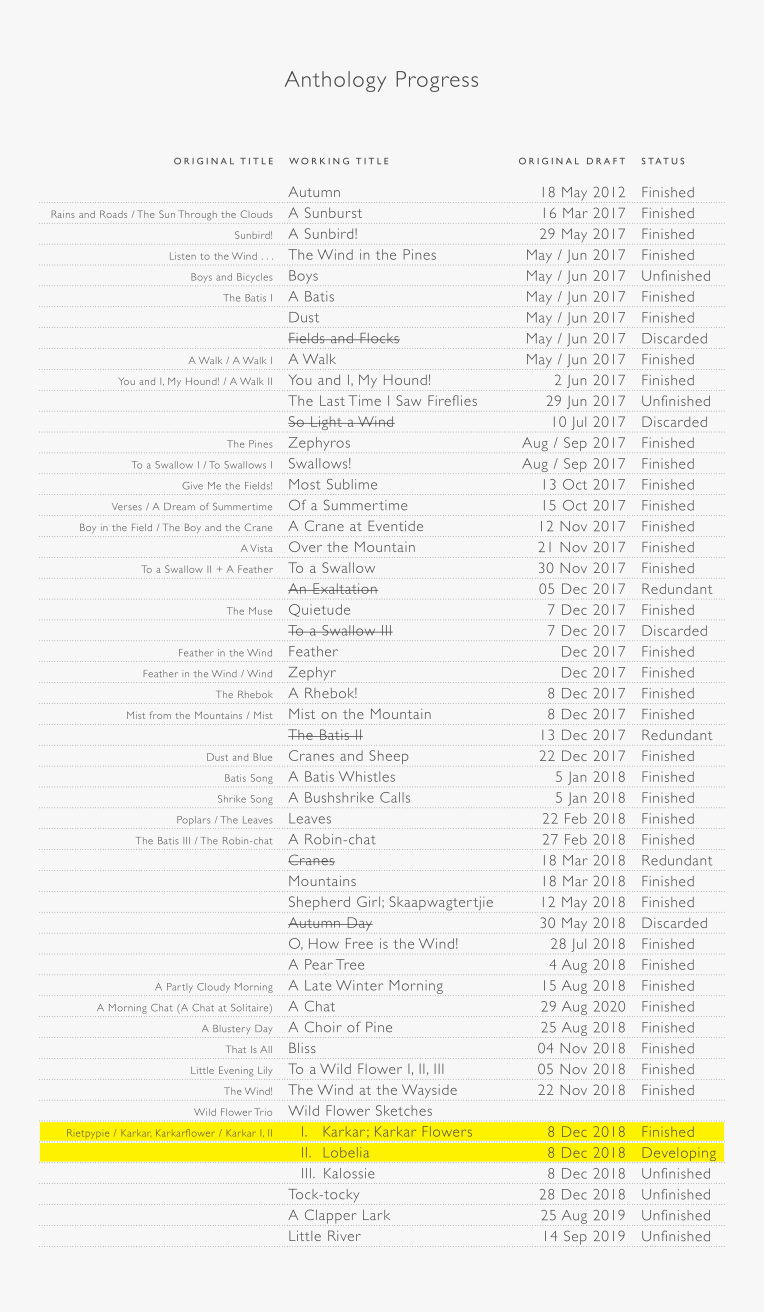
“Lobelia”, the second of three wild flower poetic sketches, is complete. A short and, I hope, sweet celebration of the Thin-stalked Lobelia (Lobelia chamaepitys) that quietly adorn the mountainsides and waysides of the Overberg region in the Western Cape of South Africa from September (Spring) to April (Autumn).

Compositionally, “Lobelia” follows the tercet style of “Karkar Flowers”; like that sketch, buoyant and brief, singing the joy of beholding the flower. If the third sketch—“Kalossie”—permits it, then it too shall have this structure and so complete a tercet trio. To the development of this composition, I devote myself next.

Captivated by the Karkar and love-struck by the Lobelia, the Kalossie (Ixia stricta)1 was pure delight: its delicate bouquet of pink blossoms swaying in the breeze on the lithest stem, a wonder to behold in the heather! This impression on the mountainside that seminal summer evening, I must somehow commit to verse.


  1. Previously, I had misidentified the flower as Ixia scillaris. According to botanist Dr Christopher Whitehouse, the two are often confused, and such was my error.
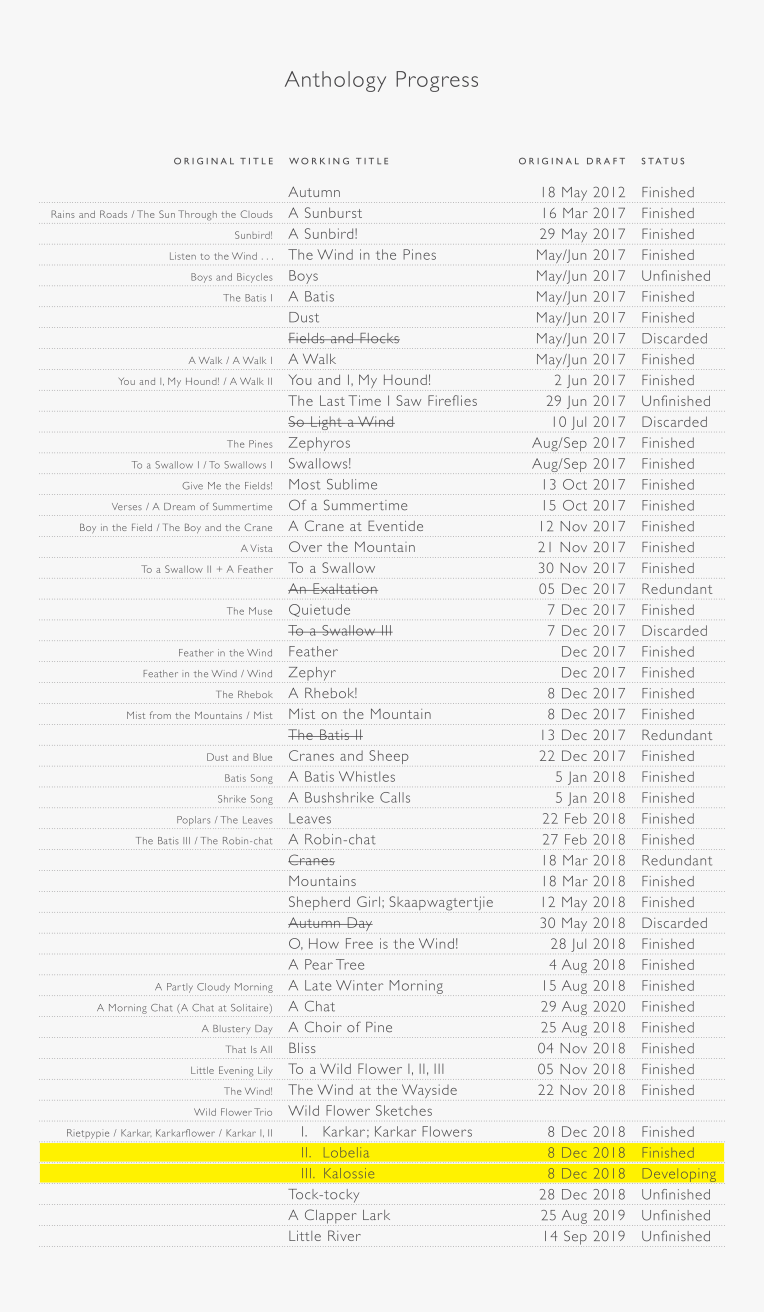
Poetry Publication Progress (2021-11-07)

“Karkar” is Complete

Tritoniopsis antholyza, 3 December 2018. Copyright 2018 Forgotten Fields. All rights reserved.
The Rietpypie or Karkarblom (Tritoniopsis antholyza), 3 December 2018.

“Karkar”

Both versions of “Karkar”1 (previously “Rietpypie”) are finished. The first, “Karkar”, consists of three stanzas and the second, “Karkar Flowers”, of two. Their styles differ, but their themes are the same: delight at the fiery flower, vivid in the setting sun. Which version to include in the final collection, I am yet to decide.


  1. “Karkar” (pronounced [kaRkaR] with a trilled [R]) is onomatopoeic, referring to the sound produced when rubbing the ribbed dry leaves together.

The compositions took much longer than anticipated: an unprecedented five months (though writing was sporadic), interrupted by life and, most significantly, love. Now, more focused on the anthology than ever, I eagerly begin development on “Lobelia” (working title), the second of the “Wild Flower Sketches”.

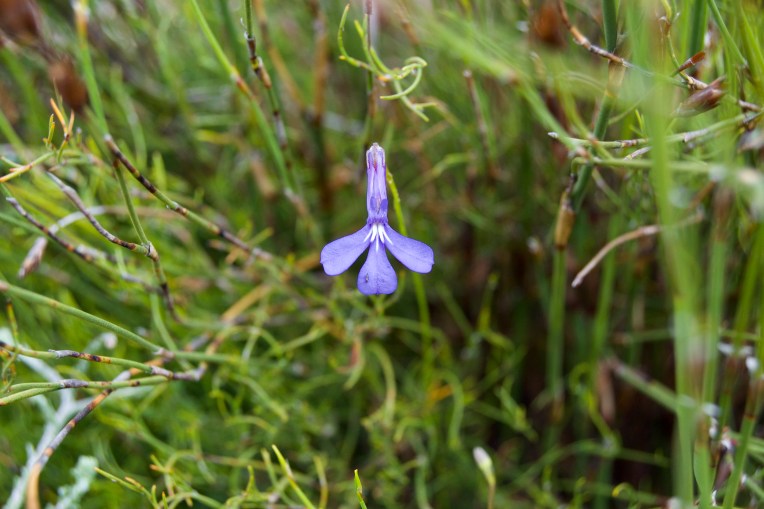
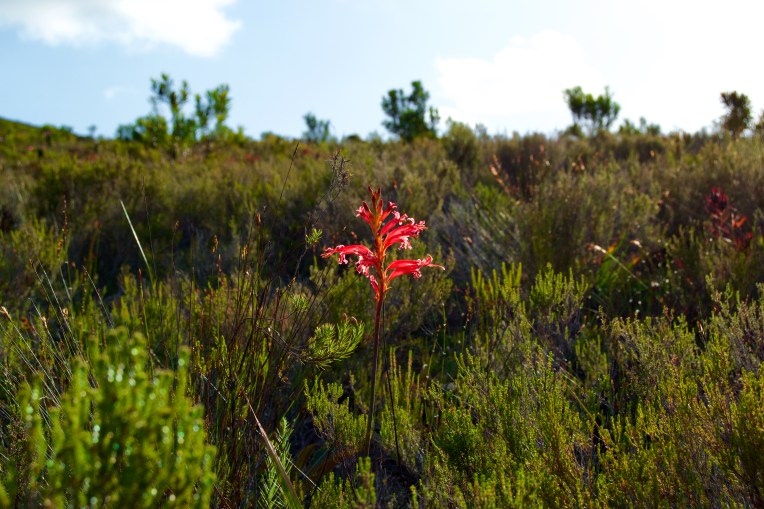
Lobelia chamaepitys, 7 December 2018. Copyright 2018 Forgotten Fields. All rights reserved.
The Thin-stalked Lobelia (Lobelia chamaepitys), 7 December 2018.

“Lobelia”

The wild Thin-stalked Lobelia is endemic to the Overberg.2 It first enraptured me in 2018 on a mountain slope not far from where I would see it again, three seasons later (along with other wild flowers new to me, among them, the Karkar Flower). Bewitched by its winglike violet petals in the breeze, a poem was inevitable.


  1. As are all the flowers and creatures of which I write—swallows, the only exception. (The Overberg is an agricultural region in the Western Cape province of South Africa.)

Its loveliness I shall now attempt to extol by developing the sketch I composed after the second encounter. I intend to write more frequently, so I expect it should be completed faster than its companion “Karkar” set; however, poems are not predictable, and I must humbly submit to my Muse (that gentle wind o’er the hills).

Poetry Publication Progress (2021-09-19)

Developing “Rietpypie”

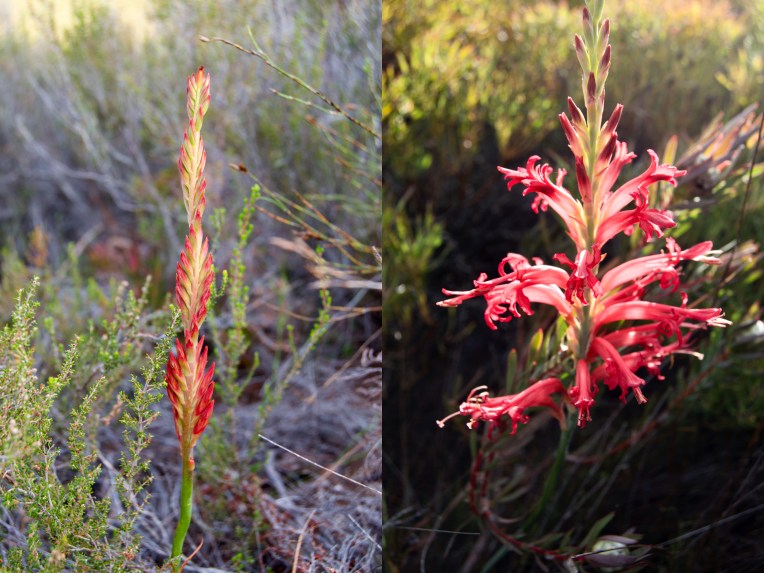
Rietpypie Diptych, 3 December 2018. Copyright 2018 Forgotten Fields. All rights reserved.
The Rietpypie or Karkarblom (Tritoniopsis antholyza) photographed just before sunset on 3 December 2018.

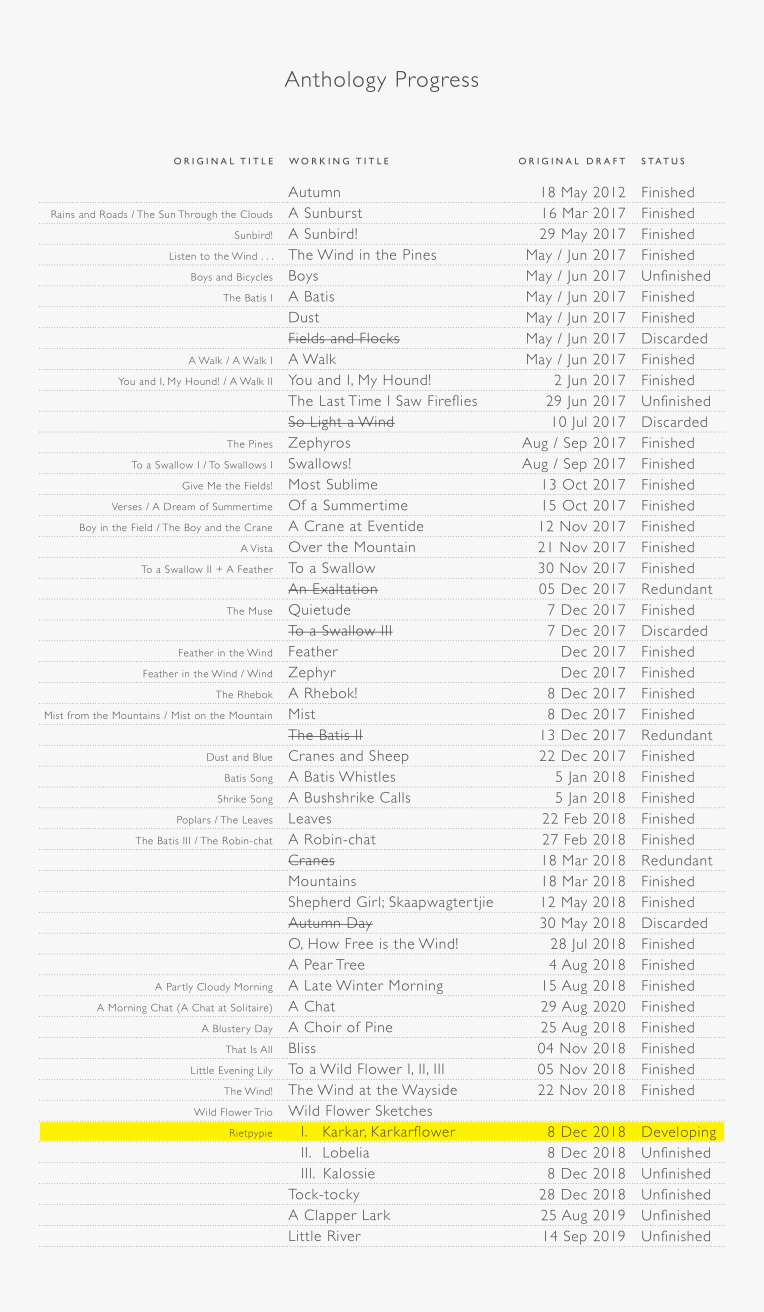
I have been working on the “Rietpypie” poem since April—the pace is glacial, but an end is in sight. In the meantime, two distinct versions of the poem have emerged from the original sketch (a continuing trend): “Karkar”1 (hitherto “Rietpypie”) and “Karkarflower” (a working title).


  1. After one of its numerous Afrikaans common names: Karkarblom. “Karkar” (pronounced [kaRkaR] with a trilled [R]) is onomatopoeic, referring to the sound produced when rubbing the ribbed dry leaves together, and “blom” (with the [o] a shortened version of that in “or”) means “flower”.

“Karkar” has three stanzas: one is finished; two, all but so; three yet to be resolved (that is to say, each of its variations refined and the most suitable one selected for the final composition). I am confident that August will see it completed, whereupon I shall start on “Karkarflower”.

Poetry Publication Progress (2021-07-18)