
Press release pressure (Asking for your feedback)

MacBook laptop and Magic mouse with spectacles on a wooden tabletop
Image by Craig Garner (unsplash.com)

Writing the Airship album press release

Whilst the Airship album is being mastered, I have turned my attention to album promotion. It is, by far, the most daunting part of self-releasing an album. I spent a little time writing a concept draft for the album press release, today. It’s not easy to be objective about yourself and your work. The challenge is to be accurate and honest, not presumptuous and pretentious. I don’t know if I’m succeeding, which is why I submit my draft here. I hope you’ll give me your impressions in the comments, friends? You are not caught up in this mess, the way I am. A fresh perspective is welcome!

The draft1

Airships have held a fascination for ambient electronic musician Ricardo Sauls ever since he first learned of their existence. Airship is his first release under the moniker Forgotten Fields. The album is a ticket for a [musical] trip through dark, abstract soundscapes, an invitation to be fascinated by the historic giants of the sky. It consists of six tracks inspired by the early days of dirigibles, taking the listener through a trial flight, described in a [soundtrack-like] instrumental experiment. The music has a strong ambient electronic [post-rock] influence. There are deep synths, mesmerising electric guitars, delicate glockenspiel and [even] a dignified French horn—all conspiring to fill you with a sense of awe [and a little nostalgia]. From the droning mechanical tone of the opening track (“In The Hangar”) to the graceful and soaring title track (“Airship”), Forgotten Fields’ first album promises a singular sonic journey.

Please tell me what you would change? It’ll be a great help. Thank you, all!

FORGOTTEN FIELDS

1 This is an unformatted, rough version of the core content of the press release. The final version will include necessary standard information, elements and formatting. Square brackets contain undecided or possible substitute words.
I know I love doing something when three hours feel like three minutes.

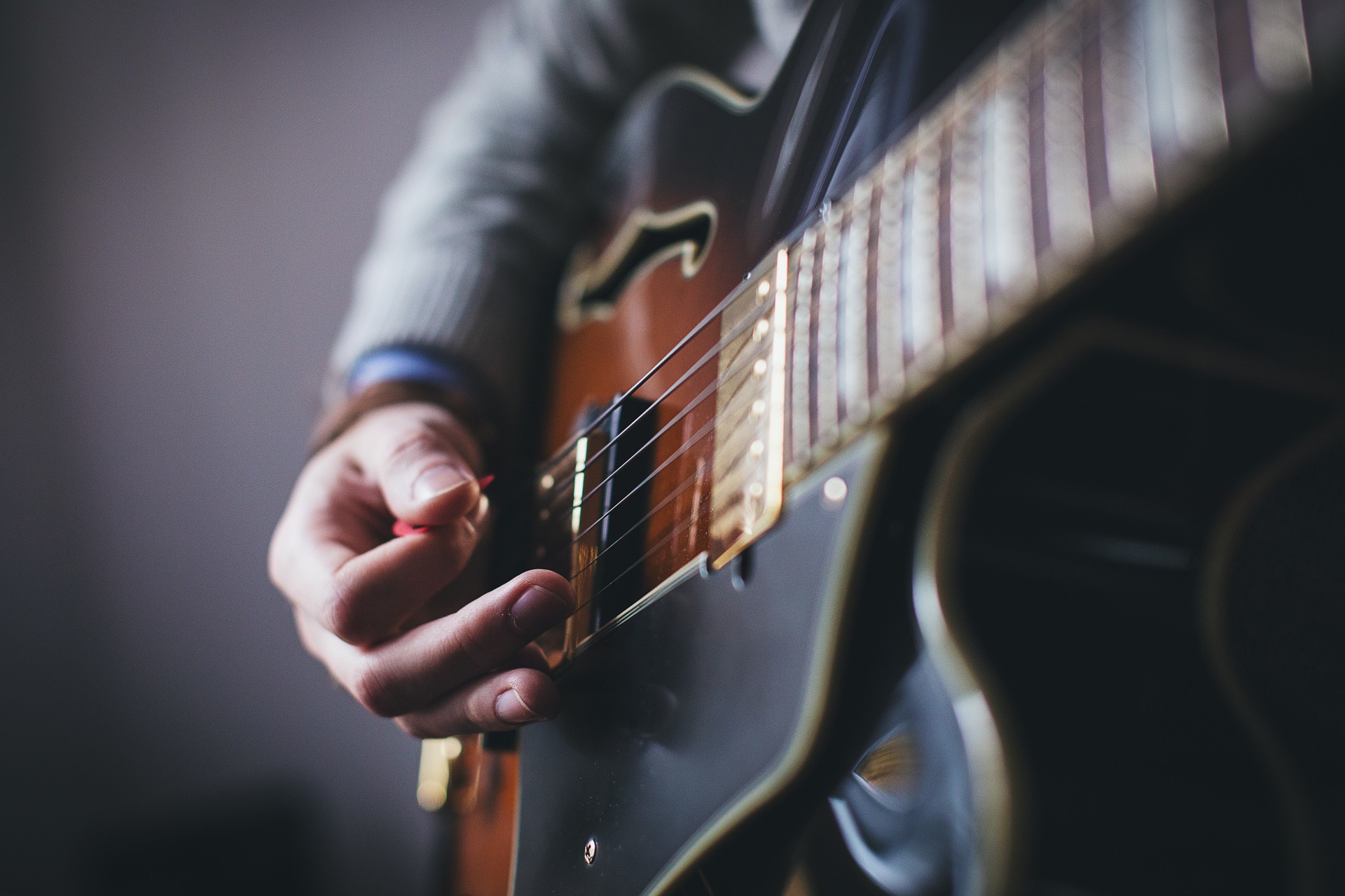
GuitarI worked on preliminary mixes for the last two tracks of the Airship album, today. They are “The View From Above” and “The Return”. “The View From Above” started out as a sketch and eventually turned into a full track. (There is a rough version on SoundCloud, called “Recording I”). At first, I didn’t think of it as part of the Airship idea. My inspiration was radio towers, the sound waves passing between them, hence the voice recording. But, once I started work on Airship, the lightness of the music came to remind me of flight, and so I inducted it into the tracklist. It’s a gentle, precarious track; there are these dissonant notes that I rather like. You could never tell with airships in the early days, they could come tumbling down, at any moment. The uneasiness of the track reminds me of that uncertainty. For the Airship version, I’ve removed the voice recording and made it much more fluid. After the changes, I think it suits the album. “The Return” is last on the tracklist. Not long ago, I considered it done and dusted, but I think it needs more work. It has a repeating guitar, strings and drum theme describing the return flight of the airship. It’s rather tense, but it brings everything to a neat end. I am still wrestling with it, but that’s the three-hour bit I love.

FORGOTTEN FIELDS

Why I Compose in GarageBand

GarageBand, compose, music, electronic, post-rock, Erik Satie, Grooverider, William Basinski, Antonin Dvorak, Edvard Grieg, minimalism, creativity, French horn
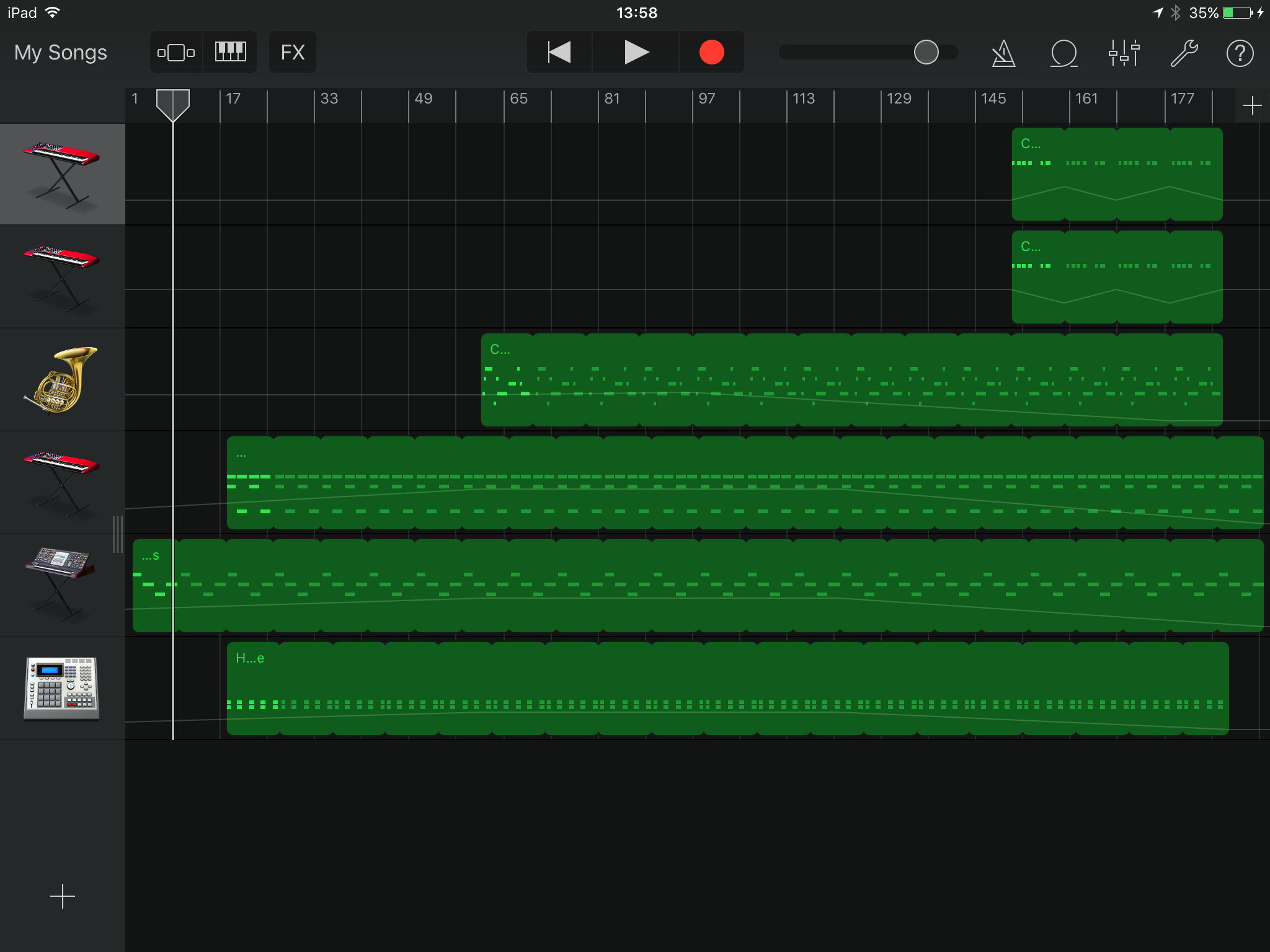
The preliminary mix for “Airship” in GarageBand
I compose using the GarageBand app for iPad. I use a limited selection of instruments and any field recordings I make. My arsenal consists of a small number of synths and, on occasion, any instruments that suit the aesthetic or theme of a track (the French horn* in “Airship”, for example). I think I work best when I have these self-imposed restraints. When you only have two bass synths to choose from, you spend less time cycling through endless options and more time wrestling with what you have to produce the sounds, effects and textures you want. To me, that is the “experimental” part in experimental post-rock music. This rigid framework forces me to be creative. It is a stimulating and interesting exercise and GarageBand provides the perfect environment in which to do this. It is uncomplicated, often very sophisticated and always a pleasure to use. This approach appeals to my minimalist aesthetic and love of precision. I like “clean” music, whatever the genre, from Erik Satie to William Basinski to Grooverider. I want to create such simplicity in my own work and composing music digitally helps me do that.

Forgotten Fields

* My adoration of the French horn comes as a direct result of my obsession with Dvorak’s Cello Concerto in B minor, Op. 104, B. 191 and Grieg’s Piano Concerto in A minor, Op. 16. If you have a quiet moment, please listen to the first movement of the Dvorak cello concerto for the most sublime use of a French horn I have ever heard. (Only Grieg’s subtlest use in the second movement of his piano concerto—my favourite piano concerto—comes close, in my opinion). When I first heard Dvorak’s use of that instrument, I am not ashamed to say that I wept, as I do today, every time I hear it—so graceful, so delicate and so stirring of one’s soul is the sound it produces.