One More Poem

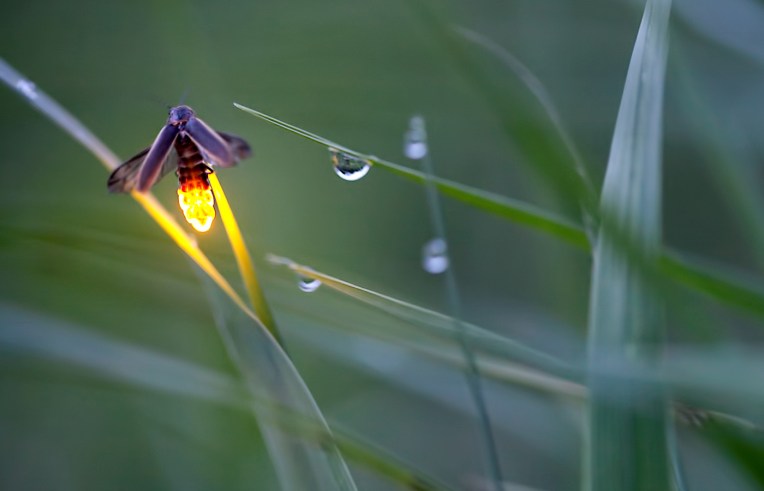
‘Amber Firefly’ by Radim Schreiber. Copyright Radim Schreiber. All rights reserved. Used with permission.
Whilst composing ‘The Last Time I Saw Fireflies’, I constantly referred not only to memory, but also the remarkable firefly photography of Radim Schreiber for inspiration. ‘Amber Firefly’ (above) was my constant reference, evoking the memory of that summer night. (Copyright Radim Schreiber. All rights reserved. Used with permission.)

Revisiting ‘The Kleinrivier at Klipdrift’

The poems ‘Boy’1 and ‘The Last Time I Saw Fireflies’ are complete. This would have marked the conclusion of the composition period, but my interest in the previously abandoned Afrikaans draft of ‘The Kleinrivier at Klipdrift’,2 titled ‘Die Kleinrivier by Klipdrift’,3 was suddenly revived after its stanzas came to me, virtually complete, one morning on the hills of South Limburg (The Netherlands) a few weeks ago.


  1. Developed under the working title ‘Boys’.
  2. Kleinrivier [claynRhfeeR] (trilled [R]) is Afrikaans for ‘little-river’, a river; and Klipdrift [klipdRift] (trilled [R]), Afrikaans for ‘stone-ford’ or ‘Stanford’, a farmland area.
  3. Pronounced [di claynRhfeeR bay klipdRift] with the [i] in ‘did’, a trilled [R] and for ‘klipdrift’, both instances of [i] as the [e] in ‘folded’.

Therefore, I shall compose the Afrikaans version after all, doing so under the working (and likely final) title, ‘Die Kleinrivierliedjie’.3 The Afrikaans expresses the diminutive of ‘The Little River Song’ (thus, ‘the little Little River song’) and is at once a reflection of the lyric nature and structure of the poem and a homage to ‘Die Oukraalliedjie’, an Afrikaans folk song dear to my heart.


  1. Pronounced [di claynRhfeeRlikki] (with the [i] in ‘did’) and a trilled [R].

As a result of the Afrikaans title, I have changed the title of the English version of the poem (‘The Kleinrivier at Klipdrift’) to the corresponding ‘The Little River Song’. I enjoy its double meaning: ‘little’ reflecting both the name of the river and the brevity of the poem or ‘song’. ‘Die Kleinrivierliedjie’ will occupy me for the next few weeks, at the completion of which the editing process of the anthology will finally begin.
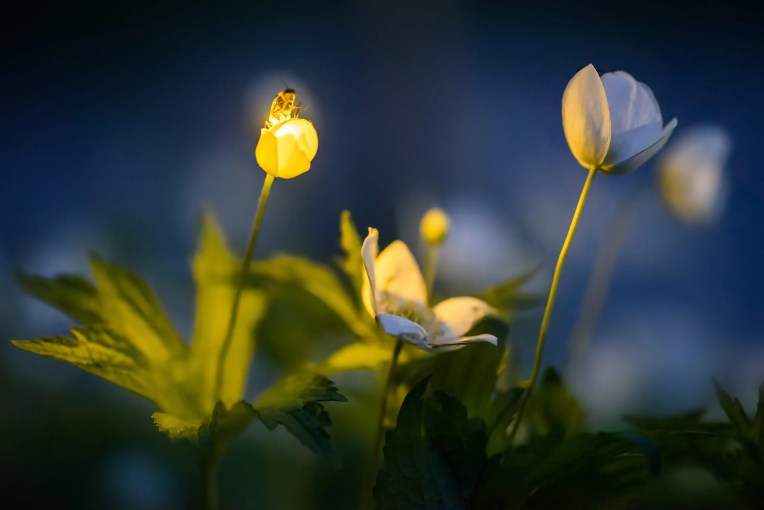
‘A Flash of Hope’ by Radim Schreiber. Copyright Radim Schreiber. All rights reserved. Used with permission.
‘A Flash of Hope’ by Radim Schreiber (Copyright Radim Schreiber. All rights reserved. Used with permission.)

On ‘Boy’ and ‘The Last Time I Saw Fireflies’

A montage of childhood memories, the original draft of ‘Boys’ recalled happy adventures in the countryside with my best friend Bradley: riding bicycles on dirt roads, picking pears from an old pear tree, watching clouds from the wayside; however, when I considered the sense of isolation I felt, even in those happier moments, it seemed more fitting to write from that perspective, and thus ‘Boys’ became ‘Boy’.

The poem has three short trochaic stanzas that move swiftly through the boyhood scenes described above. The lines are perhaps the most clear, concise and uncomplicated I have achieved yet, capturing the simplicity of that time. Somewhat more complex is ‘The Last Time I Saw Fireflies’, a four-stanza recollection of my encounter with those magical creatures as a six or seven-year-old.

It was the first numinous moment of my life—though at the time, I was too young to grasp it. I was camping with my family at the beach, rather appropriately, during a church gathering. I wandered about the site and saw in the darkness of a shrub the light of fireflies. Deeply impressed, I quietly marvelled at the sight. The poem attempts to wrap in words my naive wonder—the experience in nature of the divine.
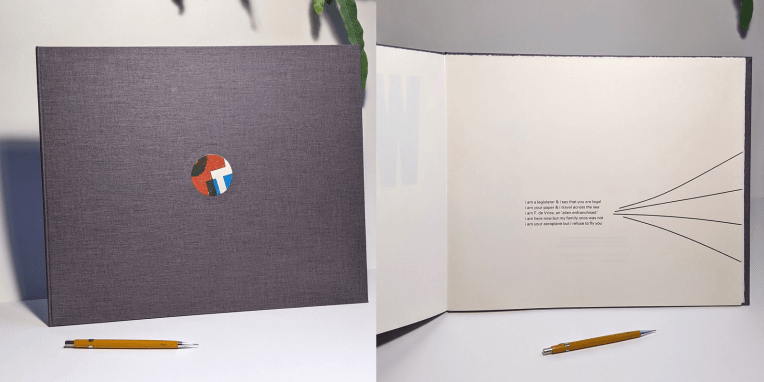
‘Here, Others’ by David Armes (Red Plate Press). Copyright Red Plate Press. All rights reserved. Used with permission.
The format of the final publication will be a limited letterpress edition by David Armes of Red Plate Press who created the sleeves for my self-titled 2017 musical release. Above is an example of his work. (Copyright Red Plate Press. All rights reserved. Used with permission.)

Publishing the Poems

Progress on the poems has been slow, but this year, I intend to assemble a chapbook, that is, a rudimentary booklet to distribute for scrutiny amongst followers of my work. As one writes, one becomes so deeply involved in the process that one misses obvious errors, obscurities and superfluities. A chapbook is the ideal way to identify and address such shortcomings and improve the verse where it is wanting.

It will also give me a sense of how the poems fit together as a collection: whether it is best to include the full set of fifty-two compositions or a selection, whether they are best arranged chronologically (by date composed or completed) or thematically (by subject matter, for example, ‘flowers’ and ‘birds’) and whether it is best to present one poem per page or per double-page spread.

Also to be decided is the title. I have narrowed down my options to Idylls, Odes and Over the Mountain. The first two describe my genre, lyric nature poetry, and the third is the title of a poem in the collection about the Overberg,5 the region that inspired it. Both approaches appeal to me. ‘Over the Mountain’ and Other Idylls (or Odes) is another option, in the style of Toon van den Heever’s Eugene en Ander Gedigte.6


  1. The Overberg (pronounced [oohuhfeR-behRCH] with a trilled [R] and the guttural [CH] in ‘loch’) is Afrikaans for ‘over-mountain’, a reference to its location beyond the Hottentots Holland mountain range, its natural border with the Cape Town region.
  2. ‘Eugene and Other Poems’, the reworked title of the South African Afrikaans poet’s first anthology, originally titled Gedigte. Eugene en Ander Gedigte is pronounced [yoogene en undeR CH’h-diCHtih] with a trilled [R], the guttural [CH] in ‘loch’ and the [i] as the [e] in ‘folded’).

Poetry Publication Progress (2023-06-24)

This May

LS000,
The cover art for the Affan “Origin I” single conceived, created and produced by David Armes of Red Plate Press.

I prepared for the Lonely Swallow label’s first release.

May was dedicated to the final preparations for the first release on Lonely Swallow, my experimental label: Origins by Affan. The event is particularly special because it is also his debut. Affan is a young self-taught pianist from London. When I first heard his compositions, I was captured by their illusive simplicity. He weaves together melodies and tempos in improvised pieces that move from theme to theme with elegance and ease. When the label was ready to induct its first artist, Affan was a natural choice. His work embodies the ethos of the label: a minimalist celebration of melody, emotion and atmospheric beauty.

Red Plate Press impressed yet again.

Letterpress artist David Armes of Red Plate Press created the cover art for the album (Origins) and single (“Origin I”). Part of his task was to establish an aesthetic for the label’s releases. Minimalism was an important consideration when commissioning the artwork, and David’s solution is excellently so. It combines a simple visual concept with an elegant model for future releases. For this album and single, he used the Roman numerals from the track titles (“Origin I”, “Origin II”, “Origin III”, et cetera) and scattered them in the format to suggest the spontaneousness of improvisation. They are rendered in textured low-ink prints to represent the low-fidelity recordings, one “I” on the single cover, six on the album.

I felt grateful.

A novice in the music business, I am guided by my devotion to Beauty and Virtue, and rely on the knowledge and skill of others for everything else. I was fortunate in the creation of Lonely Swallow to work with artists and experts who are committed to excellence. It has made the process of establishing the label and coordinating its first release a rewarding experience. Thanks to everyone at Wolfe-Coote Incorporated for guiding me through the process of incorporating my first company. Thank you Affan for entrusting me with your first album, Taylor Deupree for mastering the label’s first release, Garreth Broke for transcribing “Origin I”, David Armes for capturing the music in visuals, and you dear reader for your faith and interest in my endeavours, your generosity is my inspiration.

Mentioned in this post:

Lonely Swallow (Official Website)
Red Plate Press (Official Website)
Garreth Broke (Official Website)
12k Mastering (Official Website)
Wolfe-Coote Incorporated (South Africa) +27 (0) 21 851 4357

This April

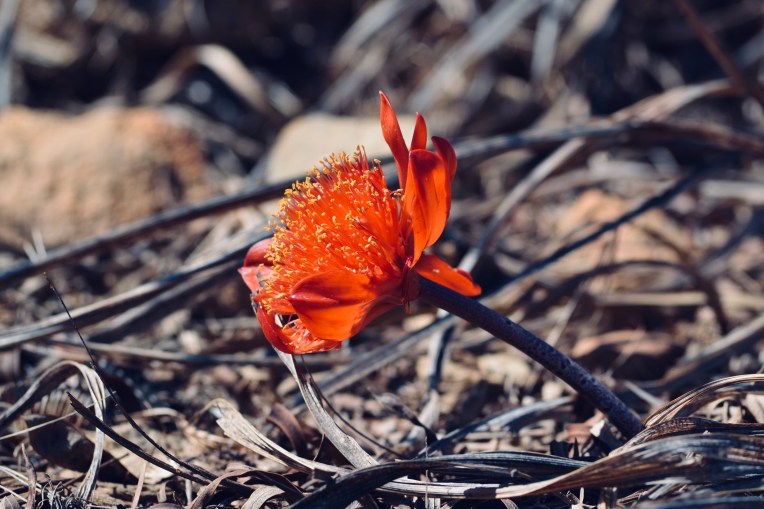
Blood Lily, 6 April 2018. Copyright 2018 Forgotten Fields. All rights reserved.
I took this photograph of a blood lily (Haemanthus coccineus), whose blossom emerges directly from the bulb without leaves. The South African autumn is full of surprises!

I completed “The Robin-chat”.

Following the discovery of my Cape robin-chat Cape batis confusion, I have at last finished “The Robin-chat” (previously, “The Batis III”). The image below shows how the composition developed: “The Batis III” version is nearly complete just before the image of the bird (evidenced by the neatness of the verses); then, a new wave of exploration, prompted by the discovery of my error, as the poem becomes “The Robin-chat”. I am delighted to report that I have since also completed “The Leaves” (previously, “Poplars”) and have tentatively started revising a sketch titled “The Pines”.

The evolution of “The Robin-chat”.

I spoke to David Armes about the artwork for the first Lonely Swallow label release.

Last month, I mentioned that I had briefly spoken to letterpress artist David Armes about the cover art for the Origins album by Affan. This month, we had a detailed conversation about the nature of the visuals, how they are to create the aesthetic of the label, and how this will apply to visuals for artists and their releases. Our objective is to present in the artwork the concept of the music and the minimalist philosophy of the label. This will be the challenge in the coming month.

I spoke to Garreth Broke about transcribing Origins.

For his first album, Affan has composed a collection of six contemporary classical impromptus that effortlessly move from theme to theme with elegance and ease. Not only do I think of these pieces as beautiful and engaging to the ear, but also to the eye and hand; and so I have asked one of my favourite pianists in the genre, Garreth Broke, to transcribe them.

Mentioned in this post:

Haemanthus coccineus, blood lily (Wikipedia)
Red Plate Press (Official Website)
Garreth Broke (Official Website)
Affan (Soundcloud)
Lonely Swallow (Official Website)