This February

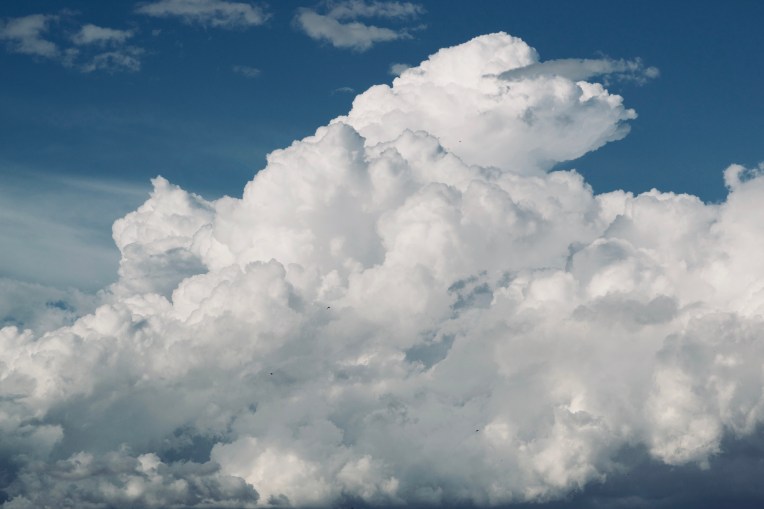
Cumulonimbus in February, 2 February 2019. Copyright 2019 Forgotten Fields. All rights reserved.
I took this photograph of cumulonimbus clouds, bearers of hope and change.

I joined SubscribeStar

I am delighted to share that I have joined SubscribeStar1, a platform enabling one to support a creator through a subscription. My reasons for doing so are to create an opportunity to support what I do, and to establish a space where I may experiment with ideas. Whether on matters philosophical, sacred or secular—in the form of essays, musical and poetic sketches or photography—it shall be my studio; a creative laboratory, if you will.

The artistic process is complex; the thinking of the artist obscure. On SubscribeStar, I shall clarify my process and thinking in the company of sympathetic minds with whom I hope to deliberate. I shall treat it also as a journal wherein I may share the updates, observations and discoveries hitherto contained in the monthly digests. My goal is to create a subscription section on this website, but until then, SubscribeStar will perform that function.

I reflected upon this blog

Ever since I joined social media in 2016, I have devotedly shared there distilled ideas and updates. These I then assembled and elaborated upon on the blog, particularly over the past year, in the “This Month” posts. So consistent have I been, it has become an observance. Now that I have joined SubscribeStar, I can better investigate subjects without burdening followers with the bombardment of posts that will inevitably result from my doing so.

This then is the last “This Month” post. It does not mean, however, that I shall no longer be active here. On this blog, I intend to share at the appropriate times what emerges from SubscribeStar. I shall make official announcements and present work and ideas in their developed form—that is, not the works in progress or the extemporary rumination that will be characteristic of my SubscribeStar activity. SubscribeStar will be messy; the blog will be neat.

I wrote this, my 100th post

Glancing over the development of the blog reminds me of my enthusiasm when I started this project in 2016. Armed with an iPad and no idea how to compose experimental music, my love for airships was all the encouragement I needed to learn. I was amazed that the blog attracted any interest at all and I did my best to present to readers what I considered engaging and interesting; 100 posts later, I hope I have succeeded.

Whenever there is change, one is reminded of what one values in life. This February, I appreciated anew your faith in my work. I may give form to a theme in music and poetry, but what joy is there in beholding the outcome alone? For proof of my work’s merit, I rely on you. Your judgements—your comprehension, appreciation and criticism—help me evaluate my own; and I assure you, I would be all the poorer without them.

Footnotes

  1. Forgotten Fields on SubscribeStar

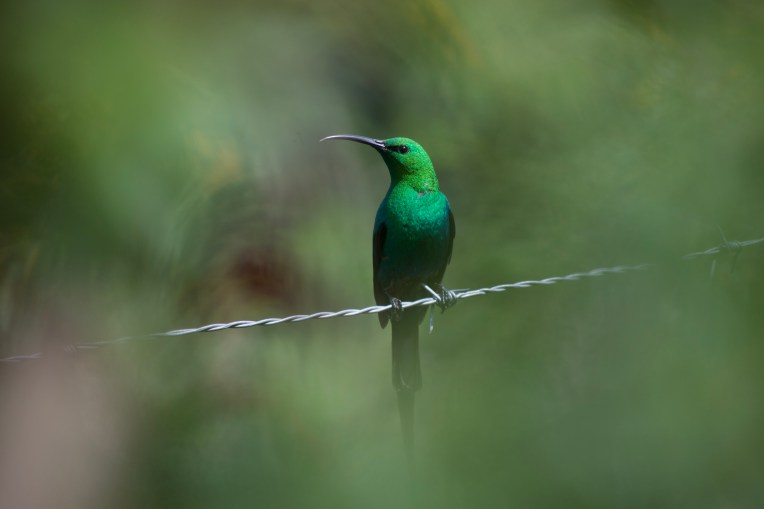
Nectarinia famosa

A Malachite Sunbird, 10 October 2018. Copyright 2018 Forgotten Fields. All rights reserved.
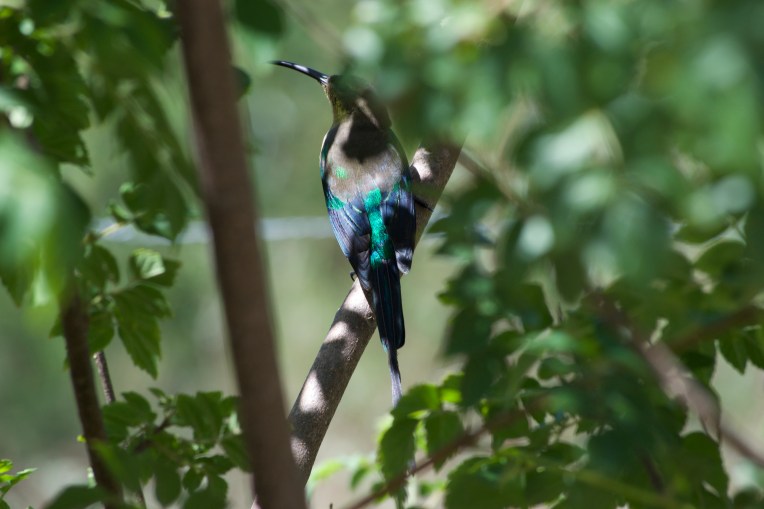
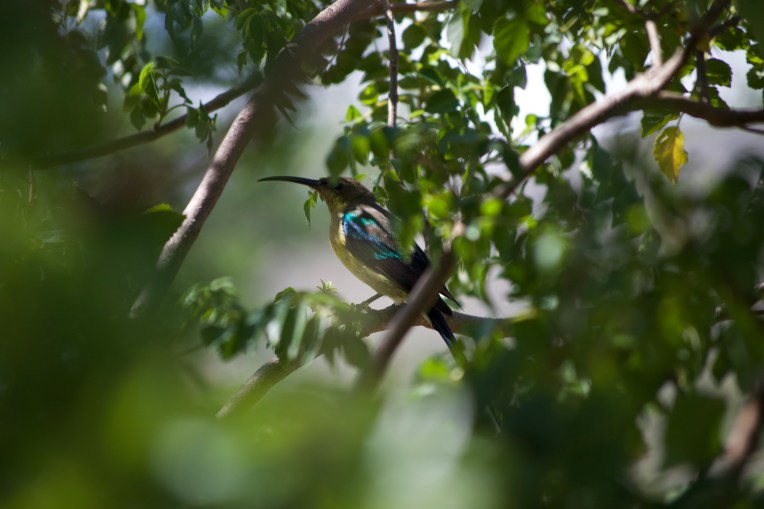
Eclipsed Malachite Sunbird Male, 20 February 2019. Copyright 2019 Forgotten Fields. All rights reserved.

In addition to praising the rural world about me through the arts of Poetry and Music, I also capture its beauty through the practice of photography. Birds are a favourite subject; and among the many species of this region, I consider the Malachite Sunbird one of the most exquisite.

Here is the male of the species. The first photograph was taken during the breeding season last year in October when it is spring in South Africa and it is covered in iridescent green; the second and third, earlier this week. It is now late summer and its breeding season plumage is being replaced by less vibrant feathers.

Needless to say, the Malachite Sunbird is a subject of my poetry—in fact, one of the very first poems I composed for the collection was an ode to the creature titled “Sunbird!”.

Why traditional poetry?

SubscribeStar AQ04

AQ04

Beginnings

My love for traditional poetry began early in life. I ascribe it wholly to the influence of my mother whose love for Afrikaans poetry inspired in me the same. Her frequent recitation of lines from the great Afrikaans poets demonstrated to me the value of the art form. Even so, I came late to composing poetry myself, writing my first verses only in my early twenties. They were all lyrical ballads inspired by songwriters I admired at the time—especially Bob Dylan and Jim Steinman whose respective themes and styles captured my imagination.

When I later took up songwriting, my interest in poetry found expression in lyrics, and for the next decade, this was the sum of my poetic pursuits. Then in my mid-thirties, I started taking an interest in poetry proper once more, and in 2012 composed “Autumn” (an ode to the season) and another poem (since lost) the title of which I vaguely recall as “A Day by the Sea” (a recollection of love). These were the only poems I wrote during that period, but “Autumn” was significant because it was the earliest incarnation of what I am doing now.

Becoming a poet

In 2016, I had the idea to compose a verse as “lyrics” for the track “Silently You Sail” on Airship. Soon thereafter, I wrote a couplet for The Zephyr and the Swallow, followed by a ballad for the eponymous album Forgotten Fields. At the same time, I slowly began to rediscover my rural surroundings: the sights and sounds, landscapes and creatures. Though I had been in the midst of them (the “fields”), familiarity had rendered them all but invisible to me (“forgotten”), and I longed to reconnect with the pastoral world about me.

Not one to do anything halfheartedly, I immersed myself in the agrarian and unspoilt beauty of the Overberg region where I live in the Western Cape of South Africa; and as it revealed itself to me anew, poetry became my inevitable response. I began drafting rough poetic sketches—at first sporadically, then ever more frequently, until at last, it was all I wished to do—and it soon became clear a collection was in the making. By early 2018, after much deliberation and reservation, I was ready to assume the self-ascribed title of Poet.

Traditional poetry

I embraced the art form, eager to explore the themes of Forgotten Fields, thitherto undertaken primarily through experimental music, in its literary antithesis: traditional poetry. The experience has been engrossing. From an artistic perspective, traditional poetry is the inverse of experimental music, introducing a complementary aspect to my process; for where in experimental music I may bend, break and invent rules, in traditional poetry I must obey, uphold and defend them, drawing from me creative ingenuity of a different kind.

Conventions introduce challenges and opportunities of their own, resulting in work with a character impossible to create at the avant-garde extreme of the gamut. Traditional poetry may now be out of fashion (hence my self-publishing the collection upon completion), but it lends itself perfectly to what I wish to express. My poetry celebrates a forgotten world where Simplicity, Innocence and Joy awaits; where Reverence and Wonder have meaning; where swallows in the heavens inspire awe and ripples in the grass contemplation.